
“Nothing about us without us.”
This phrase is central to the disability rights movement and helped shape the United Nations Convention on the Rights of Persons with Disabilities. It carries a simple, nonnegotiable idea: All policies and decisions should be made with the direct participation of the people they impact most.
With that principle guiding me, and building upon existing research and my personal experiences, I intentionally reached out to and spoke with children and adults who identify as disabled, have children with disabilities, or who are involved in disability education and advocacy to learn about their experiences with outdoor learning and accessibility in their schools and communities. I had the privilege of learning from five individuals. Certain themes surfaced again and again across our conversations; the perspectives shared here belong to these individuals and their lived experiences specifically.
The research is true: Outdoor learning benefits all students
“Outdoor learning is essential to whole child development [of all children] and should be prioritized,” Nicole (she/they), who is an outdoor, nature-based education consultant, as well as director of the Washington Nature Preschool Association and founder of Roots and Sky Nature Based Learning, told me. The research speaks for itself: Being outside benefits children and adults. Parents and children of all abilities tell me that learning outside makes them feel calmer, more at peace, and more relaxed—a real, positive effect on their overall mental health.
Liz (she/her) knows this firsthand. She identifies herself as a stay-at-home medical mom and educational assistant with her local school board and has three children: Eden, her thirteen-year-old daughter who has Coffin-Siris Syndrome and uses a wheelchair; Mason, her eight-year-old son with sensory processing disorder, anxiety, and dyslexia; and Eva, her seven-year-old daughter with chronic pain syndrome. Liz says that spending more time outside with her children “brings a different [more relaxed] type of energy to her and her children,” and she can tell they all need and crave more time outdoors.
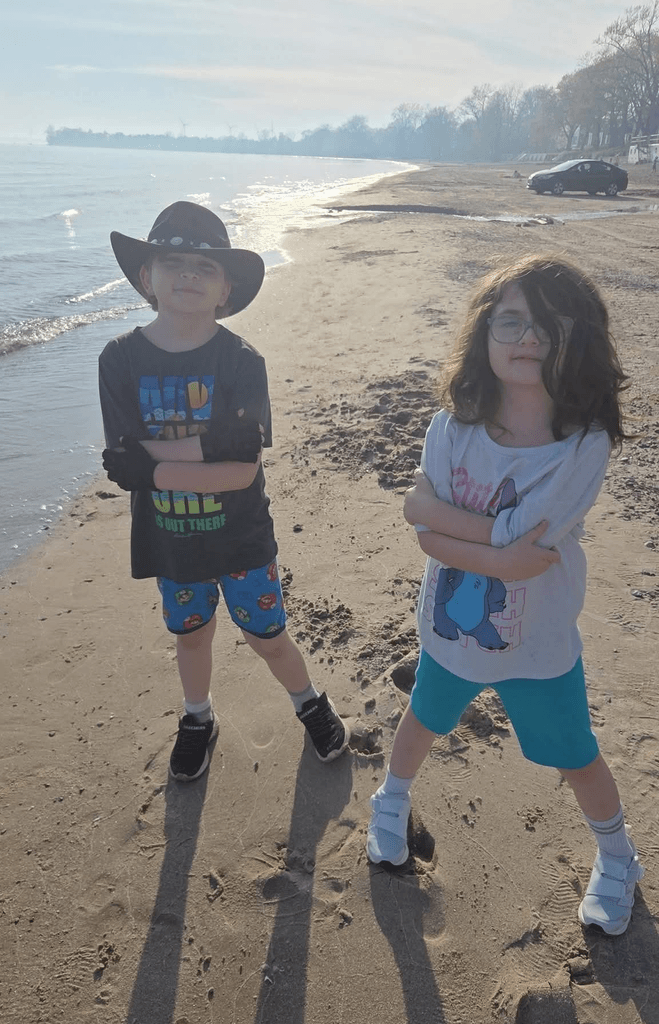
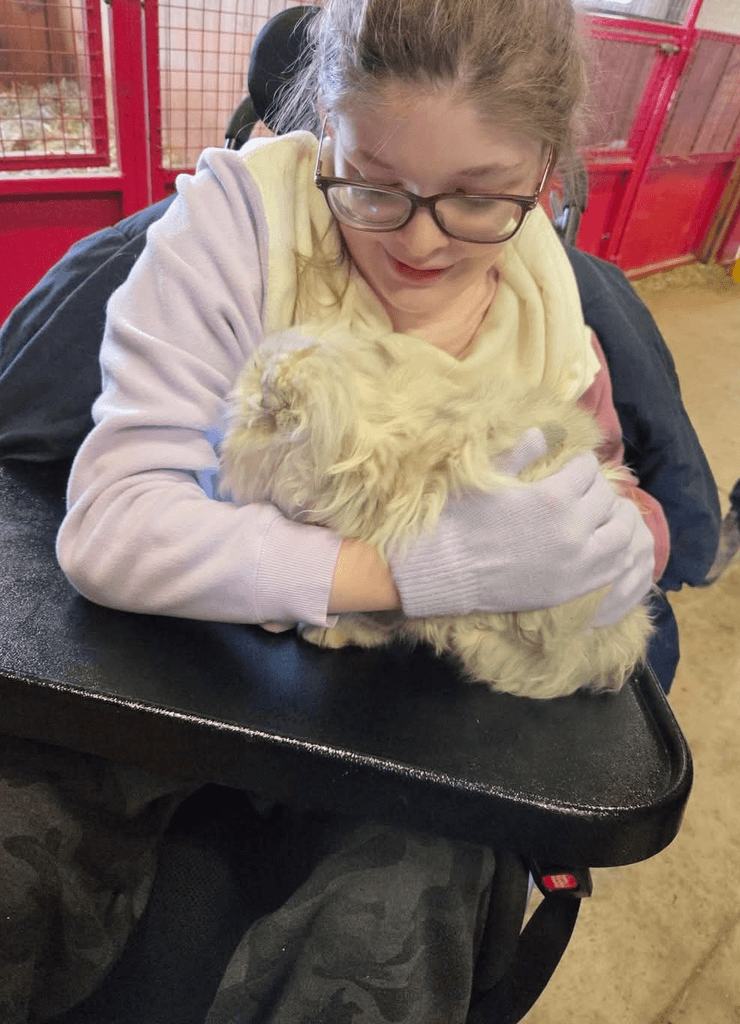
Figure 1. (Left) Eva and Mason, two children with arms crossed on a beach. (Right) Eden, child in a wheelchair wearing glasses and holding a rabbit. Photos courtesy of family.
Being outside builds confidence, sparks imagination and flexibility, promotes physical activity, and supports academic outcomes. Kit (she/they) is a queer and disabled mom, movement organizer, and policy advocate, as well as a former outdoor preschool director. She emphasized that nature-based activities spark curiosity, wonder, regulation, and a sense of rootedness, place, and belonging for all children. Access to the natural world grounds children, particularly those with disabilities, who “live in a world where the systems that they encounter are often either actively exclusionary or leave them with a sense of not belonging or feeling different.”
That sense of belonging, and the benefits nature provides, isn’t limited to children—the adults around them feel it, too. Outdoor learning helps children focus and gives them room to be active (in other words, to get their wiggles out), which educators appreciate as much as children do. More outdoor exposure often means more attention in classrooms and fewer behavioral challenges. And, crucially, ability has nothing to do with who reaps these benefits.
Whitney (she/her) is the mom of Malachi, her nonspeaking eight-year-old son who was born with medically complex disabilities and is a full-time, nonambulatory wheelchair user, and Deacon, her 3-year-old son. As a primary parent-caregiver and home care provider for Malachi and leader of a nonprofit organization supporting children and youth with diverse needs, she puts it best: “If the research shows that being in nature is beneficial for students, that means it is beneficial for all students. The existence of a disability is not a reason to gatekeep access to outdoor learning [or exposure].” She continued, “The challenge is the lack of research specifically focused on the benefits of outdoor learning and time spent in nature for students with disabilities and, in particular, students in special education classrooms. But at the end of the day, disability or not, children are children, students are students, and people, generally, are just people.”
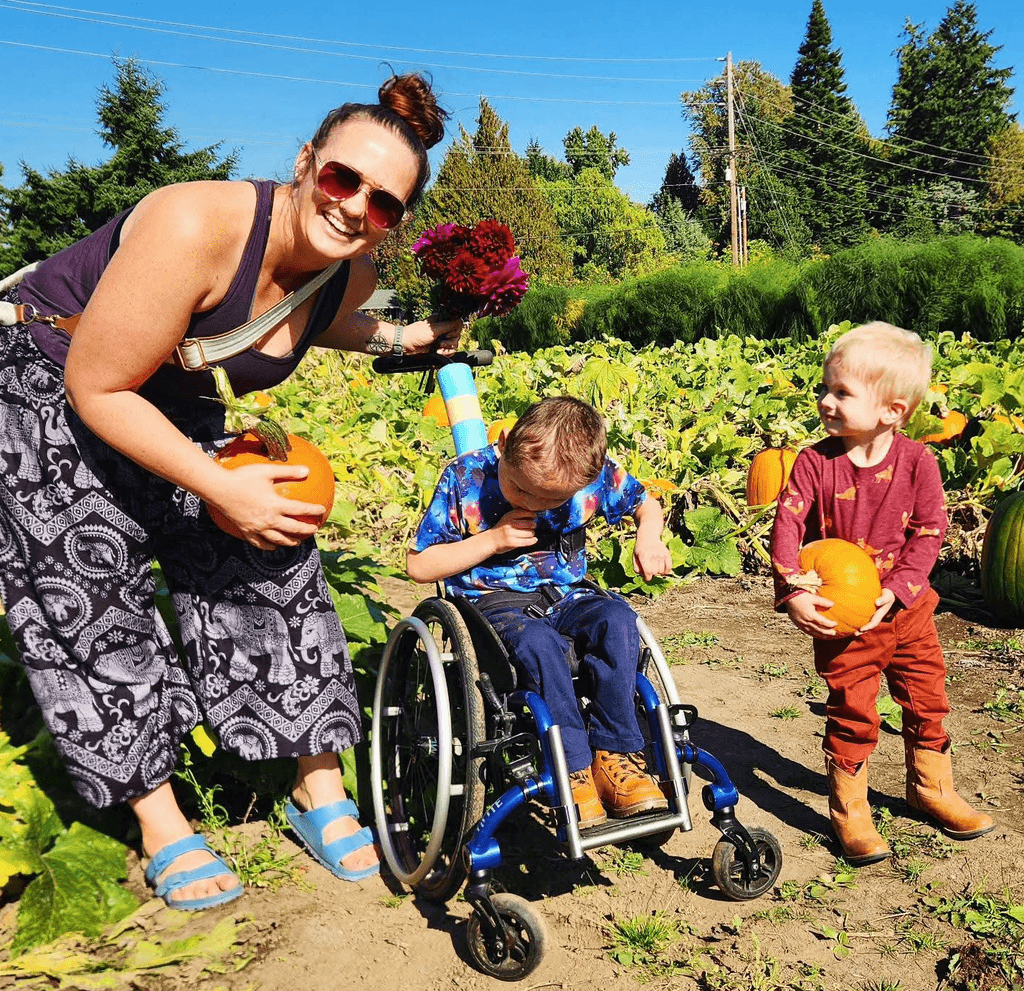
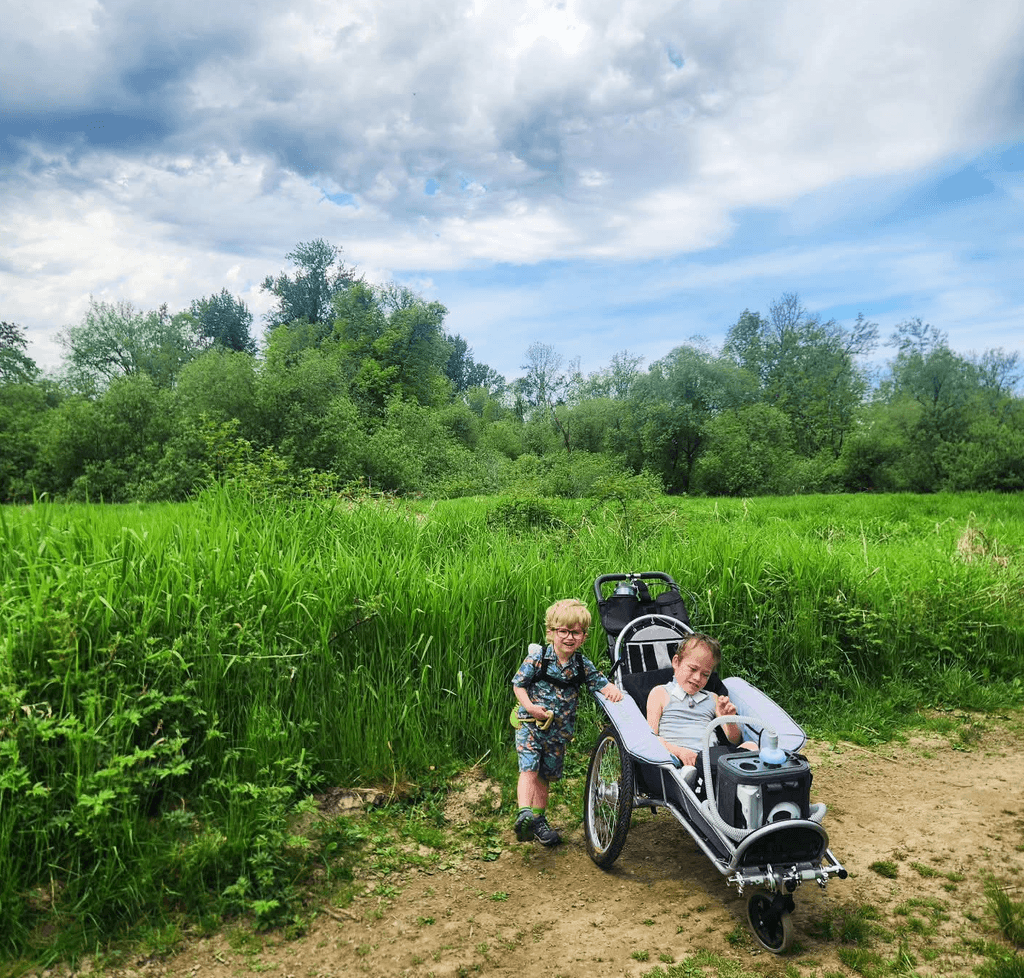
Figure 2. (Left) Three people in a pumpkin patch. Whitney, a woman wearing sunglasses and holding a pumpkin; Malachi, a child in a wheelchair; Deacon, a young child holding a pumpkin. (Right) Deacon, a young child, and Malachi, a child seated in an adaptive stroller, in a field. Photos courtesy of family.
The real barrier: ableism
If the benefits of outdoor learning are so clear, why isn’t every child getting equal access to them? Parents, educators, and children pointed to several overlapping barriers: social perceptions and attitudes, policy, and the physical and sensory environment. Research has focused mostly on the last of these, but a growing body of work is examining how society and policy shape disability itself. As Kit told me, many of the challenges that come up, including resources, attitudes, and simply having the bandwidth to support children with disabilities outdoors, reflect broken systems.
One barrier surfaced in nearly every conversation I had with people who have lived experience of disability: ableism, our social and cultural understanding and perception of disability. When we perceive disabled children as different, as something to be “fixed” rather than recognizing that it’s the world around them that disables, our actions follow that belief. And that belief shows up at every level, from societal attitudes and systemic policy down to our own internal assumptions.
Beyond the individual: how culture shapes perception
Kit pointed to a less visible but equally powerful version of ableism: our own internal beliefs around disability, which are often a reflection of systems-level attitudes and actions. “I think that oftentimes the internal narratives that we’re encouraged to develop around what happens when we bring in and work with kids with disabilities, and what comes with that, can become a barrier in and of themselves. This can end up increasing the likelihood that the responsibility for disability is going to end up falling on the individual child, even when the adults involved don’t necessarily intend for it to, because of how our system is designed.”
Nicole expanded on this, noting that these barriers extend well beyond any one person’s beliefs: They’re embedded in the culture of a school and its broader community. Just as children can develop preconceived fears or assumptions about spiders or bees, they can develop preconceived notions about disability, limb differences, or neurological differences. Our job as educators, she said, is to acclimate children to animals and people who are different from them. “When people have compassion for someone as different from them as say, a worm, it’s really easy to have compassion towards someone with physical or neurological differences. That intersects.”
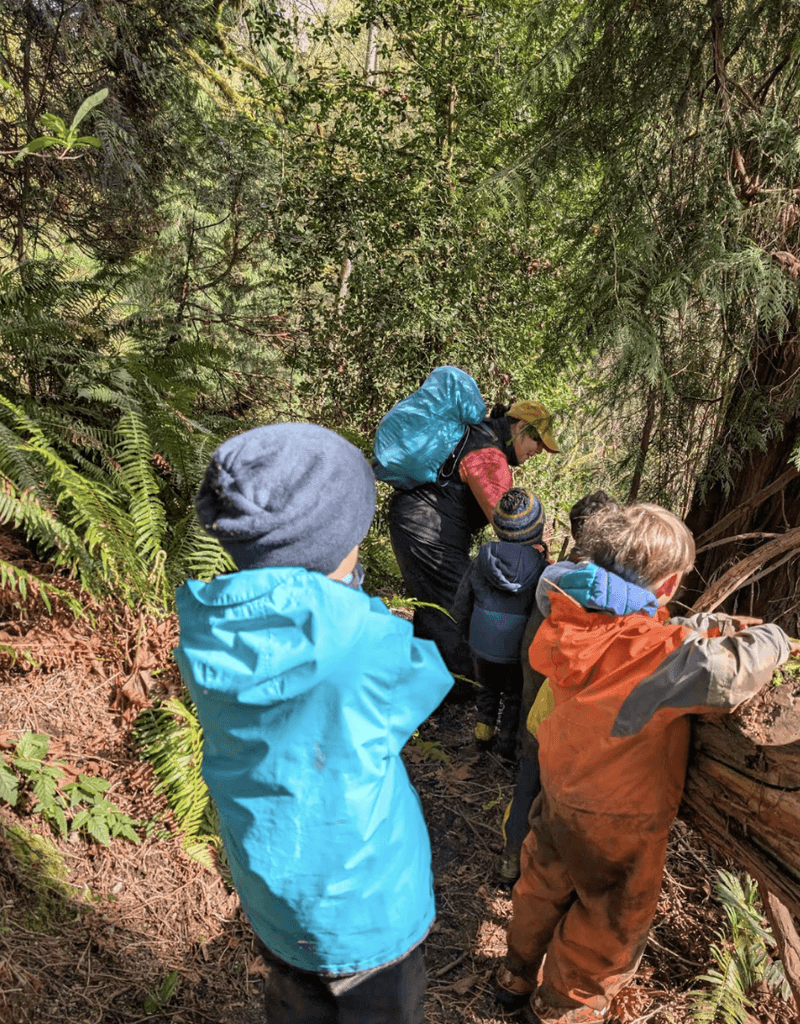
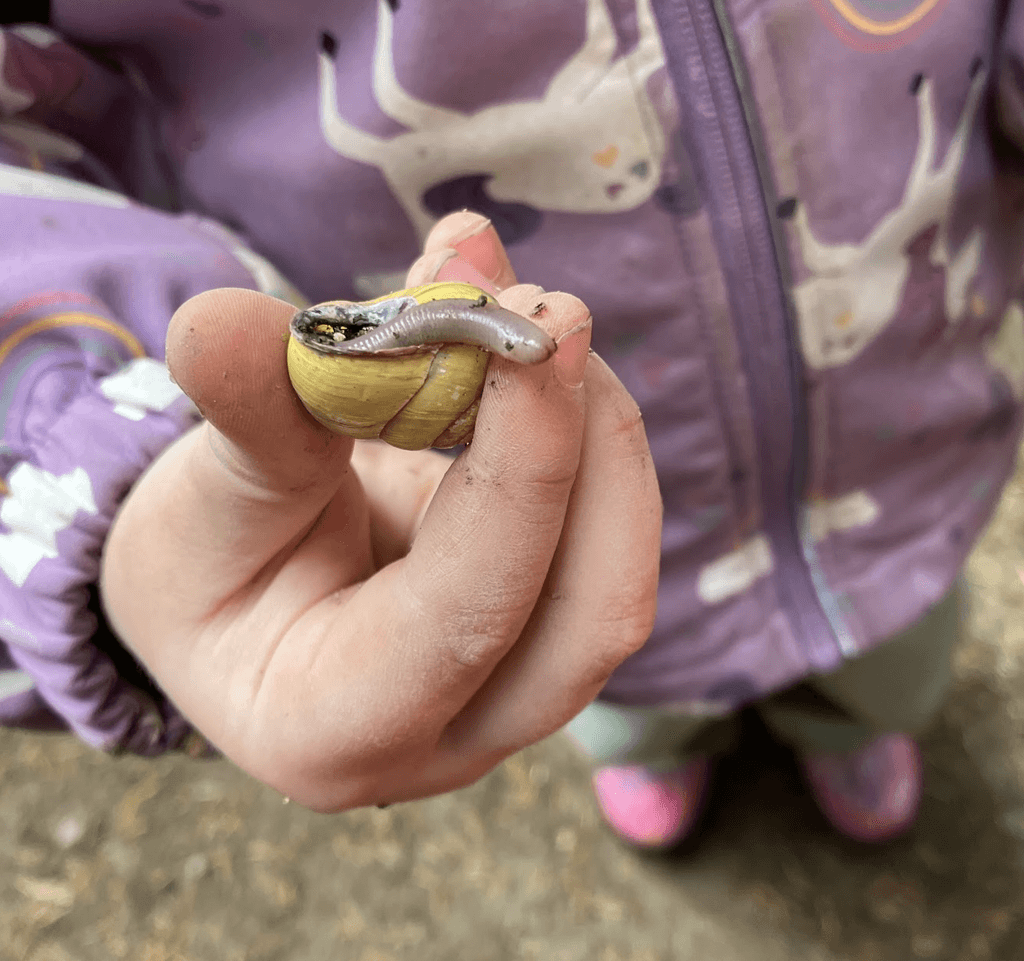
Figure 3. (Left) Nicole, an adult wearing a backpack, leading a group of children in a forest. (Right) Close-up of a child holding a snail poking out of its shell. Photos courtesy of Nicole.
Kit built on this, noting that forming relationships with the natural world—and not just with people—can be especially valuable for kids who find building human connections more challenging: “I also think that having the opportunity to build relationships with more than the human world is deeply resonant for [disabled and neurodivergent children]. Having other avenues to build connection and relationship outside of just human interaction is so powerful.” But ableism doesn’t only live in attitudes and culture—it’s built into policy and physical space, too.
When policy and design shape who gets to be outside
Federal and district policies shape who spends time outside, how outdoor schoolyards are built, and when and how much outdoor time exists at all. Too often, school outdoor play areas consist of concrete and modest play structures, with little nature or greenery. However, a growing movement and associated research, led by the Trust for Public Land’s Community Schoolyards initiative, is working with local communities to build more natural, inclusive outdoor spaces at schools, with many already constructed across California. Ten Strands is a founding partner, alongside Green Schoolyards America, on the statewide California Schoolyard Forest System.
Playgrounds themselves are rarely built with universal design in mind, though that’s beginning to change. Research shows all children need outdoor areas that are fun and allow for risky, child-directed play with real variety. Kit points out that some children with disabilities also benefit from more structured play because “unstructured play comes with a lot of unseen effort on the part of the child in order for them to show up and be successful.” Disabled children often spend more outdoor time with adults, have less choice in activities, and are limited by both the physical environment and educators’ assumptions about their needs and abilities. All of this shapes where, how, and with whom they get to play.
Eden and Malachi’s parents’ experiences reflect that research directly: Their children can’t get out of their wheelchairs by themselves to use school playgrounds and instead rely on being pushed by an adult, meaning less interaction with other children. As Malachi’s parents put it: “Our son, who uses a wheelchair, should have the same degree of access in a school environment as any other student. This would necessitate a fully accessible and universally designed classroom / school building, outdoor space and playground, and any other facilities (e.g., restrooms).”
Whitney echoed something I also heard from disabled individuals and families during the Pathways Park design process, this time about schools: “Our expectations for inclusion and accessibility in outdoor classrooms and other outdoor learning spaces should far exceed that which the Americans with Disabilities Act (ADA) mandates. School district policies should mandate accessibility as a primary design factor at the local level.” When schoolyards are universally designed and built with nature in mind, children can play with each other, not just alongside each other.
Design isn’t only about mobility—it’s also about the senses. School outdoor areas can be loud and overstimulating, which Eden finds overwhelming. Kieran (he/him) is an eight-year-old whose favorite plant is a Venus flytrap “because it’s carnivorous”; who loves to play video games, eat hot dogs, and play tag and capture the flag outside; and who lives with a disability. He told me that his ideal outdoor space would be bigger, with more trees: “You should balance it out—not too much vegetation and not too much black space.”
When recess isn’t enough
Recess times vary by school and district but typically fall somewhere between twenty and forty minutes per day—not nearly enough. Recess is also precarious: Due to weather, a child’s behavior, or other reasons, it can be taken away entirely. Except in genuinely hazardous conditions (such as poor air quality, weather extremes, etc.), this practice benefits no one. A few places, like Washington state, have begun regulating minimum recess time and barring schools from withholding it as punishment.
Kieran gets thirty minutes of recess after lunch each day, and when it’s too cold, recess moves indoors—leaving him both sad to miss the outdoors and happy about indoor activities like Legos. That tension points to something bigger: Children need more consistent access to the outdoors throughout the day, not a single, scheduled block that can be shortened or canceled at will. As Kieran told me, “Do you know what would be cool is if there is more recess time for children because that’s good for children. At least that is what I’ve heard.”
This inequity isn’t just about time—it’s also about who gets that time in the first place. Whitney described how it can play out structurally in schools: “Environmental education gets promoted during the school day in the general education classrooms, but less so for those in special education classrooms, or where you hear justifications or reasons as to why special education students cannot spend the same amount of time outdoors.”
Getting this right is a balance, as Kit told me: “It’s a balance of being able to stretch our imagination and sense of what is possible, while also tapping into partnerships and existing resources to build concrete, individualized support around each child’s needs.”
Start small and meaningful: partnerships and teacher support
When I asked children and families for advice for educators and school administrators about inclusive outdoor access, one message came through universally: Start with small and meaningful changes, and do it in partnership with disabled children and their families.
Lead with partnership, not guesswork
Nicole put it plainly: “The most critical piece is to start with the thing that is most in the way and address it in partnership—don’t try to figure it out all by yourself.” For Kieran, that partnership shows up in how teachers respond day to day. He feels most comfortable at school when “my teachers understand when I have a problem and they talk to me about it, and respond in a way that makes me feel safe and comforted.”
Partnership can take many forms and involve many people: within a school, between older and younger students, between disabled and nondisabled children, and with caregivers, occupational and physical therapists, local communities, and forest school educators. Kit points out that many educational leaders and practitioners are already having transformative experiences in outdoor spaces with children of all abilities and are eager to carry those lessons forward. Many organizations and individuals are developing accessible resources system wide. Whatever form it takes, the foundation of partnership is the same: open, respectful dialogue with children and their families.
Bring the outdoors into everyday learning
Liz and Kieran both encouraged teachers to get students outside more often, not just at recess. That can mean integrating outdoor time into the school day—reading on tree stumps, for example—or bringing nature indoors and out, like adding plants to classrooms or garden beds to schoolyards. Liz’s suggestion for getting started: “Take one month to do more outside learning and see how the children [learn and behave].”
Support teachers so they can support kids
None of this works, Nicole noted, if teachers aren’t set up to succeed: “If teachers have what they need to feel comfortable and competent, they will be successful.” She encouraged schools to grow in a way that fits their own community and to remember that comfort outdoors isn’t only a question for children: “Teachers need to be regulated, have the gear they need, and feel they have the knowledge and support to be able to do outdoor, nature-based education in a way that they feel comfortable and competent—where every being is in a state of ease and enjoyment.” That same standard, she added, should apply when including children with disabilities outdoors.
When teachers feel supported, children feel it too, and that’s where meaningful inclusion actually begins. Inclusive outdoor education isn’t one big initiative—it’s partnership, small daily shifts, and teachers who feel equipped to lead the way.
Toward anti-ableist outdoor learning: “What if we started with yes?”
Across every conversation, one message came through clearly: Policies, schools, and educators need to be actively anti-ableist. At a nature-based conference in 2016, Kit was impacted by a phrase shared by disability advocate and education consultant Adana Protonentis—“What if we started with yes?” It’s an invitation to enter into our relationships with disabled children and families with a sense of possibility and the willingness to try and make things work. Accomplishing this, she believes, starts with the knowledge that it truly is possible for all children to thrive in outdoor settings and the willingness to partner closely with families in striving to make that a reality. She sees the idea as a commitment to an inclusive future, where systems are built to ensure every student can benefit from nature-connection and learning outdoors. That means training educators to take disabled children outdoors with confidence, staffing schools so every child can be kept safe outside, and designing schoolyards and curricula with universal access in mind from the very beginning—not as an afterthought for special education but as the standard for every classroom.
It comes back, in the end, to what Nicole said about the worm: Compassion is not a finite resource, and it isn’t hard to extend once we start practicing it. When we teach children to notice and care for the smallest, most overlooked creatures outside, we’re also teaching them how to notice and care for one another. That’s the kind of outdoor education worth building—one rooted in compassion and a shared belief that every child belongs outside.
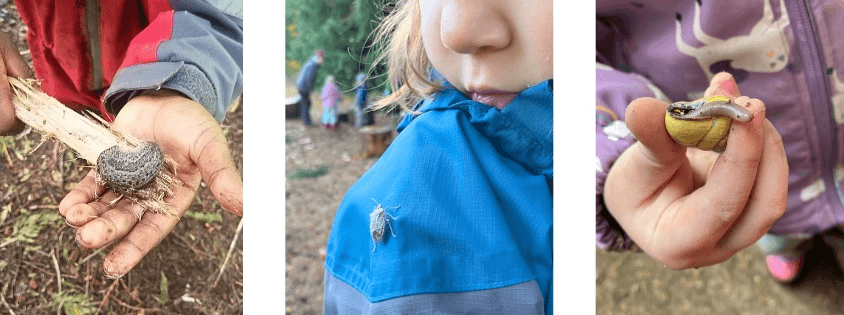
Figure 5. (From left to right): A small hand holding a snail; a child looking at bug on their jacket; a child holding a snail poking out from its shell. Photos courtesy of Nicole.