The Data Initiative for Environmental and Climate Action in California’s TK–12 Schools helps provide an understanding of the scale of California’s TK–12 education system, issues related to equity and need, and establishes baseline data for tracking and measuring indicators of progress on environmental and climate action in all of California’s TK–12 schools.

Visit the Data Initiative website to explore data focus areas related to scale, equity, and baseline data for tracking and measuring indicators of progress in environmental and climate action in California’s TK–12 school districts. The database also provides context on broader factors within municipal and county jurisdictions that may be considered barriers or opportunities to advancing progress.
Reports
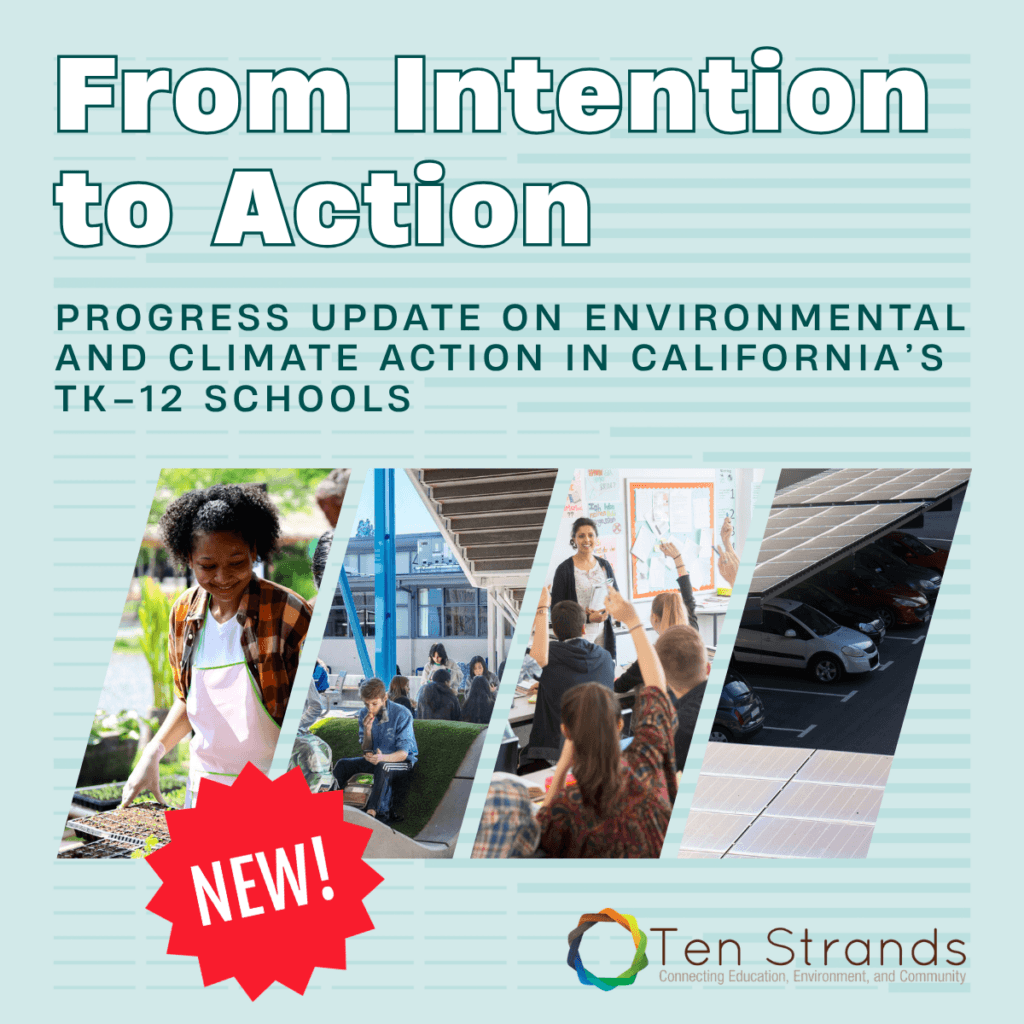
From Intention to Action: Progress Update on Environmental and Climate Action in California’s TK-12 Schools
Schools are at the heart of our communities — and critical to California’s ambitious environmental and climate goals. Especially as climate impacts such as extreme heat, flooding, and wildfires intensify.
Commitments to climate-ready facilities, environmental curriculum, green career pathways, and more have grown into a statewide movement. This led us to ask: How are districts making progress on those commitments?
This summary report highlights data and analysis across three critical areas — facilities, staffing, and funding — to reveal where our state is making progress and where gaps remain.
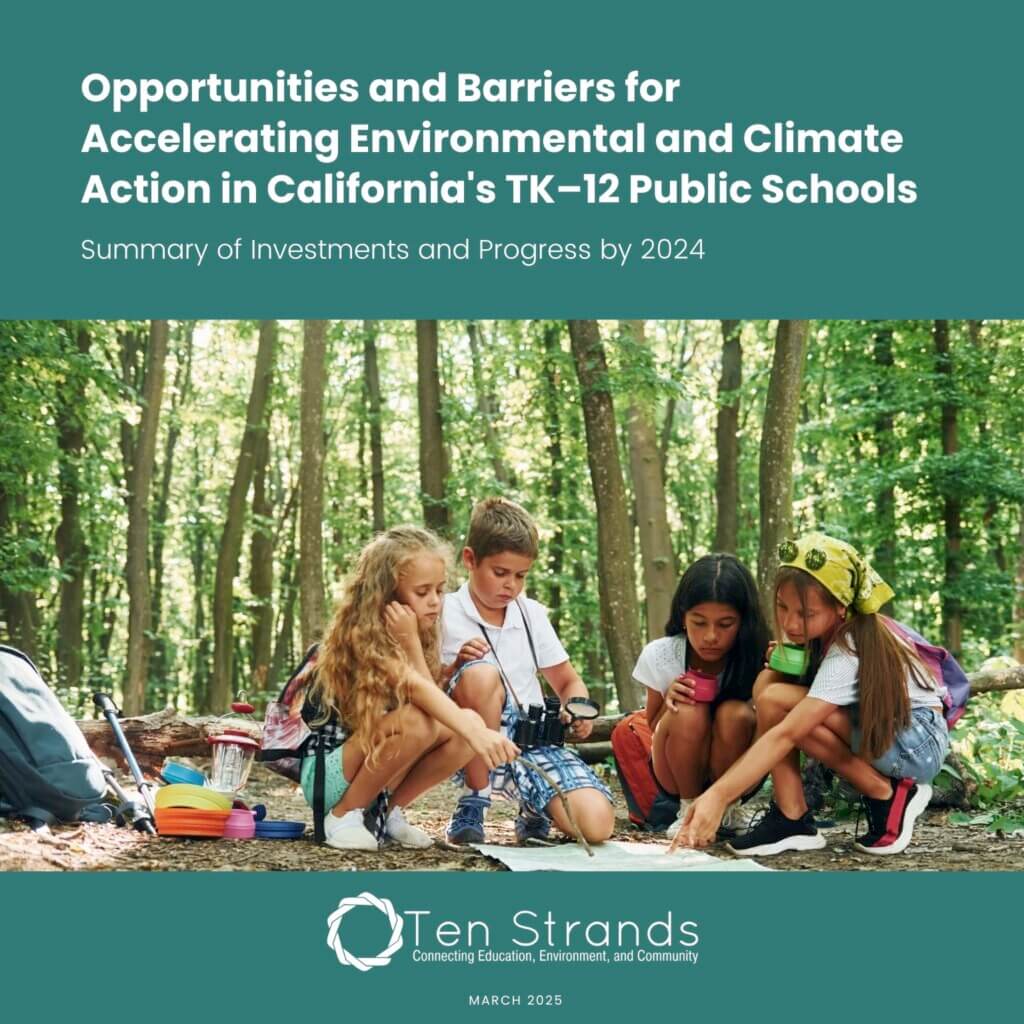
Opportunities and Barriers for Accelerating Environmental and Climate Action in California’s TK–12 Public Schools
This initiative and companion report provide educational leaders with interactive tools to visualize data on scale, equity, context, and progress in environmental and climate action across campus, curriculum, community, and culture. It supports data-informed decisions to advance climate action in California’s TK–12 schools.
Read the Executive Summary
Ten Strands hosted two webinars to unveil the statewide report. Participants explored key findings and learned how to apply them at both broad and local levels, using interactive tools and data-driven insights to advance environmental and climate action in school communities.
Watch the recordings:
• Broad-scale action: How educational leaders can use the report to catalyze county, regional, and statewide efforts.
• Local action: How students, teachers, and community partners can apply the findings to drive change at the local level.
County Investment Broader Context Data Report
This project examines how investing in dedicated environmental staff influences a school district’s ability to drive and sustain environmental and climate action initiatives across facilities, curriculum, and school culture. The analysis will provide insights for state and local decision-makers on the importance of staff capacity in advancing and sustaining environmental and climate action in schools.

How the Data Initiative Is Being Utilized
The Data Initiative is informing decision-making, policy change, early implementation pilot projects, and creating cohesion across statewide networks. Our intent is to catalyze and strengthen investments in school communities’ environmental and climate initiatives, from the grassroots level upward. The initiative is being used in a number of strategic ways, including but not limited to:
- Statewide Analysis: The data supports research, policy, and advocacy efforts by providing patterns and trends of action and inaction. It shows the extent to which action is taking place in regions with populations that are most marginalized or experiencing the highest levels of environmental injustice. The Data Initiative also provides vital information about supportive context indicators that may be critical for catalyzing and institutionalizing environmental change. Additionally, it can be used to analyze where strategic investments can be made to spur environmental action at schools and beyond.
- Local Implementation: The data included in this project are also useful for local implementation. They help identify entry points to further engage school communities in environmental and climate action and can highlight potential regional partnerships.
The Data Initiative is also being used by Ten Strands and other partners to identify where technical assistance and support services can be enhanced to support districts and county agencies.
Current Data Initiative Projects
With the baseline data established, the Data Initiative is positioned to focus on a variety of projects that continue our efforts to expand and deepen its impact. See an overview of some current projects in the accordion below.
CalRecycle Partnership: District Data Expansion and School Site Data
In partnership with CalRecycle, Ten Strands is gathering and analyzing data on how districts and a representative sample of school sites across California are advancing environmental and climate action through programs, initiatives, and policies. The project will produce an interactive dashboard with expanded district-level indicators and an analysis of the representative sample of school sites. It will also include a report showcasing progress, highlighting case studies, and offering recommendations to strengthen the state’s environmental education strategy and support equitable outcomes for all schools.
County Investment Broader Context Data Report
This project examines how investing in dedicated environmental staff influences a school district’s ability to drive and sustain environmental and climate action initiatives across facilities, curriculum, and school culture. The analysis will provide insights for state and local decision-makers on the importance of staff capacity in advancing and sustaining environmental and climate action in schools.
Analysis of Green CTE Opportunities in California High Schools
This project analyzes Career Technical Education (CTE) programs across California to identify where sustainability and green career pathways are available—and where gaps exist. The findings will provide valuable insights for educators, policymakers, and partners to expand equitable access to green career opportunities and prepare students for California’s growing green economy.
Sustainability and Climate Resilience in California District Facilities Master Plans
This project evaluates the quality of school district facilities master plans across California, with a focus on climate resilience and equitable investment. By analyzing more than 300 plans and statewide data, the research will identify trends, highlight best practices, and provide recommendations to strengthen school facility planning for a more sustainable and resilient future.