It was a rare sunny winter day in Seattle when I visited a neighborhood playground with a child and their parent. This family wanted their child to be able to play outside with their sibling and friends. As a pediatric physical therapist (PT), I had the privilege of working with them to meet their goals in their natural environment, which in this case meant in their home as well as and outdoors in their neighborhood and local playground.
We started exploring the outdoors, with a focus on independent mobility. I quickly realized how challenging it was for this four-year-old child with a disability to access their environment. Many curbs did not have cuts for a stroller or mobility device. When we got to the playground, wood chips limited the child from getting to the play equipment. It was even challenging for me, as a nondisabled adult, to access the climbing structure, let alone lift the child and attempt to support their play and interaction.
This was the first of many disabled children and families that I would collaborate with, learn from, and provide care to. These experiences taught me about the lack of access and equity in nature for children with disabilities and ignited my passion for improving it.
Children with Disabilities Especially Benefit From the Outdoors
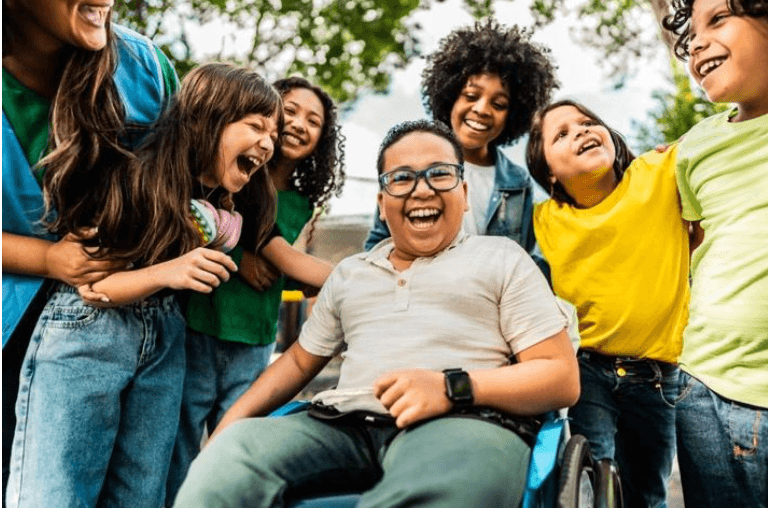
Spending time outdoors and being physically active supports numerous health benefits, especially for disabled children and their families (who may also identify as disabled). Physical therapists play a key role in promoting these outcomes during their sessions and more broadly. All children—disabled and nondisabled—benefit from 1.5 to 3 hours outdoors each day, with more time linked to better health.
As described by Dr. Pooja Tandon and Dr. Danette Glassy in Digging into Nature: Outdoor Adventures for Happier and Healthier Kids, nature contact increases physical activity, reduces obesity and associated health condition risk, improves stress regulation, supports sensory development, and strengthens social relationships for all kids, all of which are especially critical for children with disabilities. Increased outdoor time and physical activity also improve focus, memory, and learning, creating a better classroom environment for both children and educators. Because many children lack safe outdoor access outside of school, schools can make a difference by providing at least 1 to 1.5 hours of outdoor time during the school day, broken into short “outdoor snacks” of 10 to 30 minutes.
Because many disabled children experience challenges processing visual, auditory, proprioceptive (knowing where their body is in space), and tactile information, nature offers rich opportunities to support sensory integration. Engaging in nature also leads to improvements in self-esteem, self-determination, emotional and physical well-being, social interaction, and mobility, all things that I observed and heard from family reports. However, I still notice and hear about persistent barriers that limit many children’s ability to fully benefit from outdoor spaces: physical access, environmental design, and societal attitudes towards children with disabilities.
How Access, Design, and Attitudes Shape Belonging in the Outdoors
My experiences with two specific children highlight these sticking points. At a neighborhood playground, I saw a preschool-aged child sitting in their wheelchair on woodchips next to a play structure, while other children ran around them playing and laughing. At the same park, a toddler with Down syndrome I was working with was no longer challenged by the available equipment. It was eye-opening to me that this outdoor space, which was considered compliant with the Americans with Disabilities Act (ADA) because it had a ramp leading to the woodchip area, was still not inclusive of two unique disabled children. The ADA provides protection and assurance that public physical spaces are accessible; these experiences made it clear that compliance did not equal inclusion.
Additional global and federal laws are designed to protect the rights of children in general and disabled children in particular. As a physical therapist with experience in educational settings, I am familiar with the Individuals with Disabilities in Education Act (IDEA) and Section 504 of Rehabilitation Act of 1973. These laws require that students with disabilities have access to public education programs, reasonable accommodations, and accessible facilities. This may include an Individualized Education Plan (IEP) or 504 Plan, and physical and/or occupational therapy to support a student’s educational goals. The United Nations Convention on the Rights of the Child and on the Rights of Persons with Disabilities were developed to ensure that people with disabilities are respected, protected, cared for, and given equal opportunities globally. However, funding, support, and enforcement of these policies and regulations is diminishing, which made me wonder: Who is upholding these standards to ensure our outdoor spaces, programs, and classrooms are welcoming and inclusive of disabled children?
I wanted to be part of the solution. So, working closely with our local community and centering the voices of people from underrepresented groups, particularly those with disabilities, the parent of the toddler with Down syndrome and I worked to renovate that same outdated neighborhood park that no longer met their needs. During the more than six years it took to renovate Pathways Park in Seattle, over one thousand community members and stakeholders provided ongoing input into the design of the space. Common themes emerged: 1) accessibility means having variety, moving away from a “one-size fits all” approach; 2) the ADA is the bare minimum and does not meet all accessibility needs; and 3) gathering spaces, pathways and equipment where everyone is included in the fun, not just alongside it, is important.
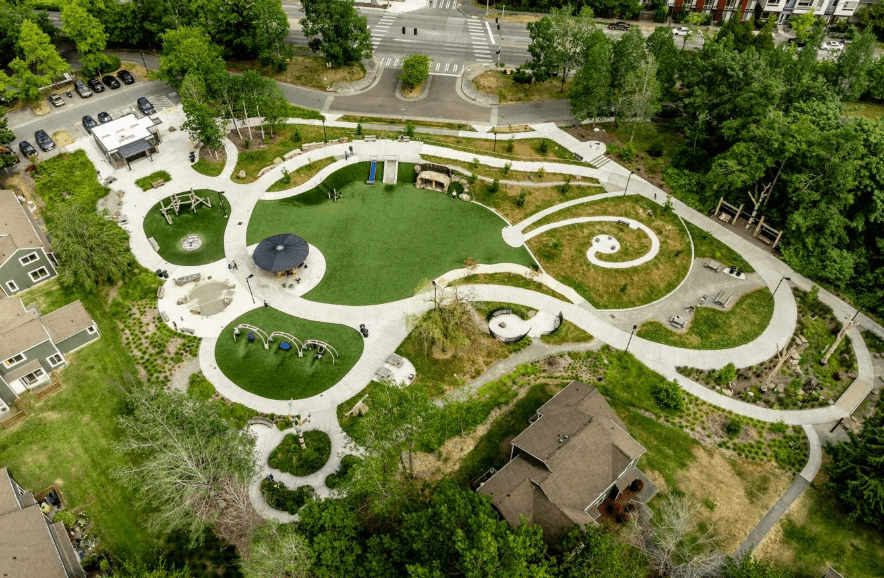
Site Workshop, the landscape architects for Pathways Park, turned our community’s feedback into design choices that made inclusion visible and tangible by including:
- wide accessible pathways
- a variety of heights of tables, garden beds, play spaces/surfaces, and chairs
- active and quiet play areas for all abilities and ages
- rich sensory experiences
- all-gender accessible bathrooms with child- and adult-sized changing tables
- circular seating areas, with space for wheelchairs
- color, texture, and lighting contrast
- multimodal, multilingual signage using symbols, images, and Braille
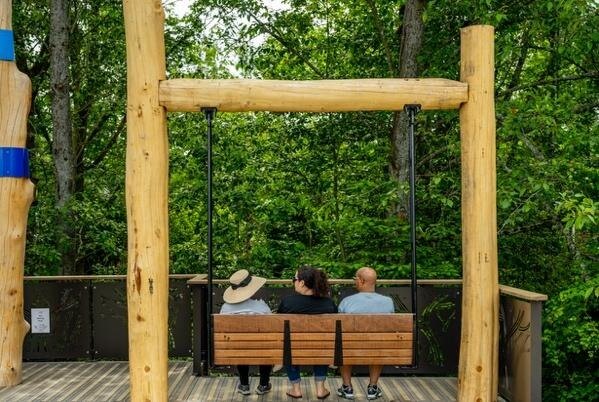
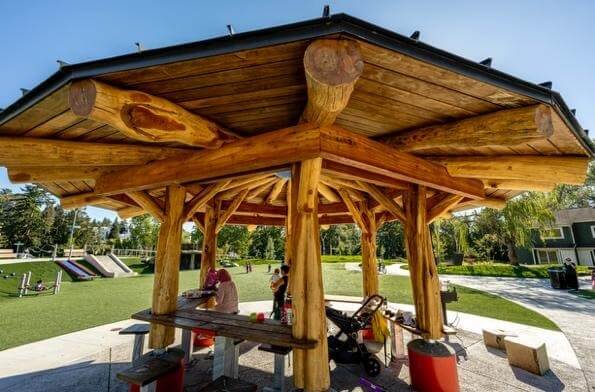
Gathering Areas at Pathways Park: porch swing overlooking ravine and covered wooden circular gazebo area with areas to sit and stand. Photo Credit: Stuart Isett
These same features can be integrated into school outdoor areas. Alongside the park renovation, I collaborated in the adaptation of an outdoor summer camp to increase physical activity for disabled children, and helped organize a family fair highlighting local adaptive outdoor programs. Families say programs and spaces feel welcoming when disability is viewed positively and teams are knowledgeable, confident, and well trained to support disabled children. Through focus groups involving people of all ages, abilities and identities, we learned that having ongoing conversations with people whose experiences are different from our own builds a sense of belonging. For educators, inclusion begins by listening to disabled children and responding to their individual needs.
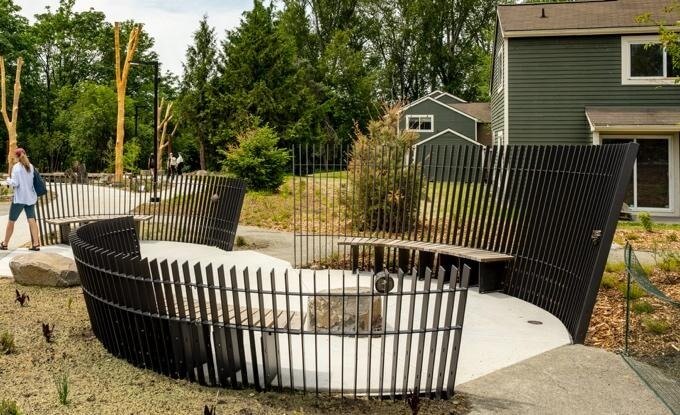
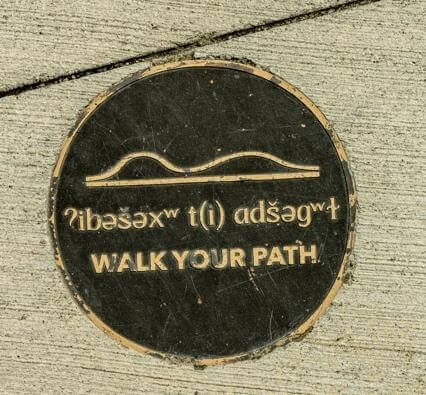
Gathering Areas at Pathways Park: circular nest seating area with space for wheelchairs and inclusive signage. Photo Credit: Stuart Isett
Communities Thrive When Everyone is Included
Nearly 20 percent of children in the United States have a disability or health condition—a number that continues to rise. Physical therapists can advocate for funding that provides expanded nature access, adaptive equipment, and support for the disability community. In my personal experience with the renovation of Pathways Park, interdisciplinary collaboration among disabled children and their families, urban planners, landscape architects, educators, healthcare providers, policy makers, and funders is essential for this work. The California Campaign for Outdoor Learning is another example of such collaboration focused on equitable outdoor access for all children.
Additional ways to take action include the following:
- Include disabled people and their families in the co-design of accessible outdoor and school spaces, programs, nature-based curriculum, bathrooms, campaigns, and policies.
- Build partnerships with disability communities, rehabilitation professionals, healthcare providers, and educators caring for children with disabilities.
- Provide ongoing training for educators and school staff on disability, inclusive practices, outdoor accessibility, and adaptive equipment.
- Help revise educator licensing standards to better reflect disability inclusion (e.g., provide feedback on the Natural Start Alliance’s Recommendations for Licensing Outdoor, Nature-Based Early Learning and Childcare Programs by March 20, 2026)
- Use inclusive language when writing policies, including “disabled” and “non-disabled.”
- Advocate for funding to support programs, staffing, training, assistive technology, outdoor weather-appropriate clothing, and rentals.
- Commit to disability justice through ongoing evaluation of spaces, policies, and programs, and continued advocacy for disability rights.
At a recent visit to Pathways Park, a parent of a nondisabled child told me that their child said: “I wish I was in a wheelchair because that kid [using a wheelchair] is having so much fun.” Another parent of a disabled child said, “We’ve never felt more welcomed in an outdoor space.” These moments reflect what I’ve learned: When we make outdoor spaces inclusive of and accessible to all children, the diversity of our communities is strengthened, and everyone thrives together.
Additional resources:
- Child and Nature Alliance of Canada Podcast: Disabled people share their perspectives about inclusion in the outdoors in several episodes
- Children and Nature Network
- Natural Start Alliance
- 2025 Position Statement on Active Outdoor Play from Outdoor Play Canada
- SPROUT-Able: Modules and resources to support children with disabilities in nature and outdoor play
- TED Talks by disabled individuals:
- Amy Oulton: Changing the way we talk about disability
- Jane Velkovski: The life-changing power of assistive technologies
- Joel Dembe: Let’s change the way we think about disability
- Judith Heumann: Our fight for disability rights and why we’re not done yet
- Karen Gaffney: I have one more chromosome than you. So what?
- Leroy Moore: ABILITY Magazine’s Thought Leaders Series
- Dr. Oluwaferanmi Okanlami: Identity and inclusion during COVID-19
- Stella Young: I’m not your inspiration, thank you very much
- Yasmin Sheikh: Disability does not mean inability

One Response
Thanks for this great article, Shawn. It helps us to think through how to ensure this important aspect of inclusiveness in the California Campaign for Outdoor Learning. Your suggestions for taking action and the resources you have provided are so helpful!