
I’m a naturally competitive person. Whether it’s sports, business, or anything else, nothing brings out my competitive streak like an uneven playing field.
Early in my education career, I worked with two groups: the students in my school day classes who came from the inner cities, and the students who went to private school that I took on outdoor adventures like rock climbing and white water rafting during my summers off. I loved the outdoor adventure work, but it was hard to ignore that uneven playing field—the gap between the experiential education each group had access to. I saw firsthand how transformational outdoor experiences could be, and I wanted that transformation for all students. The realization that access was the main challenge—and my competitive desire to level the playing field—spawned a business idea.
I believe all young people deserve to sleep under the stars, to learn in nature’s classroom, and to have the chance to explore, take risks, and discover their capabilities. My business partner and I decided to combine afterschool programming with outdoor education and adventure to form a new company called Arc Experience. Our goal was to address the opportunity gap in education by offering quality outdoor enrichment programs for underserved youth. Our stated mission was to “create transformational learning opportunities that empower youth to realize their full potential.”

In many afterschool programs, especially here in California, we simply do not have enough indoor space to accommodate all the students we serve, so we go outside. We run activities on blacktops, fields, and playgrounds. We take walks, build gardens, and create outdoor learning environments wherever we can. We are also fortunate to have weather that allows us to do this year-round. What starts as a practical solution quickly becomes something more meaningful.
We design programs that intentionally bring outdoor learning into students’ daily experience. That might look like biking programs, geocaching, obstacle courses, plant identification, or simple exploration of nature on campus. These experiences don’t necessarily require transportation or large budgets.
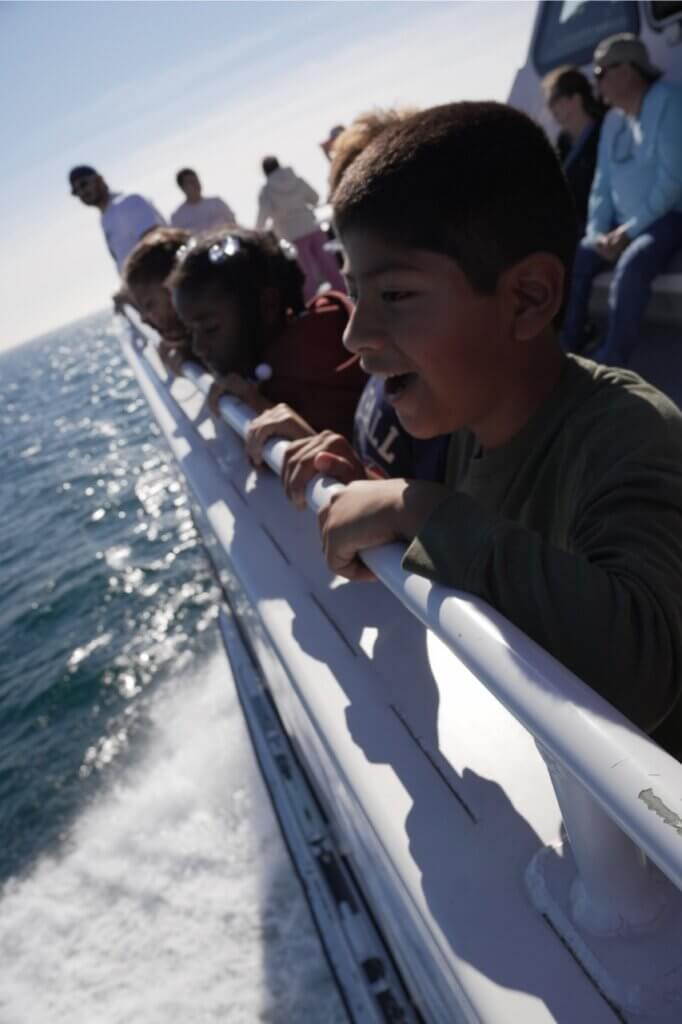
While we design experiences that take place on campus, we also design opportunities for students to go beyond their campuses and experience new environments. One of the most rewarding parts of this work is witnessing “firsts,” such as a young person’s first time seeing the ocean, first time in the snow, first time hiking, climbing, or being outside in a new way. Sometimes it is even a first for our staff, which can be a deeply meaningful shared experience that matters.
At Arc, we think about adults as co-players, not just instructors. Students see staff learning, laughing, and trying things alongside them. It creates an environment where growth feels possible and safe. Representation matters as much as exposure. We’ve been intentional about staffing our teams with people who come from the communities we serve, not just demographically but in lived experience. Many of our staff are experiencing these activities for the first time alongside students. That changes the dynamic and reinforces the idea that the outdoors is not reserved for a select group of people. The outdoors is for everyone.
Moments outdoors build confidence in a way that is hard to replicate anywhere else. We talk about “challenge by choice,” where students are encouraged to try new things but are not forced. Over time, students who engage in these challenges build real confidence. Students start to trust themselves, take educational risks, and believe they are capable of more. Outdoor learning also creates natural opportunities for leadership. When students work together across grade levels to solve problems and support one another, they develop skills that extend far beyond any single activity. Outdoor learning also creates space for students who may not always feel rewarded in traditional academic settings. The outdoors becomes an access point.
At Arc, we’re not trying to turn every student into a rock climber or a kayaker. What we’re trying to do is help students experience what is possible. We want to provide access to experiences they may not have known were available. We want students to build confidence, generate questions and feel a sense of belonging as they begin a journey of environmental literacy. Outdoor education creates such opportunities in ways that are immediate and lasting. One of the ways we open up possibilities for kids is by integrating outdoor learning across disciplines. For example, a camping trip might include an art project where students paint what they see around them. A cooking activity might use ingredients students have grown or identified and picked themselves. Outdoor learning deepens a young person’s relationship to their environment by building awareness, sparking curiosity, and reinforcing a sense of stewardship.
After more than two decades in this work, one thing continues to stand out for me personally. Students do not just learn from what we tell them. They learn from what they experience themselves. Sometimes it starts with a student standing at the edge of the ocean for the first time, realizing they belong there.

One Response
Thank you, Brad. Your work at the intersections of expanded learning, outdoor learning, equity and justice is an inspiration. I hope more expanded learning organizations will move outdoors, and more outdoor learning organizations will move into expanded learning!