Spotlight on the California STEAM Hub Network
Connecting Educators. Inspiring Innovation. Expanding Opportunities.
Across California, educators and community partners are coming together through the California STEAM Hub Initiative to strengthen learning opportunities in science, technology, engineering, arts, and mathematics (STEAM). This statewide network supports expanded learning and educational programs by building the skills, resources, and partnerships needed to create engaging, hands-on learning experiences for students. These efforts intentionally center culturally responsive and sustaining practices, ensuring that STEAM learning reflects the diverse identities, lived experiences, and community knowledge of California’s students.
Regional STEAM Hubs serve as collaborative centers where expanded learning educators, program leaders, and community partners connect to share ideas, build capacity, and explore innovative approaches to teaching and learning. Through professional development, communities of practice, and technical assistance, the network empowers educators to design meaningful STEAM experiences that spark curiosity, creativity, and critical thinking.
Expanded learning programs play a vital role in bringing STEAM to life. Afterschool, intersession, and summer programs provide students with opportunities to experiment, explore, and solve real-world problems in ways that complement classroom learning. These spaces also elevate student voice and choice, allowing young people to explore STEAM through topics that are meaningful within their cultures, communities, and everyday lives. Through the support of the California STEAM Hub Initiative, expanded learning educators gain access to tools, strategies, and collaborative spaces that strengthen program quality and student engagement.
Equity remains at the heart of the network’s mission. By expanding access to high-quality STEAM opportunities—particularly for historically underserved communities, including multilingual learners, rural students, and communities disproportionately impacted by environmental and economic inequities—the California STEAM Hub Network is helping ensure that all students have the opportunity to discover their passions and build skills for future success.
As the demand for innovation and problem-solving continues to grow, the California STEAM Hub Initiative stands as a powerful example of how collaboration and shared learning can transform education and create brighter futures for students across the state.
Region 6 STEAM Hub Professional Learning
The Region 6 STEAM Hub for Expanded Learning has a history of providing environmental literacy and outdoor education programs, including dynamic professional learning experiences for educators across the region. Through the San Joaquin and Stanislaus County Offices of Education, participants have access to three unique outdoor education centers—Durham Ferry Outdoor Education Center, Foothill Horizons Outdoor School and Summer Camp, and Sky Mountain Outdoor Education Center—each providing immersive, hands-on learning opportunities.Over the past several years, these sites have welcomed expanded learning site leads, coordinators, and direct service providers to engage in outdoor experiences.
- Durham Ferry Outdoor Education Center, located along the San Joaquin River just south of Manteca, features miles of hiking trails, seasonal ponds, oak woodlands, picnic areas, a working farm, and more than 80 acres of vibrant riparian ecosystem.
- Foothill Horizons is a California Outdoor School Association (COSA) certified residential outdoor school, summer camp, and site rental facility. Participants enjoy their time in nature, connect with one another, and have the experience of a lifetime amidst the 143 acres of forest in the foothills of the central Sierra.
- Sky Mountain Outdoor Education Center, nestled in Placer County, offers a contrasting mountain environment across 62 acres of conifer forest. Surrounded by lands managed by CAL FIRE, the U.S. Forest Service, and PG&E, the site provides an immersive residential outdoor education experience. Visitors stay in cabin accommodations, enjoy meals in a lakeside lodge, and explore the natural beauty of the Lake Valley Reservoir area.
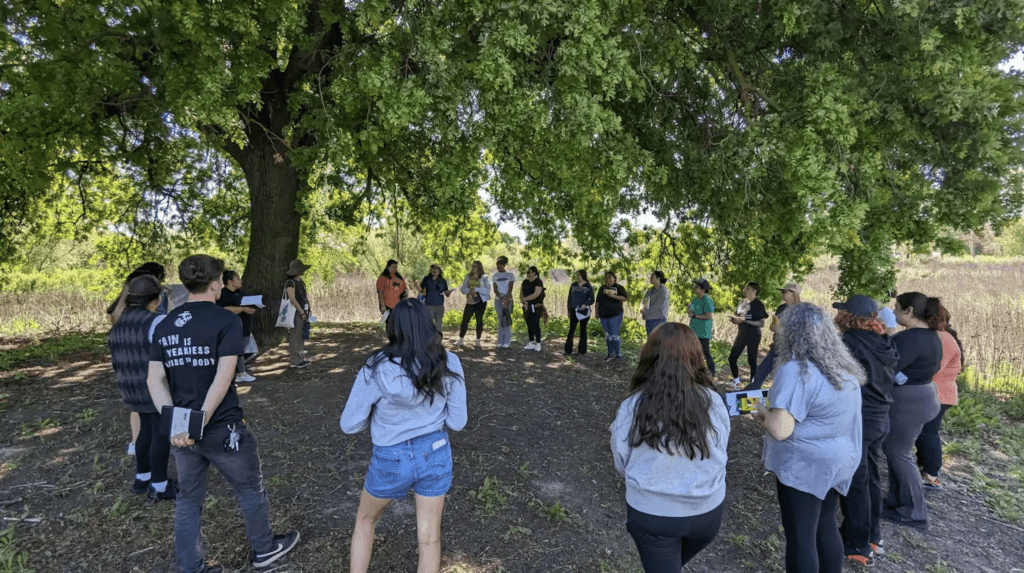
Professional learning topics span a wide range of environmental literacy and STEAM-focused experiences, including nature journaling, biomimicry, guided nature hikes, and hands-on STEM and robotics applications connected to agriculture, energy, and natural resources. These experiences are designed with an equity lens, supporting educators in differentiating instruction, integrating Universal Design for Learning, and creating inclusive environments where all students can fully participate and thrive, regardless of ability, language, or background. Together, these offerings support educators in bringing meaningful, place-based learning to life for students—both inside and outside the classroom.
Cultivating Growth: Region 6 Champions Outdoor Education
Region 6 is proving that the best classrooms don’t always have four walls. Across the region, innovative programs are redefining outdoor education, and a recent collaboration is setting a high bar for what’s possible when community partners team up.
A Day of Discovery
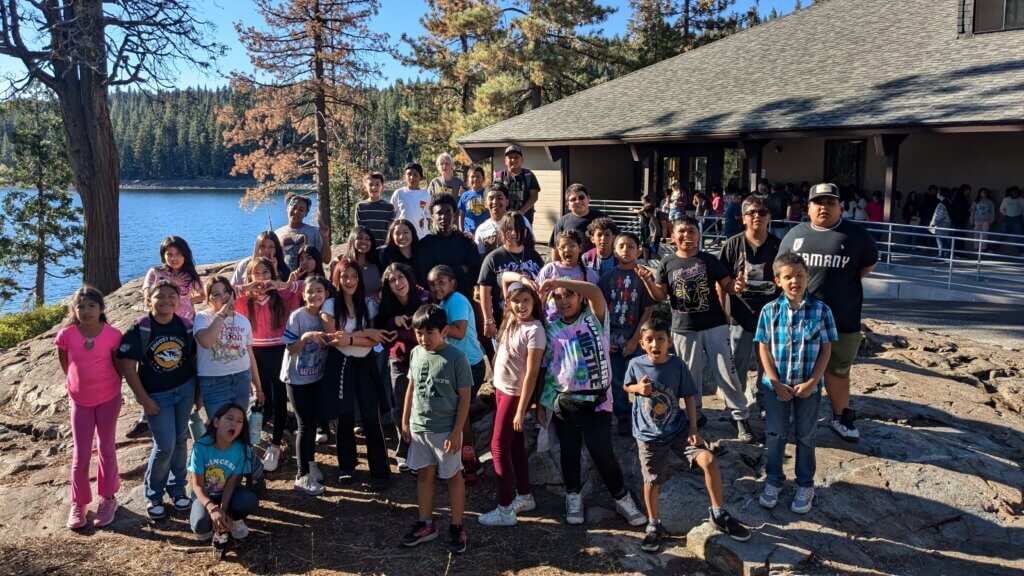
Manteca Unified School District’s Expanded Learning Opportunities Program (ELOP) and community partner Give Every Child a Chance recently hosted a comprehensive professional development day dedicated to expanded learning. Site leads and coordinators from more than 20 district sites gathered for a hands-on immersion into the natural world, with a focus on inclusive facilitation strategies that ensure all students can access and engage in outdoor learning experiences. The day was facilitated by the San Joaquin County Office of Education STEM Workforce Development and Innovation team.
The session wasn’t just about theory—it was about experience. “The SJCOE STEM Workforce Development and Innovation Team provided a learning experience that was both fun and highly engaging for our staff. Our team walked away energized and equipped with practical tools and strategies to strengthen outdoor education across our programs. The training not only built confidence for our site leads and direct service providers, but also expanded their capacity to create meaningful, hands-on outdoor learning experiences for students,” stated Oscar Munguia Jr, Coordinator of Expanded Learning for Manteca Unified School District. Educators rotated through three distinct modules designed to spark curiosity while centering inclusive and culturally relevant practices:
- Earthworm Investigations: A deep dive into the “engineers of the soil” and their vital role in our ecosystem.
- Dendrochronology & Design: An interdisciplinary look at tree rings, blending the science of a tree’s history with artistic expression.
- Literacy in the Wild: A creative connection to Just Ask! by Sonia Sotomayor, bridging social-emotional learning with outdoor exploration while highlighting themes of identity, ability, and empathy.
Each module intentionally integrated cross-disciplinary connections and opportunities for students to see themselves reflected in the content, whether through storytelling, scientific inquiry, or creative expression.
Equipping the Experts
To ensure these lessons reached the classroom, every site was provided with specialized kits containing all the necessary materials to replicate these activities with their students. Kits were designed with adaptability in mind, including strategies for multilingual learners, students with diverse learning needs, and flexible implementation across a variety of program settings.
The momentum hasn’t stopped with a single workshop. Site leads are committed to meeting monthly to debrief their experiences, share student successes, and refine their teaching strategies—continuing to build a community of practice grounded in equity and continuous improvement.
Looking Toward the Future
The success of this professional development model has been so immediate that preliminary plans are already in motion to expand the initiative for the 2026–2027 school year. By investing in educators’ connection to nature, Region 6 is ensuring that the next generation of learners grows up with a rooted appreciation for the world around them.This vision also makes youth empowerment a priority, ensuring that students not only learn about the natural world but also see themselves as active contributors and problem-solvers in their communities.


One Response
I am curious about any funding available to support schools that serve a low-income population or are located in a rural area to support them attending centers that provide outdoor education. I am the Nature Education Coordinator for Jug Handle Creek Nature Center located on the Mendocino Coast. I’m noticing that most of the schools that are able to come stay and receive our outdoor nature education are either charter or private schools. Essentially schools that can afford to send their students to us. I would be grateful for any direction to funding that helps schools that aren’t as fortunate to provide this to their students.