When buses stopped running at the start of the pandemic in 2020, so did many of the connections between California’s public school students and their public lands. But for some, the connection was never fully broken—because the pathway had already gone digital. For over fifteen years, the California State Parks PORTS (Parks Online Resources for Teachers and Students)® Program has been building the infrastructure and relationships needed to bring state parks directly into classrooms through a suite of digital resources, including their flagship live, interactive video programs, available for free. So when the world shifted, PORTS was ready, providing a lifeline for students, teachers, and park staff to stay engaged in environmental learning.
Now, as we look toward the future of environmental literacy in California, we have the opportunity—and the responsibility—to scale those connections in innovative ways that are more equitable, more inclusive, and more aligned with the realities facing today’s public schools.
At the heart of this effort is a simple idea: Every student in California deserves meaningful access to nature and environmental learning, regardless of zip code, income level, or school resources. Through the availability of live virtual programs, together with a growing network of partners aligned with our innovative approach and renewed support for K–12 initiatives, California State Parks and its collaborators are working to make that vision a reality, working to build stronger bridges between teachers and park staff along the way.
PORTS, Blended Access, and Equity in Action
At its core, the PORTS Program was never just about the use of technology—it has always been about access. By combining high-quality environmental education with videoconferencing tools and state park staff expertise, PORTS created a model for how California’s 280 state parks could serve as virtual classrooms for millions of public school students, especially those in underserved communities.
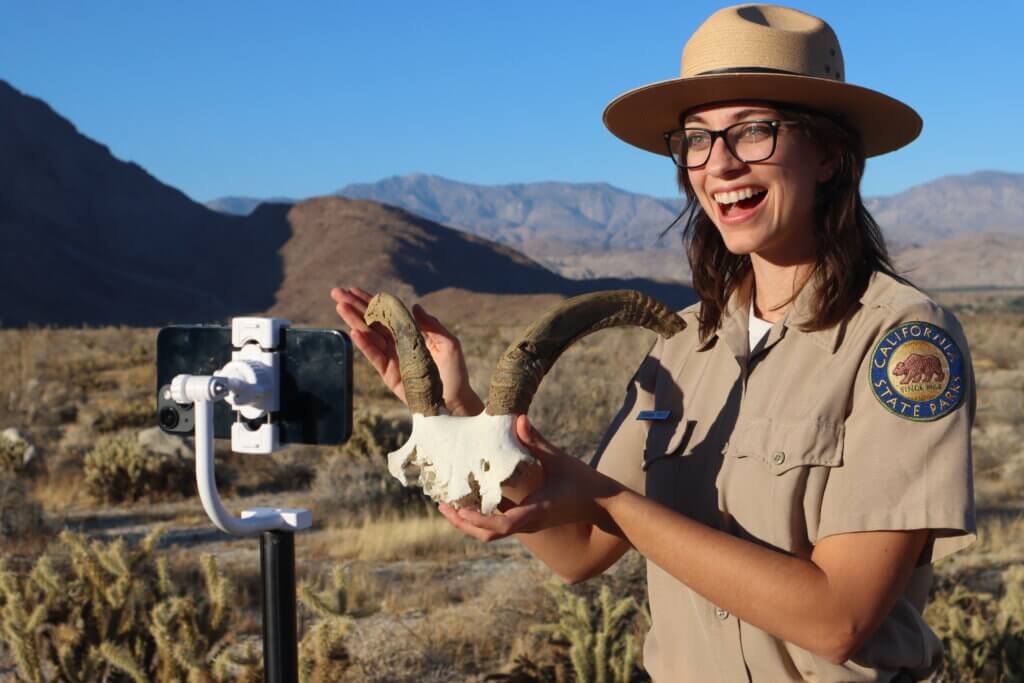
Today, California State Parks is embracing a blended-access model, with connection to the PORTS Program at its core. A student might begin by exploring the desert ecosystem of Anza-Borrego Desert State Park through a live, interactive video program delivered from a palm oasis, buzzing with life and sometimes visited by bighorn sheep. That same student might later visit that part of Anza-Borrego in person with their class, or they may apply what they’ve learned at a different park entirely—or perhaps never visit in person at all. What matters is that learning happens, and students see themselves in the experience.
Because PORTS serves as a low-barrier entry point—no cost, widely available, easy to access, and aligned with classroom curriculum—it has introduced many teachers and students to park-based learning for the first time, experienced through a screen. Likewise, many California State Parks staff have come to recognize the value of connecting before—and sometimes after—traditional field trips. This shift has sparked new ways of thinking about relationships, equity, and how learning takes place.
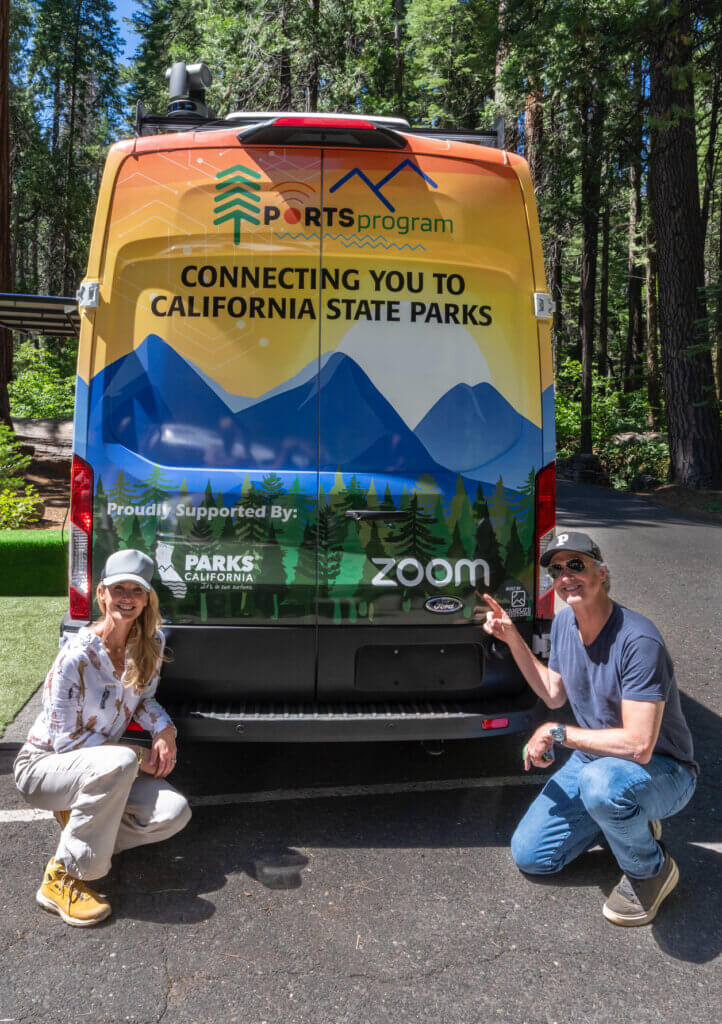
This approach has become an essential equity tool, leveling the playing field for schools that face logistical, financial, or geographic barriers to conducting traditional field trips. And with the introduction of the PORTS mobile outreach van, even schools that lack the technology experience for live programs can still engage—they can have a 21st-century school assembly, PORTS-style.
Fourth Grade Adventure Pass, Traditional Field Trips, and Rebuilding Relationships
While field trips are often held up as the gold standard of environmental learning, the truth is many students have never had that opportunity, and likely they never will unless we change our systems. California’s nearly six million public school students face barriers that make traditional access to parks—requiring buses, chaperones, entry fees, and staffing—impossible for far too many.
That’s why programs like the California State Parks Fourth Grade Adventure Pass, which offers free park access for every fourth grader and their family, are so essential. The pass serves as a welcoming introduction to California’s State Parks, jumpstarting a connection that encourages families to explore our state’s vast park system. By helping to remove at least one barrier, it sends a message that parks are for everyone. Still, providing the pass is only one step. Transportation, programming, and coordination remain persistent challenges, especially for families in under-resourced communities.
This is where relationships come into play. Over the last few years, the connection between the K–12 education system, non-profit partner organizations, and California State Parks has shifted and has sometimes been strained by changes in logistics, staffing, or competing operational demands. Now more than ever, it’s vitally important to strengthen relationships, broaden communication, and co-create meaningful experiences to overcome these obstacles and create opportunities for California’s public schools to engage with parks.
When schools and State Parks work in partnership—not only on the day of a field trip but also when working to create experiences that are culturally relevant, locally grounded, and connected to classroom learning—the results are transformative. In some cases, that may include in-person visits. In many others, immersive, classroom-based digital experiences may be the only realistic access point.
We must stop assuming that all students will make it on a field trip to the hallowed redwoods. What matters is that students see themselves in the stories, landscapes, and learning experiences that California’s parks can offer—whether experienced in person, online, or through a combination of both. That’s the model we’re building: one rooted in co-design, focused on relationships, and available in flexible formats that prioritize student identity, access, and relevance.

Seeds to Solutions™ and What’s Next
The future of environmental literacy in California lies not only in access but also in alignment.
One of the reasons PORTS resources continue to resonate in classrooms is that they evolve to meet the ever-changing landscape of K–12 public education. That’s why the emergence of the Seeds to Solutions model curriculum is so promising for California State Parks and its education partners. This fresh approach provides educators with tools that connect environmental issues, climate resilience, and cultural relevance directly to what students are expected to learn in K–12 classrooms. The curriculum is not just aligned with standards—it’s aligned with reality.
As California State Parks looks to the future, a set of resources like Seeds to Solutions offers a clear opportunity to co-develop programs and content to meet the needs of California’s diverse student population while also helping schools meet their academic goals. With these resources in hand, park staff, teachers, and administrators can speak the same language—one rooted in stewardship, equity, and student empowerment.
Most importantly, these experiences needn’t be abstract. California’s public lands are living classrooms where students can explore their own histories, ecosystems, and identities. From the tidepools of the Central Coast to the towering giant sequoias of Calaveras Big Trees, students have opportunities to learn about their world and also about their place in it.
This work also aligns powerfully with the goals of the California Outdoor Access for All initiative, championed by California First Partner Jennifer Siebel Newsom. This significant initiative recognizes that access to nature is not a luxury but a right. With timely support, California State Parks is well-positioned to meet students where they are, from whatever location or circumstances. From virtual programs and blended-access models to family passes and curriculum-aligned experiences, we’re transforming what access looks like in the 21st century.
We are incredibly fortunate in California to have such a robust and diverse state park system, one that reflects the complexity, beauty, and resilience of our state as a whole. Now is the time to ensure that all students, especially those in our public schools, have the opportunity to learn from, care for, and see themselves reflected in the richness offered by our state parks.
The seeds have been planted. The solutions are growing. Digital access is scalable and immediate. At the same time, we’re continuing to build place-based, in-person learning wherever possible. Let’s keep building the future—together.
If you are an educator, we encourage you to become a PORTS VIP (Very Informed PORTSfan) to be the first to find out about new programs and resources.
To find out more about the California State Parks Adventure Pass for fourth graders and their families, see the video at https://youtu.be/lRPwCjMRggg?si=aDrCcAsjwtY1JZK0.