California’s future requires an informed generation of young people who deeply understand how to balance the needs of their communities, local ecosystems, and our robust economy. Nowhere is this more true than in the Central Valley: home to nearly a quarter of the country’s food production, and where harvesting California’s groundwater has had a measurable and lasting effect on the land and the communities who depend on it.
This summer, about 30 educators experienced that challenge from an entirely new perspective: not just as teachers, but as students first. Hosted by Amy Frame, Director of the Sequoia Environmental Education Directive (SEED) in partnership with Ten Strands, the three-day Summer Institute immersed educators in the Grade 7 Seeds to Solutions® groundwater unit.
Along the way, they uncovered more than the science behind groundwater and land subsidence; they experienced a model for climate literacy built on curiosity, local relevance, and hope. Here are five key lessons participants took away.
1. Start with curiosity, not answers.
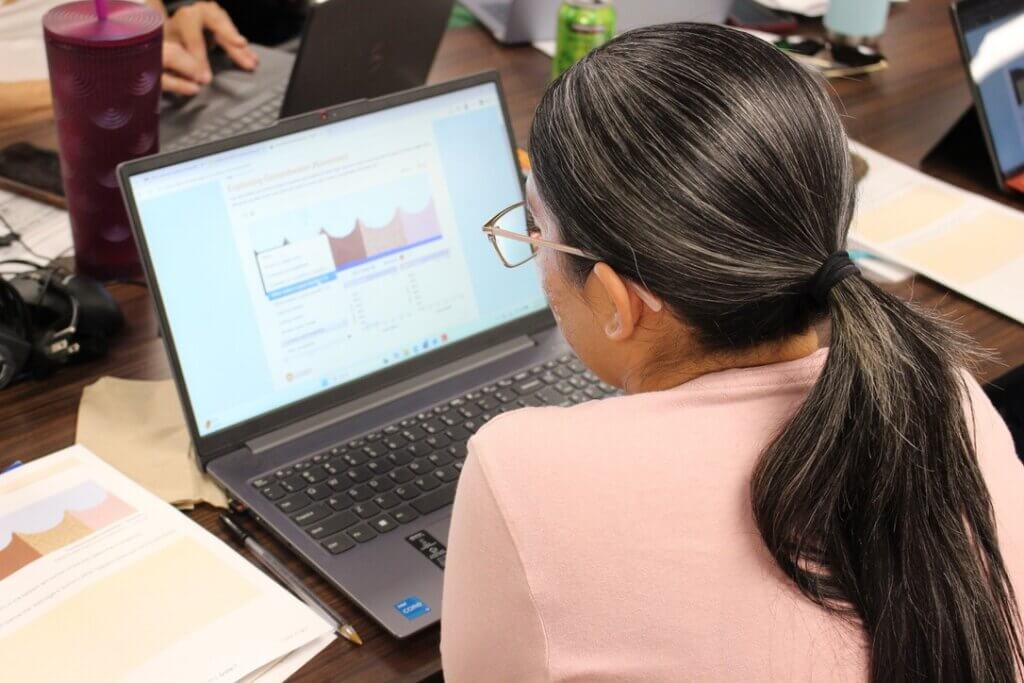
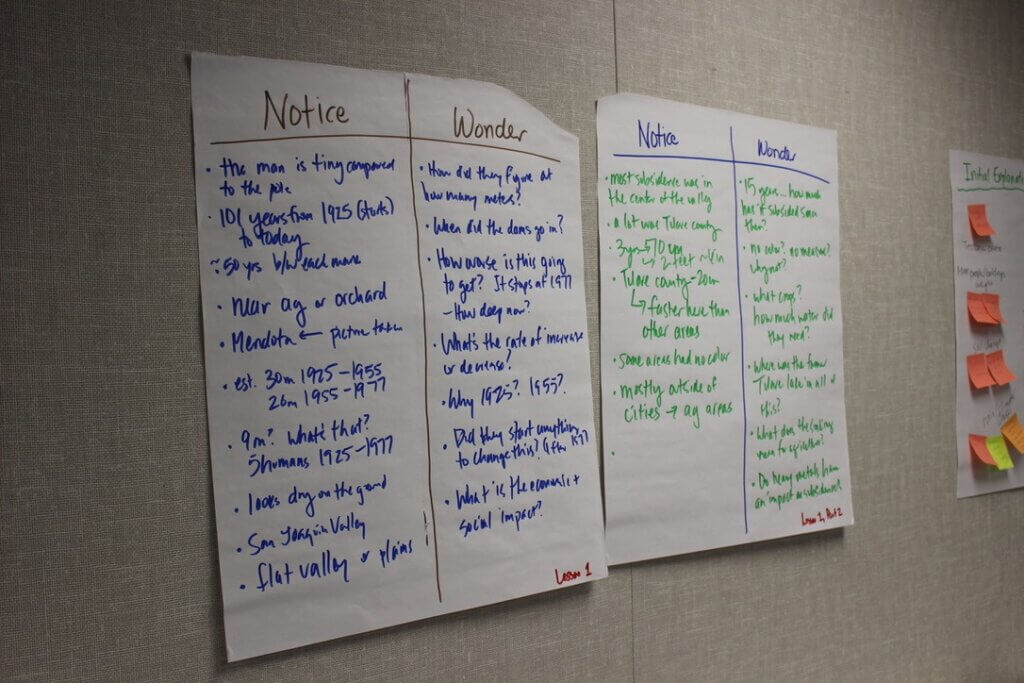
Rather than starting with lectures explaining subsidence, educators experienced the seventh-grade Seeds to Solutions unit as students would. After observing historic photos and satellite imagery, they noticed and wondered, concluding that some areas within the Central Valley have subsided by up to nine meters (about 30 feet) since the 1920s.
Working from questions captured in the class’ driving question board, educators explored primary source documents, maps, and data. These investigations helped them to uncover the connections between Indigenous stewardship, colonization, groundwater pumping, agricultural development, and the changing landscape of today’s Central Valley.
One teacher, while reflecting on the interdisciplinary nature of the approach, shared, “I enjoyed the opportunity to interact with the curriculum components from a student view. The curriculum touched on various disciplines and connected back to the science behind the situations and solutions taking place today.”
2. When possible, bring science to life by leaving the classroom.
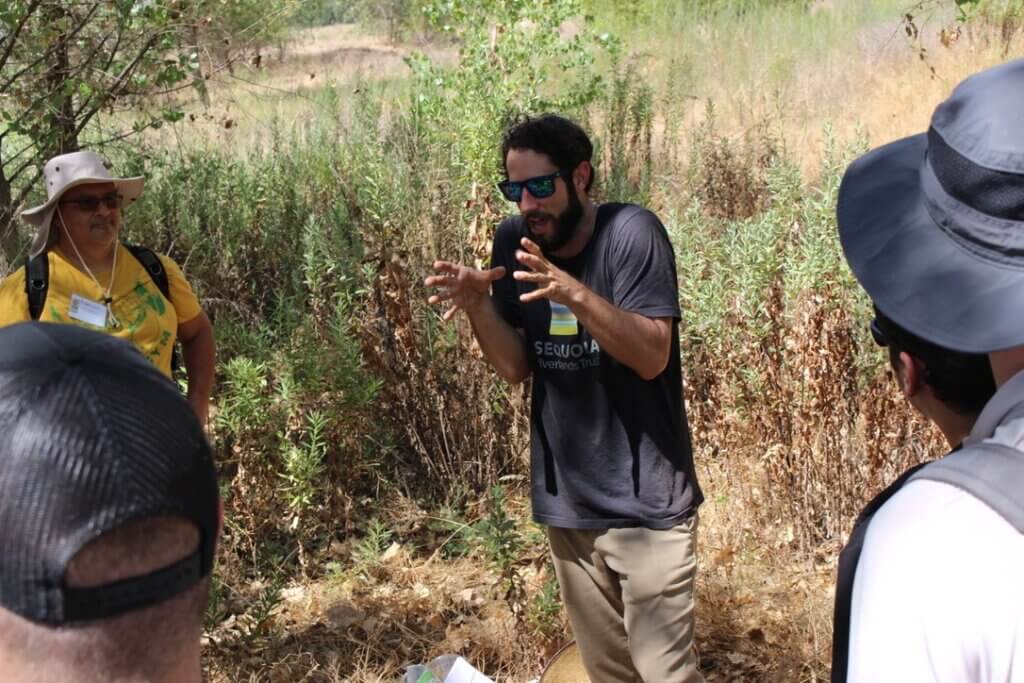
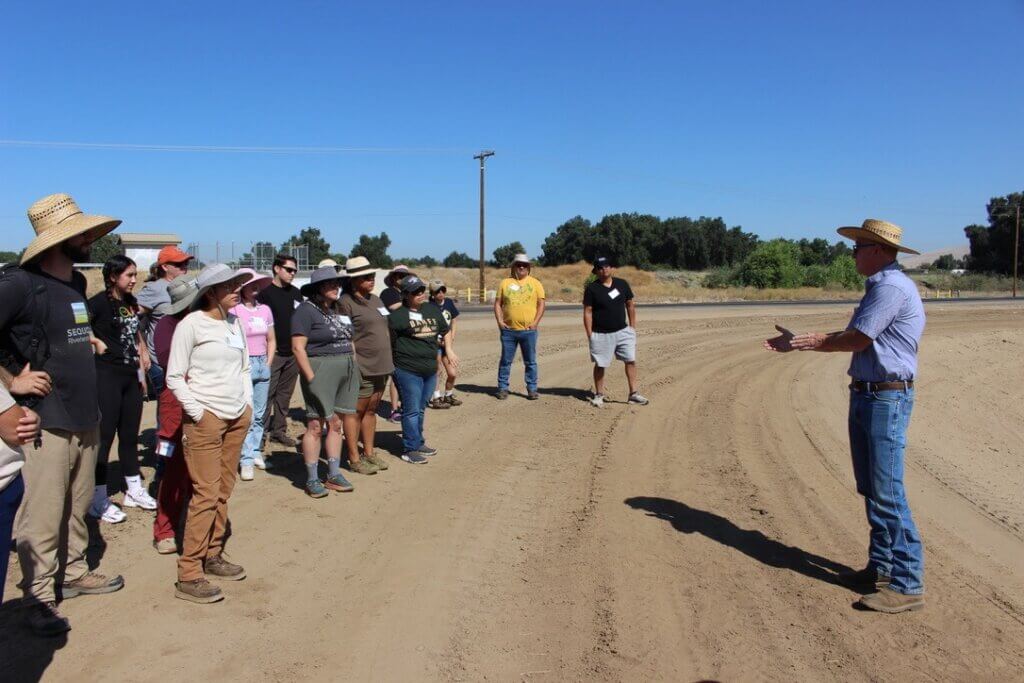
On the bright, sunny morning of day two, participants boarded a bus to visit a local basin built by the Kaweah Delta Water Conservation District before continuing to Kaweah Oaks Preserve. Here, the land became the classroom.
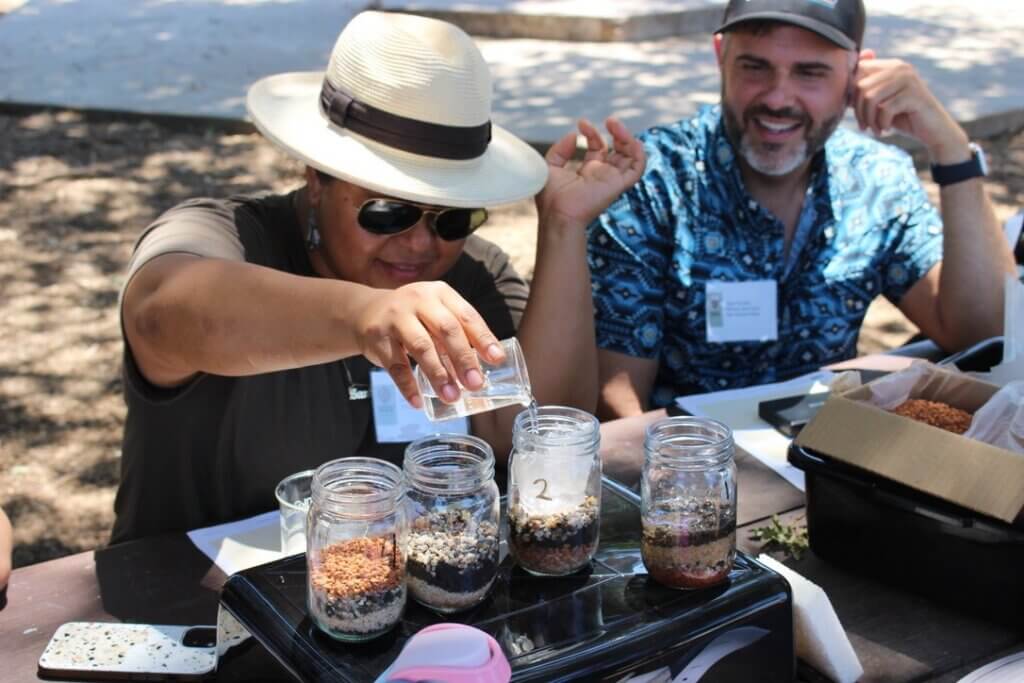
Despite triple-digit temperatures, educators participated in hands-on investigations as they explored aquifer inflow and outflow and discussed the difference between snowpack and rainwater. They observed these concepts in action and saw firsthand how landscapes can both replenish aquifers and support local wildlife.
For many participants, the experience transformed familiar places in the community into powerful learning opportunities. Educator David Soltero reflected, “What stuck with me was how close these basins are to me. I had gone to the Kaweah Oaks Preserve multiple times, but I never knew the purpose behind it! Wow! That truly blew my mind and I cannot wait to share with my students.”
3. Help students see that local issues have statewide importance.
Like several of the Seeds to Solutions units, the seventh-grade unit is set in a specific location: the Central Valley. Yet participants routinely reflected on the importance of this unit’s focus for all learners across the state.
Jason Ferreira, agricultural educator and FFA advisor at Hanford High School, reflected, “It’s for everyone. The decisions that are made in other parts of the state affect what’s happening here. And so everyone needs to be well informed. I hope in some small way that, like, you know, these materials can help do that across the state, too.”
Our livelihoods and well-being have never been more interconnected. For instance, groundwater in the Central Valley affects all of California’s food supply. Communities across the state, from Chico to the Monterey basin to the Coachella Valley, also depend on groundwater. Built into the unit are opportunities for students to reflect on the ways environmental issues impact themselves, their families, and different groups of people.
4. Community members are some of our best teachers.
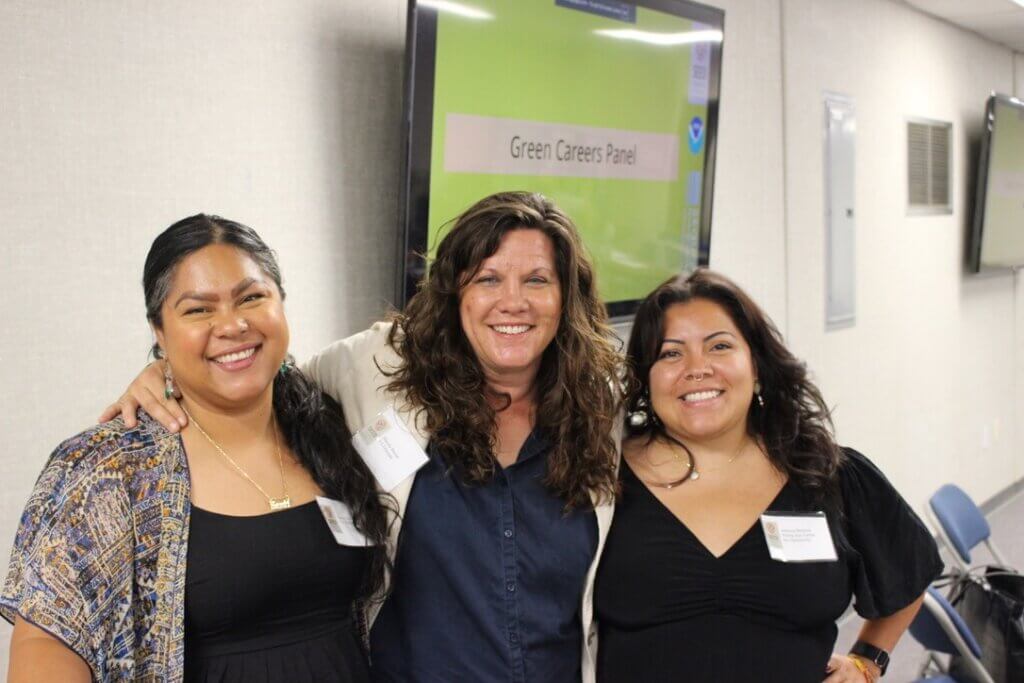
The final morning of the institute welcomed more than thirty additional community members for a green careers panel and community solutions forum, bringing to life the “solutions stories” featured within the Seeds to Solutions unit. Participants learned directly from Tribal leaders, education nonprofits, community organizations, and other local experts working to address California’s water challenges in the Central Valley.
Environmental educator, Prisma Flores shared, “I had the honor to sit and listen to Robert [Jeff] and Kenny [Barrios] [from the Tachi-Yokut tribe]. Their perspective on how water and the land should be accessible to everyone because that’s how it was intended to be used by the creator was inspiring.”
By connecting directly with local leaders and organizations, educators experienced the same learning progression students do within a Seeds to Solutions unit. They moved from understanding environmental phenomena to recognizing that meaningful solutions already exist — and that they, too, can contribute to positive change.
5. Climate literacy should leave learners with hope.
After three days of learning and networking, educators departed the institute carrying with them new instructional resources, stronger community partnerships, and renewed confidence in exploring climate literacy with their students.
Kona Cooke, an Earth Science teacher at Golden West High School in Visalia, shared, “I walked in with no idea how to teach about groundwater, and now I’m so excited to teach my students and motivate them to learn!”
Ultimately, educators left with a shared belief that environmental education can cultivate both understanding and optimism for the future. Participant Francisco Fernandez perhaps captured that feeling best when he shared, “There is hope for us after all.”
If these lessons inspire you to explore environmental and climate literacy topics with your students, I encourage you to check out these resources:
- Browse Seeds to Solutions for free, high-quality K–12 units exploring California-specific environmental challenges and solutions. (Join me for drop-in office hours if you could use a sounding board!)
- Connect with SEED for environmental literacy classroom resources in the Central Valley.
- Find more professional learning opportunities on environmental and climate literacy.