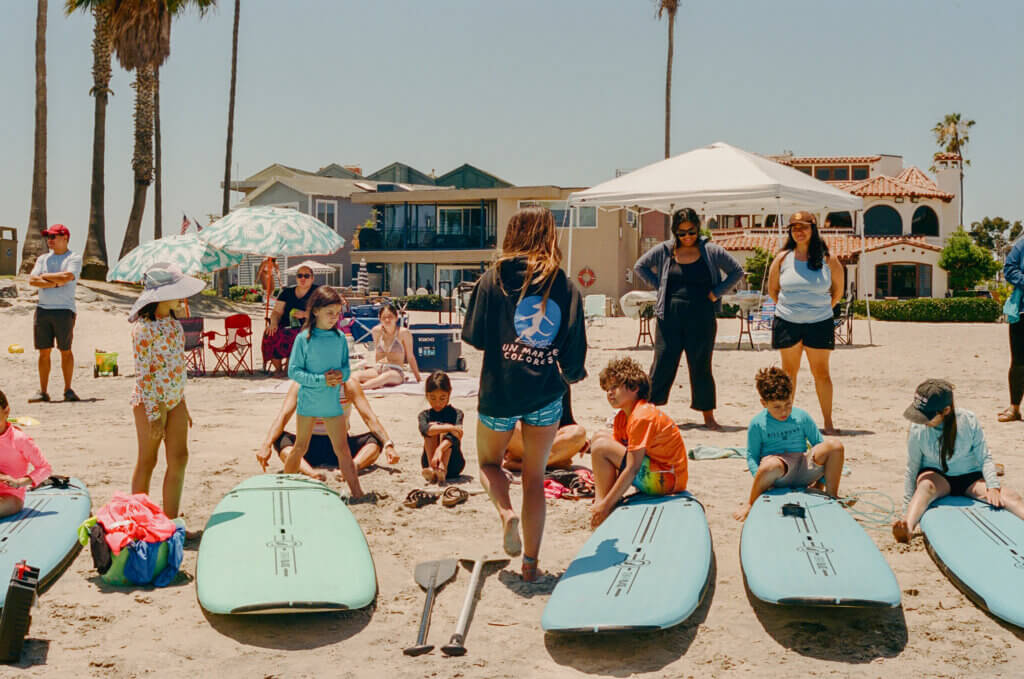
There’s a moment I’ve watched hundreds of times, and it still stops me every time. A kid stands at the edge of the water with a board that’s bigger than they are. Their shoulders are up around their ears. You can see the whole story written in their body—the fear, the bracing, the readiness to be told they don’t belong here. Then a wave comes, and they paddle, and for one impossible second, they are standing. And the story changes. The shoulders drop. Something in the nervous system that had been clenched for a very long time lets go.
If this generation is the most virtually “connected” in history, why does loneliness keep rising? Our kids are surrounded by a current they can’t escape. This Ten Strands series has been making the case that outdoor learning is the antidote our screen-saturated kids need. I want to dive one fathom deeper. Because for the young people we serve at Un Mar de Colores, the water is not only where they learn about the environment and where they recreate, but most importantly, it is also the medicine. El mar es la medicina.
It’s easy to treat nature as a backdrop, a beautiful setting for the real work (the lesson or the counseling session) which happens to take place outdoors. The ocean is the scenery; the lesson or the counseling session is the real intervention, and it just happens to be outside. We at Un Mar de Colores have come to believe something different. For us, the ocean, the land, the body, the breath, and the culture youth carry are the intervention, as the well-being of one’s environment is directly related to the well-being of self. The relationship to place is what does the healing.
That distinction matters most for the kids who need it most. The antidote to the dissociation that occurs from the endless flood of feeds isn’t simply less screen time. It’s embodied presence inside a living system, a cold rush of saltwater that demands you arrive in your body right now, a horizon that asks nothing of you, a lineup of peers who catch you when you fall. You cannot doomscroll in the wave impact zone. There’s nothing that pulls you into the present like riding a wave, the final arc of the moon’s energy reaching the shore. The ocean insists on the present tense, and presence, it turns out, is where regulation begins.
How it actually works
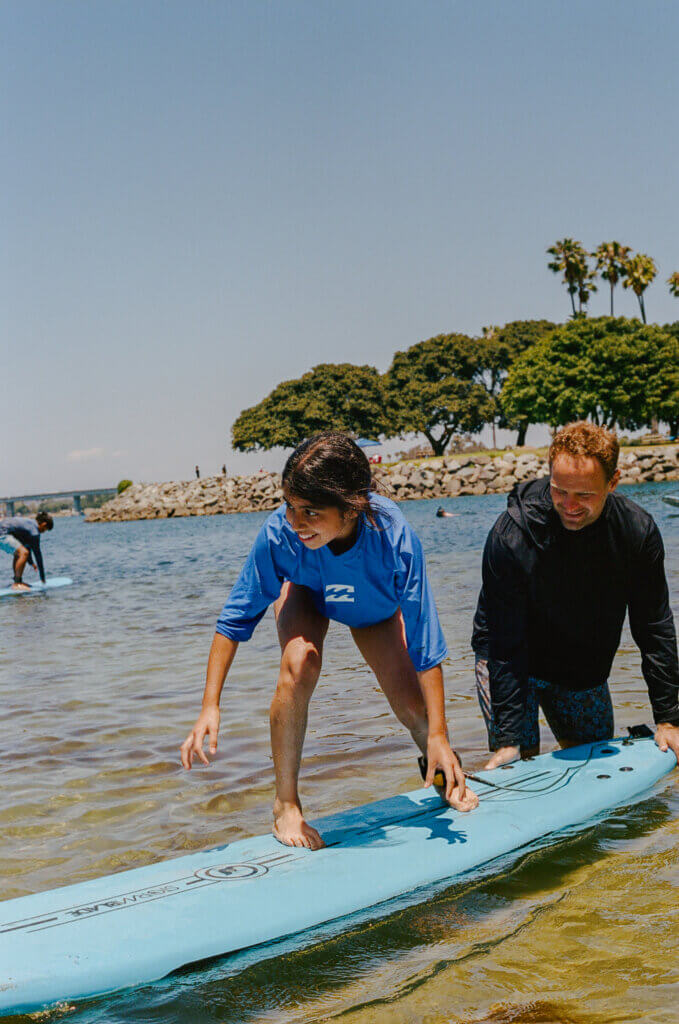
This is the work of Mar y Mente, our community mental health department, led by our clinical director, Lacy Martinez, LMFT, and clinical manager, Abhi Ardagh, AMLFT. Our practice is grounded in using the land and water to teach young people to track their own nervous systems and find their way back to calm, woven together with somatic regulation, mindfulness, and the growing body of evidence behind surf therapy and “blue mind” practices.
What’s specific to the ocean, as opposed to any other beautiful place? The water demands self-regulation as a precondition. Waves teach courage, surrender, and return, over and over, in a single afternoon. The lineup becomes a circle of co-regulation, where belonging is built shoulder to shoulder. The nervous system learns safety through the body before the mind can argue with it.
And it is real clinical care. Our staff are trauma informed, eco-therapy informed, and ocean-safety certified, and the work is clinically supervised. Un Mar de Colores is a Board of Behavioral Sciences site where the next generation of culturally rooted, ocean-based clinicians and behavioral health workers earn their supervised hours. We hold the same standard of care you’d expect in a clinic. We just hold it in the surf.
Who gets to be healed by the sea
Here is the equity challenge this whole movement has to face, and it’s the one I think about deeply: Nature can only be medicine if people can actually reach it.
The young people (Latino, Black, and Native youth) and binational families we serve along the San Diego–Tijuana coast have been disconnected from it by a stacked set of barriers. Transportation they don’t have. Costs they can’t carry. A real and rational fear of water no one ever taught them to move through. The quiet message, absorbed over years, that the coast belongs to someone else. And a watershed scarred by cross-border contamination resulting in thirty percent of San Diego’s beaches being closed due to unsafe water bacterial levels.
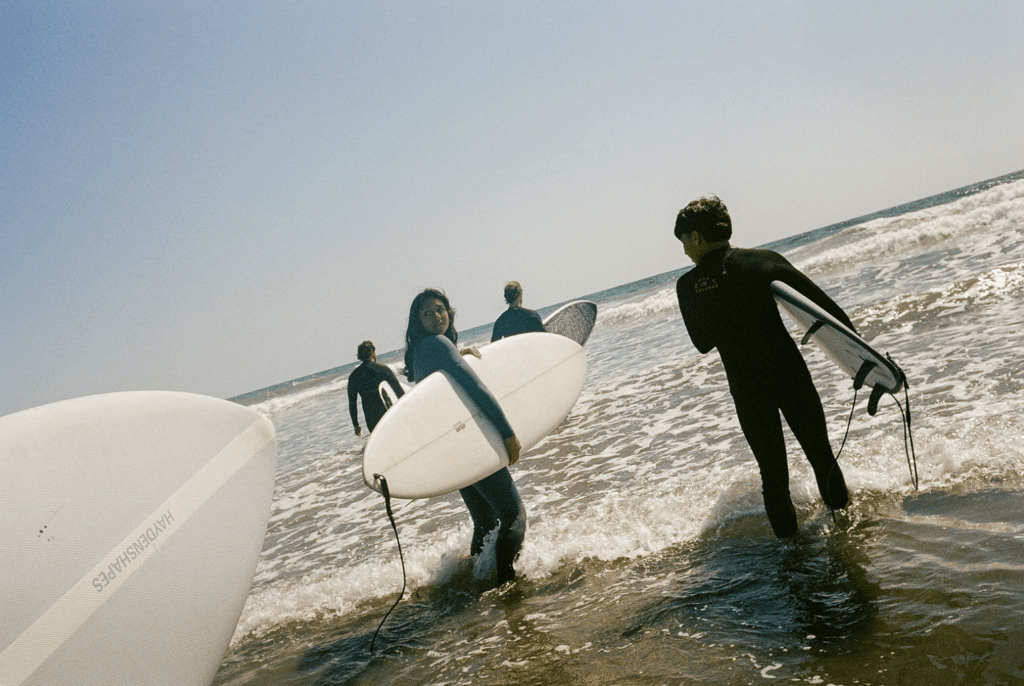
In 2025, our team of six staff members removed many of those barriers for 175 youth from across San Diego County by providing 588 contact hours in nature and 754 miles of transportation, so that distance would stop being destiny. Ninety-five percent of the young people who came to us were first-time surfers. Seventy percent come from families receiving state or federal assistance, and thirty-seven percent live in communities flagged as disadvantaged on California’s CalEnviroScreen. Clinically supervised, nature-based mental health care has, for most of its history, been a privilege of the few. We make it free, and we make it culturally rooted, with food, family, and Indigenous ecological knowledge in the room, drawn from my own Yucatec Maya heritage and shaped in partnership with Kumeyaay relatives who serve as our advisors, so the knowledge is placed based.
One current, not three
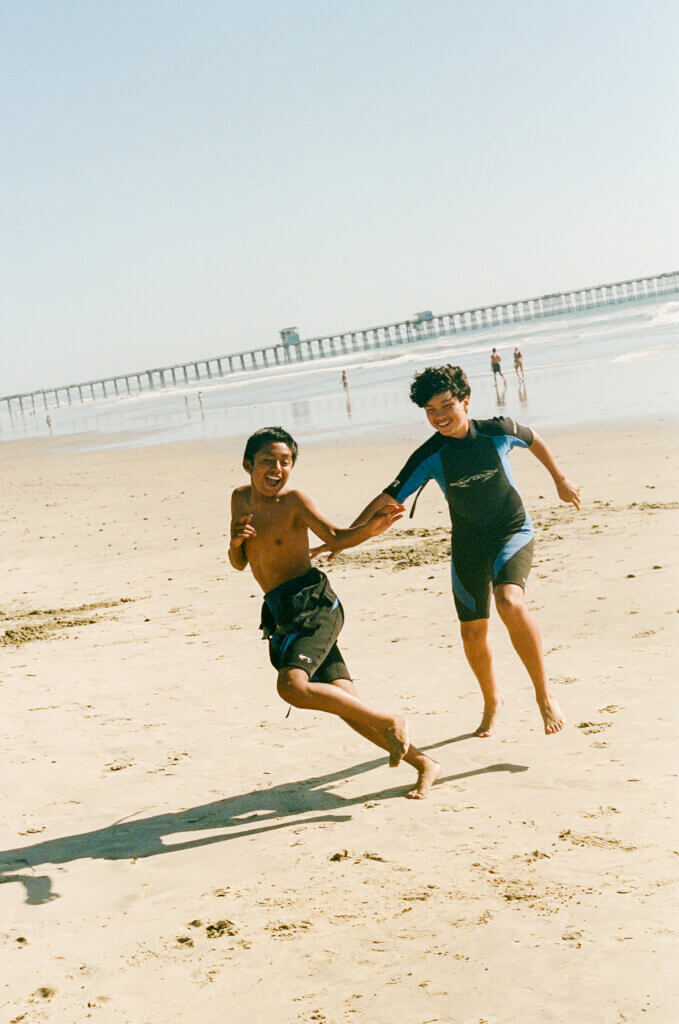
Mental health, environmental literacy, and connection to nature are usually funded and measured as if they are separate tracks. In our Living Ocean Learning Framework, they’re a single current. The same afternoon that steadies a panicking teenager is the afternoon they learn to read a tide, and it’s also when they begin to see themselves as people who could protect this coast. Belonging leads to healing, healing to identity, identity to stewardship. For kids drowning in screens and the toxic weather of social media, embodied time in the ocean restores the very things the feeds erode: attention, regulation, belonging, and a reason to look up. This is exactly the antidote we’ve been naming—we’re just insisting it be available as care and available to everyone.
Making the medicine available and replicable
None of this scales on good intentions alone. It scales on access, and access is something policy can build. California has started to. AB 2939, the coastal-access measure our Surf Justice Coalition helped pass, chips away at the physical and economic walls between youth and the shoreline. AB 2158, the Outdoor Learning and Environmental Literacy Act, which cleared the Assembly with unanimous bipartisan support, can move outdoor learning from a boutique privilege to a public good.
This is the systems change Ten Strands was built for: turning what one nonprofit can offer a few hundred kids into something every child in California can reach, environmental literacy and the healing it carries alike. Environmental literacy, done right, is also mental health care. The coast, made reachable, is also medicine.
So let me end with the most honest thing I know. For our kids, the ocean is what finally lets them exhale. It’s where they belong and become. The ocean is the medicine, and every child deserves to access it and benefit from its healing power.