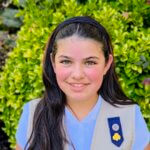
This article is part of our Youth Voices series. At Ten Strands we believe that young people have valuable perspectives and a critical role in shaping our society and our world. We recognize their power to drive dialogue and create positive change and are committed to providing a platform which amplifies their contributions. Recently, we interviewed Natalie, a seventh grader from Sacramento, who is using her Girl Scout Silver Award project to advocate for heat safety education in schools. Through her work, Natalie is raising awareness about heat illness and showing how young people can lead meaningful, lasting change.

Can you tell us your name, what grade you’re in, and where you’re from?
My name is Natalie. I am in seventh grade and from Sacramento.
Can you explain the Girl Scout Silver Award?
The Girl Scout Silver Award is the highest award that Girl Scouts in sixth through eighth grade can earn and the second-highest award in Girl Scouts overall. To earn the award, you have to find a problem in your community, identify the root cause of the problem, and make a sustainable fix for it. Girls have to spend at least 50 hours working on their project to earn it.
For my project, I’m trying to make sure students receive a short, memorable safety training every year. That would be sustainable if it became a law or was adopted by schools to keep students safe. Even if only my school district does it, it would still make a lasting impact.
Can you tell us about your Girl Scout Silver Award project and why you chose this topic?
My Girl Scout Silver Award project is to make sure that students stay safe when it gets dangerously hot outside. So, I want them to learn what the signs and symptoms of heat illness are and how to respond if they or their friends start to feel sick.
I chose this topic because kids spend a lot of their time outside playing and most of them don’t know what heat illness is or how dangerous it can be. I started by working with my school district, but my goal is to make it statewide so that all students in California can stay safe when it gets dangerously hot outside.
What made heat illness and student safety feel important to you?
In 2022, I was in fourth grade and there was a record-breaking 116-degree heat wave, and the air conditioning in my school’s cafeteria broke. We had to eat lunch outside for multiple days during the heat wave.
Later, I gave a current events presentation on that heat wave, and about a third of my class told me they felt sick while eating outside. They didn’t know they were showing signs of heat illness or even what heat illness was and they didn’t realize they should have told an adult. That made me realize there’s a big gap in student safety that we need to fill.
What was it like leading your own project? How did you get support from other students or adults?
One of the ways I got support was that I made a petition online and it got a lot of support from community members and friends and family. I also spoke at my school board meeting. Before the meeting, I emailed doctors, firefighters, and other people in the field who work with heat illness and asked them to write letters of support or possibly speak at the board meeting with me. I had a few people speak and I received many letters of support, which I’m very thankful for. I also have a project advisor who helps me figure out next steps, and my parents support me too.
About how I feel leading this, it’s challenging. I have to do public speaking and write emails, which can feel repetitive, but it’s also very rewarding. I would never want to do something else other than this project. It’s amazing to be able to do this at such a young age.
What’s one thing you learned during this project that surprised you?
One thing that surprised me is that, according to the CDC, a significant number of emergency room visits for heat illness involve children and teens under 18. Kids might experience heat illness and think it’s just the heat and that it’s not important or will go away, but it can quickly turn into an emergency. That really shows how big the safety gap is.
What do you think schools should know or do to better protect students during hot weather?
I want schools to provide students with a short safety lesson once per year about the signs and symptoms of heat illness and what to do if they start to feel sick while playing outside. There should also be quick reminders during official heat waves so students don’t forget. I think it’s important that they learn this information, and that they are taught this in school.
What advice would you give other kids who want to start a project or get involved?
The advice that I give to kids starting a large project is to make sure that you are passionate about what you’re doing because it is easy to lose interest in something if you’re not really passionate about it or it’s not something that you really want to do. And another piece of advice is to do your research before you start, make sure that you have knowledge on the topic that you’re choosing, and then go for it. Make change in this world and you’ll do great.
How did you get involved in Girl Scouts, and what kinds of experiences has it given you?
I got into Girl Scouts when I was really little because my mom wanted to do Girl Scouts when she was younger, but she never got the chance. So she signed me up, and I’ve been doing it since kindergarten and loving it the whole way. How you join depends on where you live. Girls can go to the Girl Scouts website and type in their zip code to find their local council and a troop in their area. For me in Sacramento, my council is Girl Scouts Heart of Central California. It’s an amazing program to be part of.
Through Girl Scouts, I’ve gotten to go on adventures like traveling to the Grand Canyon and Crater Lake, which was really fun. I’m especially excited for my troop’s upcoming Disney cruise to the Bahamas. I’ve also done a lot of things to help my community. My troop put on a Save the Trees event where we taught people in a public park how to take care of trees. We had hands-on activities for them to do, which made it really engaging. We’ve also made blankets for children in children’s hospitals. Because of my Silver Award project, I’ve had opportunities like speaking in front of my school board and meeting with legislative offices, which is really cool.
How can adults best support kids who are working on health, safety, or climate issues?
I find it best when adults listen to what the child that they’re helping needs for their project and encourage them to do it if they really want to, but they’re not quite sure. Always encourage and help them move on to the next steps. If they’re having trouble researching, then help them with that. Anything that they need help with, support and guide them. And they can do amazing things.