This article is part of our Youth Voices series. At Ten Strands, we believe that young people have valuable perspectives and a critical role in shaping our society and our world. We recognize their power to drive dialogue and create positive change and are committed to providing a platform which amplifies their contributions. Today, you’ll meet Siyona Singhal, one of the inspiring youth leaders contributing to this important work.
Q: Briefly introduce yourself: Tell us a little bit about your background and who you are—grade level, where you go to school, geographical location, any diversity indicators (pronouns, race, ethnicity, etc.). You can include your major, interests, or anything else you’d like us to know!
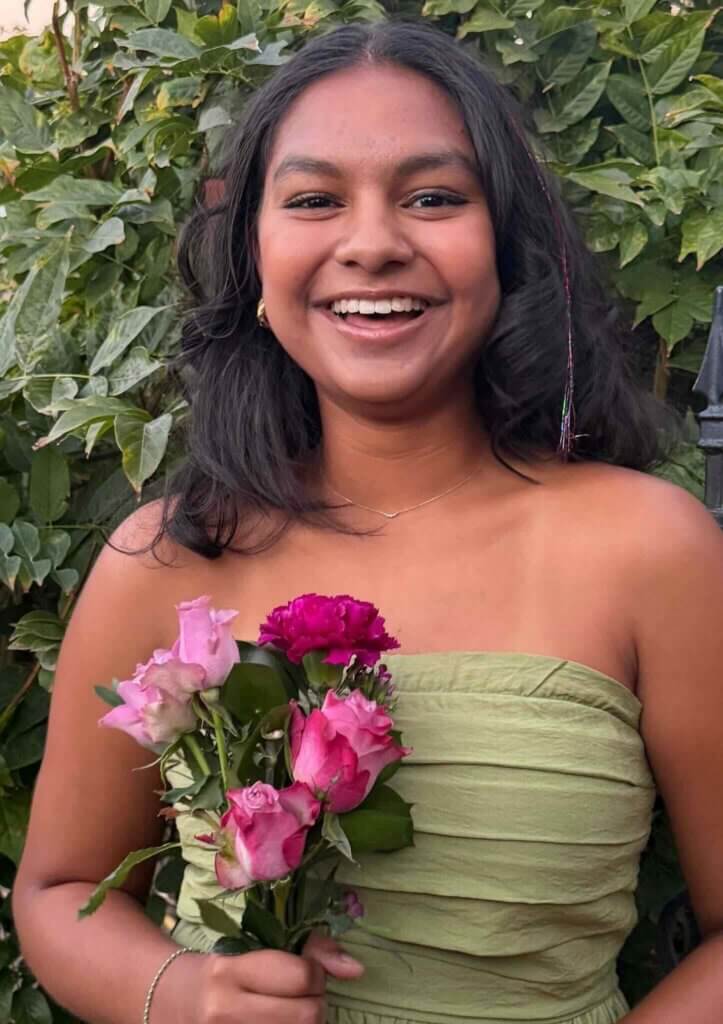
A: Hi! My name is Siyona, I’m 16, and I am a rising senior at Los Gatos High School. I live in the Bay Area with my family and cutie dog. My pronouns are she/her and my ethnicity is Indian! I hope to major in environmental engineering, combining my love of STEM and my passion for the environment. I love to read, make friendship bracelets, and watch fun movies.
Q: Why are you interested in environmental and climate issues? And why did you want to pursue an internship with Ten Strands, an organization that focuses on environmental and climate action in TK-12 schools?
A: I took APES [AP Environmental Science] in school and loved the class. I was especially interested in how environmental issues affect so many areas other than the environment itself. I liked Ten Strands because environmental literacy is so important, especially in the technological age we live in now. Without proper education on environmental issues, we can never take effective action.
Q: What projects, programs, and services did your internship focus on with Ten Strands? Describe your experience and what stood out to you as you worked on different aspects of your internship.
A: I worked on creating case studies for various local environmental issues. What stood out to me most was the large amounts of research I was doing and how hard it was to confirm if certain data was actually correct. Writing the case study wasn’t hard, but actually collecting what I was going to say was the challenging part.
Q: In what ways do you hope the work you did through your Ten Strands internship will make an impact?
A: I hope that students who learn about the environmental issues create a more holistic view of environmental phenomena and realize the importance of the environment and ecology we are surrounded by.
Q: What skills did you learn or grow during the internship, and/or what did you learn about yourself during this internship?
A: I learned technical skills like effective research and taking notes, and I improved my writing. In terms of soft skills, I learned how to meet hard deadlines, manage time, and be dedicated to the project. I learned that I can do things that seem boring or super hard, and overwhelming things can be broken down into easier tasks.
Q: To what extent do you plan on pursuing something related to the environment in your college or career pathways?
A: I am very interested in pursuing environmental engineering in college and hope to keep sustainability in my career. I would love to work in the environmental technology field in the future.
Q: What does it mean to be a youth climate leader, and why is youth leadership for the environment important to you? And/or, what advice would you give to young and aspiring environmental or climate climate leaders?
A: To me, being a youth climate leader means using your voice and taking action to create a more sustainable future. Youth leadership is important because young people will live with the consequences of today’s environmental decisions. My advice to aspiring climate leaders is to start small, stay informed, and don’t be afraid to speak up.