This article is part of our Youth Voices series. At Ten Strands, we believe that young people have valuable perspectives and a critical role in shaping our society and our world. We recognize their power to drive dialogue and create positive change and are committed to providing a platform which amplifies their contributions. Today, you’ll meet Mia Yue, one of the inspiring youth leaders contributing to this important work.
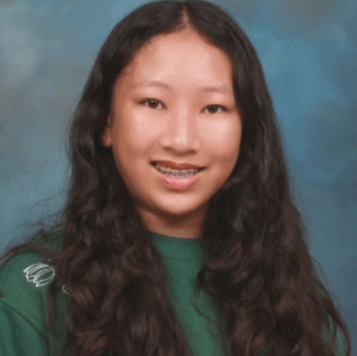
Q: Briefly introduce yourself: Tell us a little bit about your background on who you are – grade level, where you go to school, geographical location, any diversity indicators (pronouns, race, ethnicity, etc.). You can include your major, interests, or anything else you’d like us to know!
A: My name is Mia, and I’m a junior at Palos Verdes High School. I’m passionate about biological research, especially microbiology and regenerative medicine. My hobbies include playing tennis and crocheting stuffed animals for my friends and family!
Q: Why are you interested in environmental and climate issues? And why did you want to pursue an internship with Ten Strands, an organization that focuses on environmental and climate action in TK-12 schools?
A: I was drawn to the opportunity to work on environmental literacy within schools because I believe that education is the most important way to create long-lasting change in society. The students of today will be the decision makers, teachers, parents, and leaders of tomorrow who will shape society and the world we live in. By enacting change in schools, we effectively are changing the future. Seeing consumer culture and overconsumption online led me to see the importance of helping people understand the effects of their actions on the planet and empowering them to change their everyday lifestyle to be more environmentally friendly. I was initially exposed to Ten Strands through my school’s internship program. Though I had experience in research through programs at school, I wanted the opportunity to see how professional data analysis is conducted. Ten Strands’ internship was the perfect choice for me to broaden my horizons while making a significant impact in California’s TK-12 schools.
Q: What projects, programs, and services did your internship focus on with Ten Strands? Describe your experience and what stood out to you as you worked on different aspects of your internship.
A: During the project, I mainly focused on scoring and analyzing data related to environmental-action-related job descriptions of staff in California schools. Something that stood out to me was that we reviewed job descriptions from fewer than 70 districts, but there are 937 districts in California. Often, these districts simply didn’t have any sustainability integrated within their job descriptions, and this really astonished me.
Q: In what ways do you hope the work you did through your Ten Strands internship will make an impact?
A: I hope my work made an impact by providing data that can help schools and organizations make more informed decisions about sustainability. Even if my contributions were only one part of a larger project, I hope the analyses and visualizations I created made the information easier to understand and identify patterns that could support future environmental initiatives. I also hope my work contributes to spurring environmental change, especially in introducing more jobs in which sustainability and environmental action are integrated to ultimately create a more environmentally conscious student body.
Q: What skills did you learn or grow during the internship, and/or what did you learn about yourself during this internship?
A: This project did help me grow my data skills, but not as much as I would have liked. Skills I learned include data visualization, analysis, and cleaning, and I already knew some of these from past research. One thing that would have made the experience more skill-building would have been learning how to use code to analyze or process data, automate repetitive tasks, and work with larger datasets more efficiently. I also would have enjoyed gaining experience with more advanced statistical analysis or data visualization tools.
Q: To what extent do you plan on pursuing something related to the environment in your college or career pathways?
Though I don’t plan on pursuing a career directly related to environmental research, I do plan to pursue biological research in college and beyond. The skills I’ve learned in this internship with Ten Strands including data cleaning, formatting, and analysis will continue to be valuable regardless of the field I ultimately choose.
Q: How do you see data as a meaningful and powerful tool in catalyzing environmental and climate action in schools? Reflect on how data, in your view, can support systemic change in TK–12 education.
I believe data is at the core of how environmental change is enacted within schools. Data helps inform important decisions and gives us the tools to analyze whether or not past choices were worthwhile. Without the facts provided through data analysis, district administration lacks the information required to support decisive moves, making any meaningful change within school systems impossible.