This article is part of our Youth Voices series. At Ten Strands, we believe that young people have valuable perspectives and a critical role in shaping our society and our world. We recognize their power to drive dialogue and create positive change and are committed to providing a platform which amplifies their contributions. Today, you’ll meet Kieran Beckham, one of the inspiring youth leaders contributing to this important work.
Kieran Beckham’s journey with Ten Strands reflects the power of environmental literacy and youth leadership. A member of the inaugural California Youth Climate Policy (CYCP) Leadership Program cohort, Kieran transformed a personal interest in sustainability into meaningful action in his community. Following CYCP, he worked with his former K-8 school (Heritage Oak, in Yorba Linda, California) to strengthen environmental literacy initiatives and support the school’s successful pursuit of a California Green Ribbon Schools Award. As a Ten Strands intern from summer through fall 2025, Kieran supported CYCP outreach and recruitment efforts, represented youth voices in statewide webinars, and collaborated with the California Department of Education’s Green Ribbon Schools Program to develop resources and communications that help schools engage in sustainability efforts. Kieran graduated from Yorba Linda High School in 2026 and will spend the coming year working with Beyond AI on projects related to energy, sustainability, and ESG (Environmental, Social, and Governance) initiatives before beginning his studies at Columbia University in fall 2027.
Q: What does it mean to be a youth climate leader, and why is youth leadership for the environment important to you?
A: To me, being a youth climate leader means helping others understand environmental challenges and empowering them to take action. Young people bring important perspectives to conversations about climate change because we are directly experiencing many of its impacts and will continue to live with their consequences in the future.
My interest in environmental leadership developed through a combination of personal experiences. Growing up, I spent summers outdoors with my grandparents in Maine, which helped me develop an appreciation for nature. Later, when the Blue Ridge Fire forced my family to evacuate our home, I began to understand how climate-related challenges could affect my own community.
What stood out to me was that I was not learning much about these issues in school. That realization eventually led me to the California Youth Climate Policy (CYCP) Leadership Program, where I learned how education and advocacy can help create change. Through CYCP, I worked with my former K-8 school, Heritage Oak, to strengthen environmental literacy initiatives and support its California Green Ribbon Schools application. Seeing students, educators, and community partners work together toward a common goal reinforced my belief that education can be a powerful tool for creating positive change.
Q: Why did you want to pursue an internship with Ten Strands, and what was your experience during your internship?
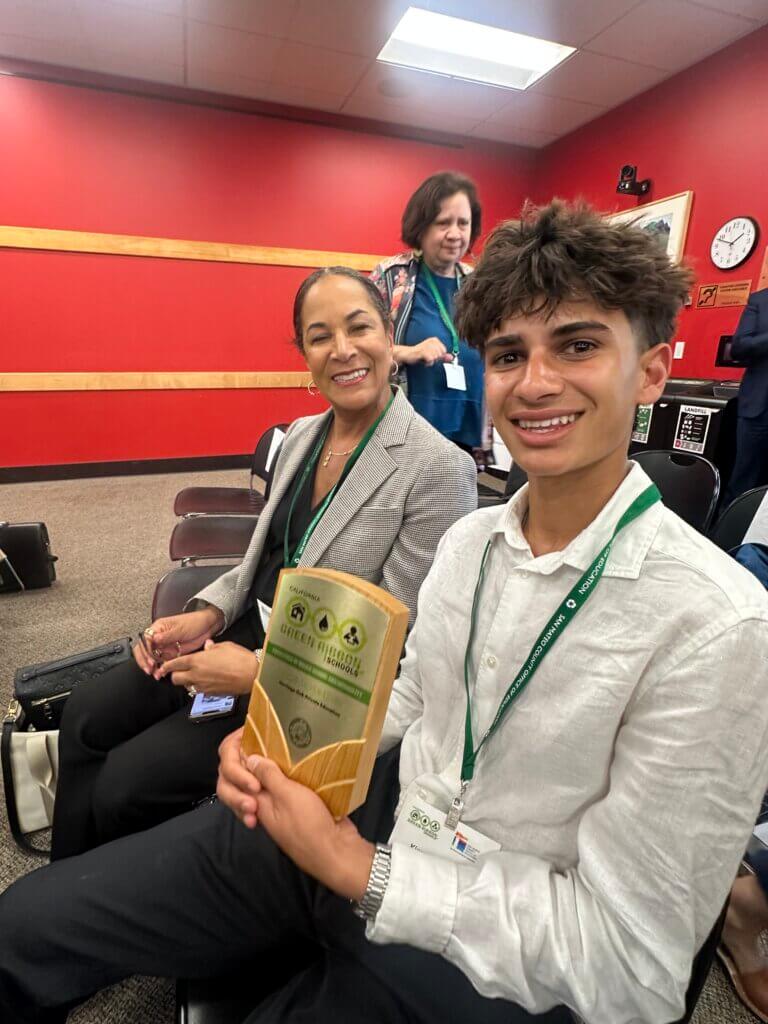
A: I wanted to pursue an internship with Ten Strands because I had personally experienced the impact of programs like CYCP and wanted to help create similar opportunities for other students. The internship allowed me to continue learning while contributing to projects that advance environmental literacy and sustainability in schools.
Before becoming an intern, much of my environmental leadership focused on helping Heritage Oak strengthen its sustainability efforts and pursue recognition through the California Green Ribbon Schools Program. Working alongside administrators, teachers, and community partners, I supported projects related to environmental education, school gardens, climate emotions, waste reduction, and student leadership. Watching the school earn a California Green Ribbon Schools Award was one of the most rewarding experiences of my leadership journey.
During my internship, I supported CYCP outreach, recruitment, and resource development efforts. I also represented Ten Strands as a youth panelist during the Youth Leading Climate Action webinar, where I shared my experiences with student advocacy, climate emotions, and environmental education.
Another meaningful part of my internship was supporting the California Department of Education’s Green Ribbon Schools Program. After helping Heritage Oak earn a Green Ribbon Award, it was exciting to support outreach efforts that could help other schools across California begin similar sustainability journeys. I helped create social media content and resources that highlighted practical examples of environmental action and school sustainability.
What I appreciated most about the internship was seeing how many different people and organizations are working together to expand environmental literacy. It gave me a broader understanding of how statewide change happens and how education can help students become informed problem-solvers.
Q: In what ways do you hope your internship made an impact?
A: I hope my internship helped make environmental leadership opportunities more accessible to students and educators. Through my work with CYCP, I hope I helped encourage students to get involved in environmental leadership and advocacy. Through my work with the Green Ribbon Schools Program, I hope I helped schools discover practical ideas and resources that can support their sustainability efforts. More broadly, I hope my contributions supported Ten Strands’ mission of ensuring that more students have access to meaningful environmental literacy experiences.
Q: Do you plan on pursuing environmentalism as a career?
A: Yes. Environmental leadership has become an important part of both my academic interests and future goals. I am interested in studying environmental science and business and exploring how organizations can develop solutions that balance environmental responsibility with long-term success.
Q: What advice would you give to young and aspiring climate leaders?
A: My advice is to start with an issue that matters to you and be willing to learn as you go. When I first became involved in climate advocacy, I did not know much about policy, leadership, or how schools make decisions. I simply wanted to make a difference.
I have learned that meaningful change often comes through persistence, collaboration, and a willingness to keep improving ideas over time. Not every project will succeed immediately, and not every conversation will lead to the outcome you hope for. Those experiences are part of the learning process.
I would also encourage young people to seek out mentors and opportunities that help them grow. Programs like CYCP provided me with valuable skills, relationships, and experiences that helped turn my interests into action. Most importantly, remember that you do not need to be an expert to get involved. Curiosity, commitment, and a willingness to contribute can go a long way.