Standing beside poster boards, systems maps, and student-designed presentations, freshmen in the San Ramon Valley Unified School District (SRVUSD) shared their views on how global issues such as climate change, mental health, biodiversity loss, and social and political polarization connect to challenges in their own communities. Science, English, math, health, and social studies teachers, as well as administrators and education foundation members, interacted with students who had synthesized months of interdisciplinary learning into public presentations that asked not only, “What is the problem?” but also, “What systems are shaping it, and what could change?”
The presentations represented the culmination of an effort that began with a fundamental question: How might we make the freshman experience more connected, relevant, and meaningful?
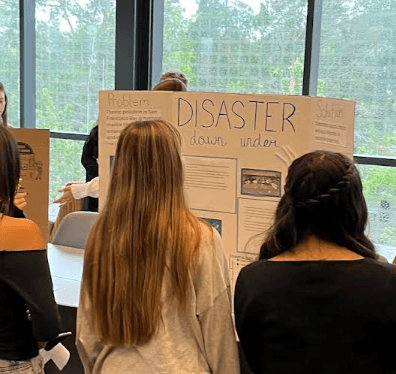
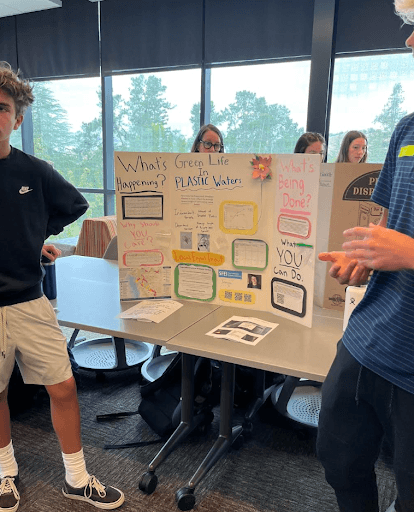
Student Presentation Posters at Monte Vista High School
The transition to high school can be disorienting. As freshmen navigate new classrooms, teachers, expectations, and social circles, their school day can feel divided into separate experiences. Courses are traditionally organized by discipline, often leaving students to make connections on their own between subject areas, among their peers, and between what they are learning in school and the world beyond the classroom.
To address this challenge, SRVUSD educators began thinking differently about both the freshman experience and the traditional structures of secondary education. A small interdisciplinary team worked together to identify the skills freshmen need to succeed in high school and consider how those skills could be intentionally developed and reinforced across multiple content areas. Teachers examined their curriculum together, looking for opportunities to connect topics, questions, and skills so that students could encounter important ideas through multiple disciplinary lenses.
Central to this work was the Solutionary philosophy developed by educator and author Zoe Weil. The approach emphasizes systems thinking, which encourages students to look beyond the surface of a problem, investigate the systems and root causes that contribute to it, and consider solutions that do the most good and least harm for people, other living beings, and the planet. Teachers also participated in professional learning in Solutionary Project-Based Learning, a model that provided a framework for translating these principles into interdisciplinary learning experiences.
With support from the San Ramon Valley Education Foundation (SRVEF), district and site leaders, and professional learning from Ten Strands, educators explored how environmental literacy, interdisciplinary learning, and solutionary teaching could help students make meaningful connections across their classes and between their learning and the world around them.
At the center of the initiative was a core belief: students learn more deeply when learning is relevant, relational, collaborative, connected, and grounded in authentic issues facing their communities and the wider world.
Testimonial from Solutionary Academy Teacher: “We have asked freshmen to research complex issues, analyze systems, synthesize information, collaborate, and communicate their thinking to others. We weren’t sure at first what they would be able to accomplish, but they really rose to the challenge.”
Building a More Integrated Freshman Experience
The initiative began as a pilot program at Dougherty Valley High School (DVHS) during the 2024–25 school year, bringing together a cohort of freshman students across English Language Arts, Biology, Algebra II, Health, and World Geography (Ethnic Studies in 2025–26). The Freshman Interdisciplinary Cohort and Solutionary Academy initiative was launched under the leadership of Dr. Doron Markus, SRVUSD’s former Coordinator for Curriculum and Instruction, whose vision centered on creating more connected, interdisciplinary, and real-world learning experiences for students. In 2025–26, the model expanded to Monte Vista High School (MVHS) and included English Language Arts, Biology, Health, and Algebra I.
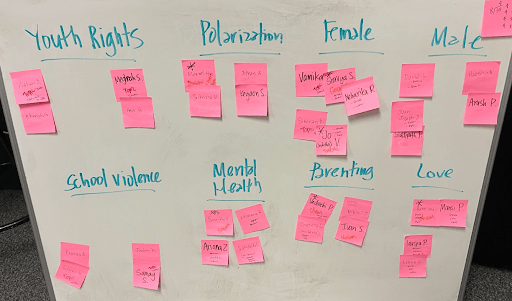
Rather than experiencing each course in isolation, students engaged in thematic semester projects that encouraged them to investigate complex social and environmental challenges through multiple lenses. Using systems thinking and the United Nations Sustainable Development Goals (UN SDGs) as a framework, students explored topics including mental health, poverty, injustice, gender equality, environmental sustainability, and community well-being.
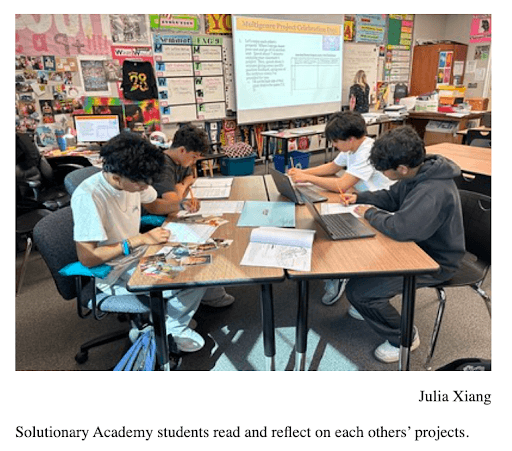
Students analyzed the root causes of problems, examined how local experiences connect to larger societal and global systems, conducted research, communicated findings, and proposed thoughtful solutions. Throughout both semesters, many students gravitated toward environmental and sustainability-related issues in their projects, exploring how global environmental challenges show up within local communities and everyday life.
At Dougherty Valley High School, students connected themes from Romeo and Juliet to modern issues such as identity, mental health, anxiety, and social conflict, while also exploring how environmental, social, and economic challenges manifest differently across local, national, and global contexts. At Monte Vista High School, students investigated issues connected to adolescent well-being, environmental sustainability, and community challenges, ultimately presenting research and solutions through science-fair-style exhibitions and solutionary showcases.
Projects included town-hall-style presentations, collaborative research projects, systems mapping activities, and public exhibitions where students presented both their analysis of complex problems and possible pathways toward action.
Importantly, the emphasis was not on students “solving” enormous global challenges, but rather on developing the skills and habits necessary to thoughtfully engage with the complexities involved in those challenges: inquiry, analysis, systems understanding, communication, civic thinking, and solution development.
9th Grade Cohort Testimonial: “I learned that when you look at a big problem, there usually isn’t just one cause or one solution. You have to look at the different systems connected to it, understand why the problem is happening, and then think about what kinds of solutions could actually make a difference.”
9th Grade Cohort Testimonial: “One thing I learned was how problems that seem really big or global can also show up in our own community. Looking at an issue at different scales helped me understand how everything is connected and think about solutions that could actually work locally.”
9th Grade Cohort Testimonial: “It was a fun experience getting to present our projects to those up on the board. Talking to people that we haven’t talked to before got us outside of our comfort zone.”
Teachers Learning Alongside Each Other
While the student experience was transformative, one of the most powerful outcomes of the initiative was the experience of the educators themselves.
Secondary schools are rarely structured to support interdisciplinary teaching and learning. Teachers often work within separate departments and pacing guides, with few opportunities to collaboratively design learning experiences across subject areas. This initiative challenged those traditional structures.
In the Solutionary Academy, teachers across disciplines worked together weekly, and at some points daily, to coordinate instruction, design projects, discuss individual student needs, and think critically about how students were experiencing the school day across multiple classes. Through that process, many educators described gaining a deeper understanding of both their colleagues’ disciplines and the student experience itself.
Teachers reflected on how valuable it was to understand where students were experiencing redundancy, overwhelm, or disconnects between courses. They also described how meaningful it was to collaboratively create learning experiences that felt more aligned, engaging, and relevant for students.
Throughout the implementation process, educators also participated in professional learning focused on interdisciplinary instruction, systems thinking, project-based learning, environmental literacy, and solutionary teaching practices. Facilitated in partnership with Ten Strands, these sessions supported teachers in developing shared language, collaborative structures, and instructional strategies that helped connect real-world problem-solving skills across disciplines.
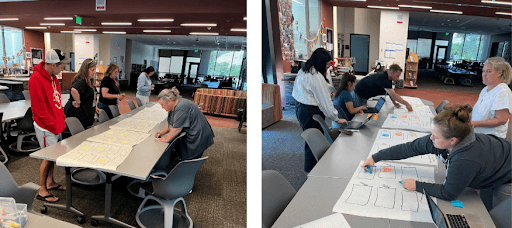
DVHS and MVHS Educators Working Together at Summer and Weekly Professional Development
Teachers at both schools shared that the collaboration improved not only instruction, but also school culture among colleagues. Educators described learning from the different ways their colleagues approached teaching, inquiry, and problem solving. Further, they developed stronger empathy for students navigating multiple classes and expectations.
However, teachers at both sites also acknowledged that the work was not always easy. Coordinating interdisciplinary instruction required significant communication, flexibility, and ongoing problem solving. Some disciplines connected more naturally than others, and teachers had to navigate the realities of pacing, logistics, scheduling, and the demands of different subject areas.
Despite these challenges, educators generally described the experience as professionally energizing and deeply rewarding.
Teacher Testimonial: “One of the most rewarding parts of this experience has been the opportunity to collaborate so closely across disciplines. You learn how other teachers think, but you also start to see school through the students’ eyes. I have a much better understanding of where content and skills overlap, what might cause students to feel overwhelmed, and how we can work together to support them better.”
Several teachers reflected that this kind of collaboration is simply rare in secondary education, despite how valuable it can be for both students and adults.
The initiative also highlighted the importance of structural support. Teachers repeatedly emphasized that common planning time and intentional collaboration structures were essential to making this kind of work possible. The experience revealed both the promise of interdisciplinary learning and the realities of sustaining it within traditional secondary systems.
Students Developing Skills for a Complex World: Confidence, Connection, and Critical Thinking
Across both sites, teachers observed significant growth in students’ confidence, communication skills, collaboration, and ability to think critically about real-world challenges.
Students developed research and presentation skills, practiced collaboration, and learned how to analyze issues through a systems lens that moved beyond surface-level explanations. Many students demonstrated growth in their ability to connect ideas across disciplines and understand how environmental, social, cultural, and civic systems interact.
At Monte Vista, the cohort intentionally included many students enrolled in Algebra I, creating opportunities for a broader range of students to engage in public speaking, collaborate with peers, and take ownership of meaningful work that challenged them to think deeply and communicate clearly.
The cohort structure itself also had a significant social impact. Students described feeling more connected to their peers and teachers because they shared multiple classes together and collaborated frequently. For some students, the experience helped ease the transition into high school and created opportunities to build relationships beyond existing social circles.
9th Grade Cohort Testimonial: “I am really glad to have been a part of the cohort because it gave me the chance to meet students from other middle schools and break away from the clique mentality. I am not sure that would have been as easy without this cohort. We got to know each other much better because we had so many classes together, and we also got to do cool group projects that helped as well.”
Students also noticed the collaboration happening among their teachers. Several reflected that it felt meaningful to know that their teachers were communicating regularly and collectively invested in their success.
9th Grade Cohort Testimonial: “I really appreciated knowing that my teachers were also working together, as it made me feel like there was this group of adults who knew who I was, and the other kids in my group, and that they really cared about our success.”
Teachers also observed that students were often being asked to engage in more sophisticated thinking and communication than what is typically expected of freshmen. Rather than simply memorizing information, students were practicing how to ask questions, analyze systems, evaluate evidence, communicate ideas, and consider how individuals and communities might respond to complex challenges. For many students, this was not only an academic experience, but also a relational and developmental one.
9th Grade Cohort Testimonial: “Being a part of this cohort gave me a chance to interact regularly with the same kids and made me feel more comfortable to be myself. The group work also taught me a lot about different perspectives, and how to communicate with others, and how to be successful in group projects. I had not really had many good experiences in the past, and this gave me the opportunity to have that.”
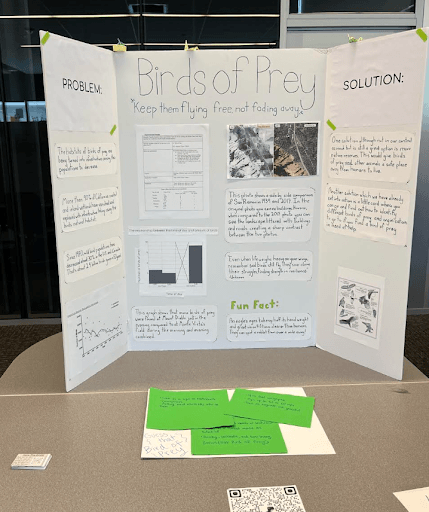
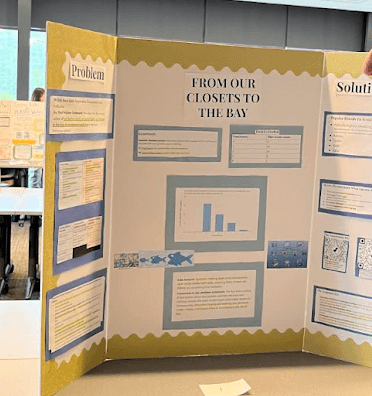
Student Posters from Monte Vista High School Presentations
Innovation Within Traditional Structures
The Freshman Interdisciplinary Cohort and Solutionary Academy initiative was not a perfect or finished model, and the educators involved were honest about the challenges that emerged along the way.
Sustaining interdisciplinary collaboration within traditional high school structures remains difficult. Scheduling constraints, staffing changes, varying course structures, and the realities of secondary systems all created ongoing tensions that required adaptation and problem solving. Teachers wrestled with how to integrate some subject areas more deeply into semester projects while also balancing pacing demands and content expectations in their subject-area departments. Collaboration time also varied by site and year. While the original DVHS pilot provided more regular opportunities for teachers to work together, collaboration time became more limited during DVHS’s second year and was also constrained during the first year of implementation at MVHS. Several educators reflected that the work required far more communication and coordination than traditional teaching structures typically allow.
Despite these challenges, the outcomes underscore why this work matters. The initiative demonstrated that when students are invited to investigate interconnected social and environmental challenges through systems thinking, environmental literacy, and collaborative inquiry, learning can become more engaging, more relevant, and more connected to the world students are inheriting.
It also demonstrated that meaningful educational innovation requires more than creative curriculum ideas. It requires structures that support educator collaboration, shared planning, professional trust, and sustained learning communities.
Teacher Testimonial: “Interdisciplinary teaching is not easy. There are different personalities, different subject-area demands, and a lot of logistics to work through. But having the opportunity to collaborate this closely around meaningful learning experiences for students has helped me grow tremendously as an educator.”
Looking Ahead
As SRVUSD continues reflecting on the future of the initiative and makes plans for expansion to the remaining high school sites, the early years of the Solutionary Academy have already offered important lessons about what is possible when educators are given space to collaborate across disciplines and center real-world learning.
The work has shown that environmental literacy and solutionary teaching and learning can reach across subject areas, providing a powerful framework for helping students understand interconnected systems, explore complex challenges, and develop the skills needed for thoughtful civic participation and problem solving.
Most importantly, the initiative demonstrated the power of connection — connection across disciplines, connection between educators, connection among students, and connection between learning and the real world.
In classrooms, libraries, and showcase spaces across both campuses, students stood beside projects that reflected months of inquiry, collaboration, and critical thinking. Teachers who had spent the year navigating the challenges of interdisciplinary collaboration watched students make connections across subjects, communicate ideas publicly, and engage thoughtfully with complex issues affecting their communities and the broader world.
In a world increasingly shaped by interconnected environmental and social challenges, the Solutionary Academy offered students something rare: the opportunity to practice making sense of complexity alongside peers and teachers who were learning, collaborating, and growing together.
See other articles written about this program: Solutionary Academy Article in the Wildcat Tribune (May 2025)

3 Responses
I love the idea of the freshman transition being coupled with an intro to *thoughtful* community-level interdisciplinary work. This work is amazing and I hope it can continue. I know there are difficulties, but I am sure that challenges can be smoothed out in year 2, 3, ….
Best wishes!
Mark
Mark Windschitl
Professor Emeritus | Science Education
University of Washington
• • • • • • • • • • • •
• • • Book and companion website now available • • •
Teaching Climate Change: Fostering Understanding, Resilience, and a Commitment to Justice.
Harvard Ed Press
Companion website for Climate Change Book
See also: Ambitious Science Teaching
Harvard Ed Press
Sorry, I pasted in my e-mail signature line in my initial comment and did not mean for it to look like an advertisement. 🙂
No worries Mark! Always happy to advertise your amazing work 🙂
And thank you for your interest in this exciting work coming out of San Ramon Valley USD. It has been a real honor to work with this highly dedicated, passionate, and innovative teachers. I am excited and hopeful for them to keep their work going across the district and inspire others to take it beyond.