Skip to content
Facebook Instagram Twitter Linkedin
  • ABOUT US
    • About Us
    • Mission & Vision
    • Organizational Values
    • Team
    • Board & Advisory Board
    • Annual Reports
    • Careers
    • About Us
    • Mission & Vision
    • Organizational Values
    • Team
    • Board & Advisory Board
    • Annual Reports
    • Careers
  • WORK

    Current Initiatives

    • California Environmental Literacy Initiative
    • Outdoor Learning Initiatives
    • Seeds to Solutions
    • Sustainable and Climate-Ready Schools
    • Data Initiative
    • Youth Engagement
    • Technical Assistance Services
    • California Environmental Literacy Initiative
    • Outdoor Learning Initiatives
    • Seeds to Solutions
    • Sustainable and Climate-Ready Schools
    • Data Initiative
    • Youth Engagement
    • Technical Assistance Services

    Legacy Initiatives

    • Education and the Environment Initiative
    • Environmental Principles and Concepts
    • Blueprint for Environmental Literacy
    • San Mateo Environmental Solutionary Teacher Fellowship
    • Global Climate Action Summit Education Affiliate Event
    • Environmental and Climate Change Literacy Projects
    • National Outdoor Learning Initiative
    • Education and the Environment Initiative
    • Environmental Principles and Concepts
    • Blueprint for Environmental Literacy
    • San Mateo Environmental Solutionary Teacher Fellowship
    • Global Climate Action Summit Education Affiliate Event
    • Environmental and Climate Change Literacy Projects
    • National Outdoor Learning Initiative
  • ADVOCACY
    • 2025 Advocacy
    • 2024 Advocacy
    • Advocacy Successes
    • 2025 Advocacy
    • 2024 Advocacy
    • Advocacy Successes
  • PARTNERS
  • NEWS
    • News
    • Blog
    • Featured Stories
    • Press Releases
    • Newsletters
    • News
    • Blog
    • Featured Stories
    • Press Releases
    • Newsletters
CONNECT
GIVE

One Forum, Many Voices: A Few Reflections on Global Climate Action

by  Katinka Lennemann
  • November 4, 2025
  • | Featured Stories, Youth Voices

This past September, I was lucky to have attended the New Taipei 2025 Youth Climate Forum in New Taipei City, Taiwan. The event, which offered discussion and collaboration on climate change issues, featured speakers from all over, including adults and youth from Taiwan, the United States, Canada, Japan, and South Korea. Andra Yeghoian, previously a sustainability coordinator for my county office of education and now chief innovation officer at Ten Strands, kindly invited me to speak as a youth leader because of my work to pass a climate emergency resolution at my high school.

Katinka (second from right) on a panel of other youth and adult changemakers

This was the first time I had ever been to an international climate event. Across the two days of events and activities, I spoke to Taiwanese youth about my experience taking action in my local school district. I also interacted with changemakers from all over the globe, which gave me a much greater understanding about the diversity of climate action from place to place.

I’ve always known that knowledge about the place that one resides in is integral to making a change. As a writer for Seeds to Solutions, a project spearheaded by Ten Strands to develop K–12 climate curriculum resources, I had done many interviews with frontline communities being impacted by California aquifer depletion. In fact, one of the core themes that we built into our curriculum is that frontline communities often know the ins and outs of a problem best. The farmers and unincorporated city members, who are hit the hardest by water shortage, typically know what they need to adapt to these issues. Scientific experts can flesh out the details of a problem, but one cannot underestimate the value of people’s lived experiences. 

At the conference in New Taipei, I saw other examples of individuals taking action where they saw a local problem. Many of the youth projects showcased at the event involved solutions to Taiwan-specific problems of climate action. For instance, many food establishments in Taiwan use high volumes of frying oil. To reduce the amount of waste oil, one team created a project to recycle this expired cooking oil into hundreds of soap bars. Another project developed an educational chatbot about endangered frogs, specifically targeting those individuals who had just visited a museum to see the animal exhibits. The girl spearheading this project had hosted the bot on Line, the most popular messaging app used in Taiwan. 

As I was listening to these presentations, I saw so much opportunity for similar projects in California. While the implementation may look much different—food waste laws are different in California, as are the most common messaging apps—I see that these projects are equally as applicable and feasible in California. Youth too can make such a change in their communities. (And the fact that the New Taipei City government recognizes these efforts serves as a powerful example of leadership prioritizing climate action!)
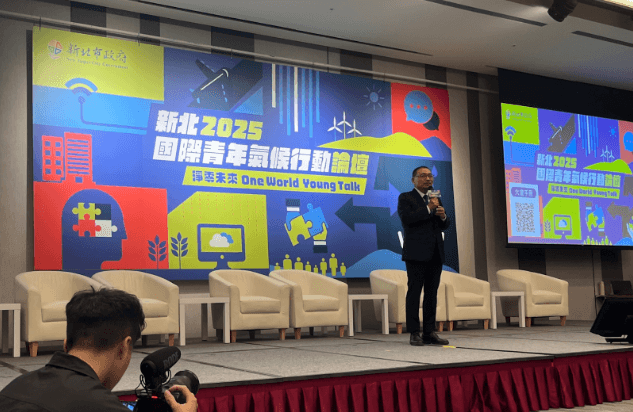
Mayor Hou Yu-ih of New Taipei City giving opening remarks

Across the stories of the youth and various speakers, I noticed several common threads among them, such as the importance of sharing information and knowledge, of empowering stakeholders, and of ensuring long-lasting action. Despite these similarities, each one had its own regional flair and creativity: for instance, the Agriculture Food Youth Forum (AFYF) in Korea held raves for young people to advocate for local and healthier food—may we remember to bring joy and fun into our climate action projects, too!

Or, consider Kotoko Yadomaru from NatureLit Japan, an organization working on climate action empowerment. She shared the graphic below on the path from awareness to action, highlighting that one’s readiness for change can’t be understood in binary terms. Rather, it involves a series of several steps of readiness, from being unaware of environmental issues, to having clear ideas of issues and actions, to trying but failing to take action, and finally, to being able to take action proactively.
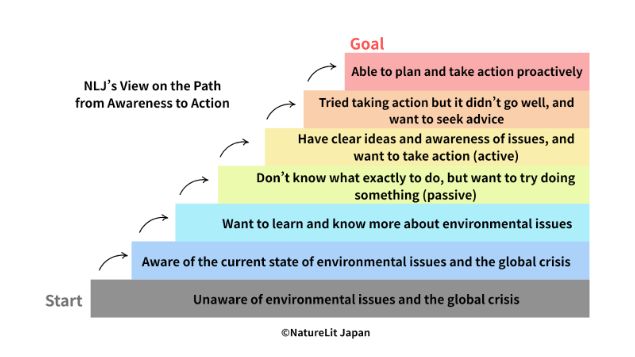
NatureLit Japan’s infographic on the path from awareness to action

Bringing this framework to analogous action-based programs in the United States would be fantastic. For instance, as a mentor for the California Youth Climate Policy (CYCP) Leadership Program by Ten Strands, I found that while some of my mentees are comfortable pushing their school policymakers, others are just beginning to get into the weeds of climate policy in schools. Using frameworks such as these to understand what stage an individual might be in can help mentors support students more effectively.

These are just a few instances of learning at this summit, but they highlight to me the way that differences—whether they be cultural context or regional constraints—can result in some incredible and innovative approaches. By being open to learning about other people’s climate action stories in their own lives and places, we can learn from their success and mistakes. Instead of focusing on how the specific places where these initiatives are implemented makes them different, may we instead recognize their similarities, combine this knowledge with our own lived experiences, and create innovative and effective climate action.
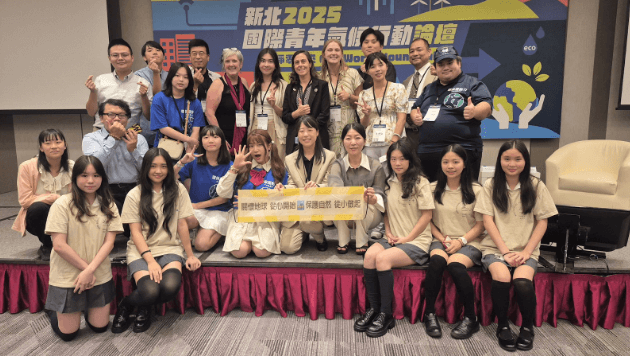
Group picture of speakers and youth together

Share this article:

Katinka Lennemann

Katinka Lennemann is a rising senior at UCLA, majoring in applied mathematics and statistics and data science. She began climate action and advocacy in her high school, where she successfully lobbied for the passage of a climate emergency declaration resolution and organized stakeholders into the Sequoia Union High School District Sustainability Committee. This cross-generational committee works on school-based climate action and is still in operation today. While studying at UCLA, she continued working in the sphere of climate education as a contributor to the development of Seeds to Solutions, a Ten Strands initiative to create solutions-oriented educational resources for K–12 students. She served on the project steering committee and had a significant role in the development of seventh-grade lessons, working with Global Nomads Group. Most recently, Katinka interned with the San Mateo County Sustainability Department, working on cataloguing methane gas equipment at schools and conducting a cost study on commercial kitchen electrification, part of a broader effort to drive building decarbonization. Katinka is passionate about policy as a lever for climate action and believes in learning from international approaches to sustainability. She hopes to pursue a career in strategy-driven climate roles or public policy creation, with a focus on empowering individuals and communities to take meaningful action. From her own background as a student leader, she loves to work with youth and is a mentor for the California Youth Climate Policy (CYCP) Leadership Program. Outside of climate work, she loves runny egg sandwiches, travelling, and a good Franz Kafka book with a cup of tea.

Katinka Lennemann is a rising senior at UCLA, majoring in applied mathematics and statistics and data science. She began climate action and advocacy in her high school, where she successfully lobbied for the passage of a climate emergency declaration resolution and organized stakeholders into the Sequoia Union High School District Sustainability Committee. This cross-generational committee works on school-based climate action and is still in operation today. While studying at UCLA, she continued working in the sphere of climate education as a contributor to the development of Seeds to Solutions, a Ten Strands initiative to create solutions-oriented educational resources for K–12 students. She served on the project steering committee and had a significant role in the development of seventh-grade lessons, working with Global Nomads Group. Most recently, Katinka interned with the San Mateo County Sustainability Department, working on cataloguing methane gas equipment at schools and conducting a cost study on commercial kitchen electrification, part of a broader effort to drive building decarbonization. Katinka is passionate about policy as a lever for climate action and believes in learning from international approaches to sustainability. She hopes to pursue a career in strategy-driven climate roles or public policy creation, with a focus on empowering individuals and communities to take meaningful action. From her own background as a student leader, she loves to work with youth and is a mentor for the California Youth Climate Policy (CYCP) Leadership Program. Outside of climate work, she loves runny egg sandwiches, travelling, and a good Franz Kafka book with a cup of tea.

Leave a Reply Cancel reply

Your email address will not be published. Required fields are marked *

This site uses Akismet to reduce spam. Learn how your comment data is processed.

Invest In Ten Strands

Make environmental literacy a reality for all California students!

Connect With Us

Sign up for our newsletter and stay informed.

"*" indicates required fields

This field is for validation purposes and should be left unchanged.

Copyright © 2025 Ten Strands

Facebook Instagram Twitter Linkedin

Contact | Privacy Policy | Terms of Use