Before working at Ten Strands, I worked for Key Curriculum Press, a publisher that focused on inquiry-based mathematics, including the simple idea that students should be supported in learning to think their way through problems, not in memorizing their way to passing a test. We used to say that if our programs worked, a student could sit for any exam, not just the one they’d crammed for.
In 2002, the No Child Left Behind Act took effect, and the landscape shifted sharply toward standardized testing. Our sales team, under commercial pressure, asked us to drop “innovators” from our tagline, “innovators in mathematics education.” We chose not to, unwilling to give up what mathematics education research had shown was most beneficial to students, without knowing how long the wait would be. Eight years later, in 2010, the Common Core State Standards in mathematics elevated many of the same approaches we had continued to champion — conceptual understanding over rote procedure, problem-solving and perseverance through difficulty, and mathematical reasoning students could apply and explain, rather than memorization aimed at a test.
I saw the same pattern again with California’s Next Generation Science Standards, adopted in 2013 with real pedagogical ambition and far less funding than math and English language arts received after Common Core adoption. Advocates spent more than a decade making the case for support, and as recently as 2022, only 55 percent of California districts had even purchased NGSS curricula and materials. Only this year did science finally earn a full place on California’s School Dashboard alongside English language arts and math — a change one advocate, testifying before the State Board, could barely get through without her voice breaking.
What do these two examples have in common? Innovative, research-based ideas that center student learning often emerge before a system is ready to receive, integrate, and fund them. Eventually, through persistence, they earn the recognition they deserve and become part of students’ core learning experiences, but only after years of being carried by people who believe in them and in the research. Back-to-school season, when a new state budget has just landed, is a good moment to ask where environmental literacy and climate action sit on that same arc.
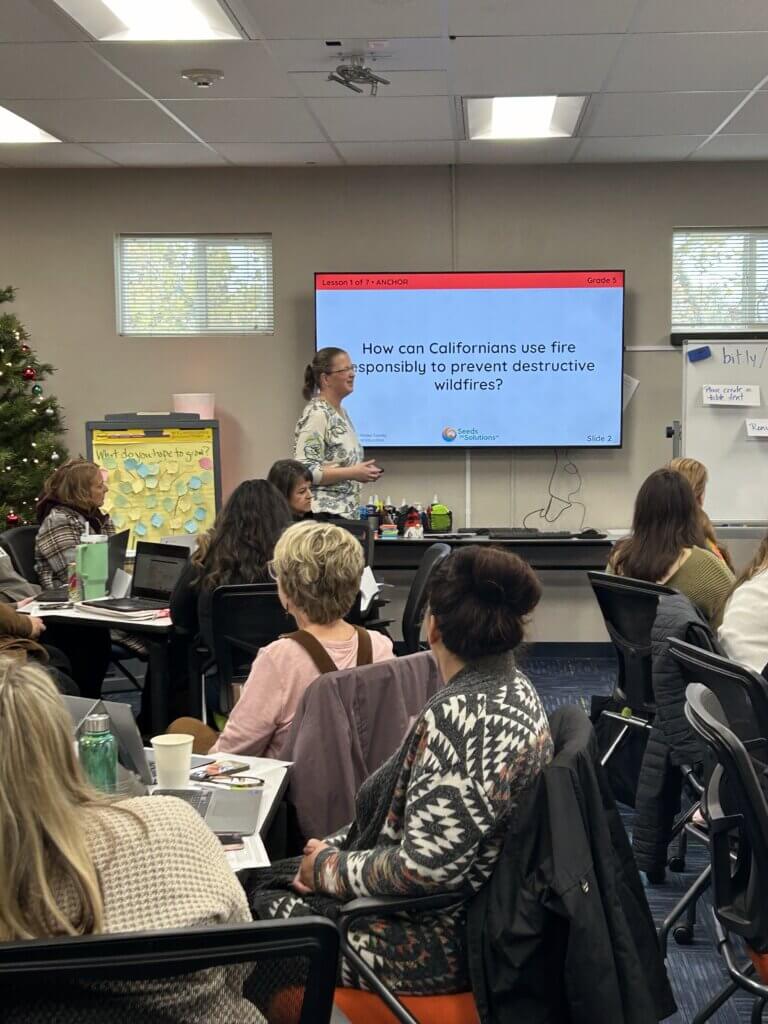
At Ten Strands, we focus on whole systems change related to environmental literacy and climate action, and work across what we call the 4Cs of curriculum, campus, community, and culture — what gets taught, the ground and buildings students learn on and in, and the community-based work supporting knowledge-to-action learning that build students’ sense that they’re equipped to respond to a changing climate, not just study it. That last part matters more than it might sound. Understanding the climate crisis and being equipped to act on it are different achievements, and California’s students need and want both.
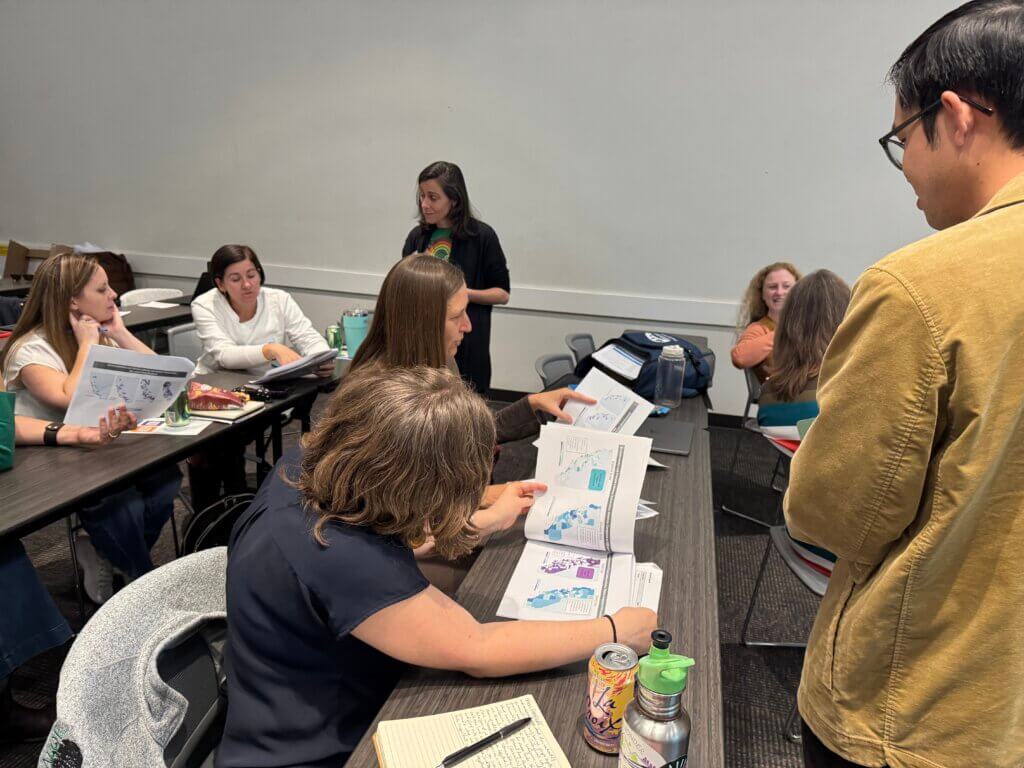
Specifically on curriculum and instruction, California’s definition of environmental literacy is embedded in our Environmental Principles and Concepts (EP&Cs), which were State Board-approved in 2004 and ratified as the state’s definition of environmental literacy through SB 720 (Allen) in 2018. The EP&Cs are integrated into science, history-social science, health, arts, math, and world languages frameworks. In the 2021 state budget, $6 million was appropriated to develop model curriculum units focused on climate change and environmental justice that integrate the EP&Cs. The product of that effort, Seeds to Solutions, is now available for free as an open education resource to all California teachers. However, the state has not committed to supporting teachers’ professional learning and implementation. Having worked in education publishing for most of my career, I can tell you that by the time you create the instructional resource, you’re only halfway there. It’s not the end of the journey. It’s like driving across the country to see the Pacific Ocean, only to stop in Nebraska. It’s a lot better if you keep going! In 2023, AB 285 (Rivas) passed, requiring California public schools to incorporate climate change instruction into the science curriculum for grades 1 through 12. Just this year, the State Board’s new Portrait of a Learner named environmental literacies within its “Critical Thinker and Problem Solver” competency, and environmental sustainability within “Community Contributor.” The Board was careful to note the Portrait is not a mandate, so no funding, no requirement, just a vision. Taken together, this amounts to growing legitimacy — the state, through its policies, frameworks, guidance, and expectations, is increasingly asserting that environmental literacy and climate action belong in California’s education system.

Legitimacy keeps arriving, but significant investments do not yet. Even science’s win comes with an asterisk: the state’s flagship investment in the subject, a $50 million grant to the California Mathematics, Science, and Computer Science Partnership, runs out in June 2027, and advocates are already organizing to make the case for more. $6 million for climate change curriculum in 2021 and $50 million for science, math, and computer science professional learning in 2022 sound like a lot when you have nothing, but the state’s education budget this year, from all sources, is $151.4 billion. California has shown that when it decides something is essential to students thriving, it invests at scale and keeps investing: universal transitional kindergarten, universal free school meals, expanded learning, and community schools, four commitments launched in a single 2021 budget bill, have received billions in sustained, ongoing funding ever since. Environmental literacy and climate action have gained recognition, but they have not yet received the same level of commitment. I applaud California’s investment in transitional kindergarten, universal meals, expanded learning, and community schools, and I’m proud to live in a state that promotes them, but there is no version of students thriving that does not include schools built for the climate crisis already here.
The curriculum side of this story is the part with the clearest paper trail. It’s also, on its own, an incomplete picture. Ten Strands’ own statewide Data Initiative, the first of its kind in the country, shows where the same gap lands once you look past curriculum, and it’s worth sitting with the numbers. Districts are far more likely to name environmental goals in their Local Control Accountability Plans, about 19 percent, than to actually fund them, about 12 percent. Only about 10 percent of districts employ any dedicated environmental staff, the clearest campus-and-community lever we track. And only about 10 percent have published a Facilities Master Plan in the last five years, meaning most California schools have no updated roadmap for the climate risks already disrupting learning today. Where staff investment has been made, we’ve seen real, visible movement. Everywhere else, the idea sits legitimized but unscaled.
This back-to-school season arrives alongside real structural change. AB 181, signed this July, creates a new, governor-appointed Education Commissioner beginning in January 2027, reshaping who runs the Department of Education. AB 126, the accompanying trailer bill, carries some of this year’s program investments. Neither was written with TK–12 environmental literacy and climate action in mind. Governors make their priorities known through their investments, and over the past eight years, this work has not been among them. Now we’re turning our attention to a new Governor and a new Education Commissioner, arriving at a moment when the climate crisis is more urgent and visible than ever before. That’s an opportunity to accelerate the change we believe needs to happen.
Extreme heat, wildfire smoke, flooding, and power outages are already disrupting learning today. Nearly six million California children attend school in buildings and on grounds still designed and funded as though none of that were true. Schools being built or renovated this year will shape what students experience over the next fifty years, and they need to be both sustainable and resilient.
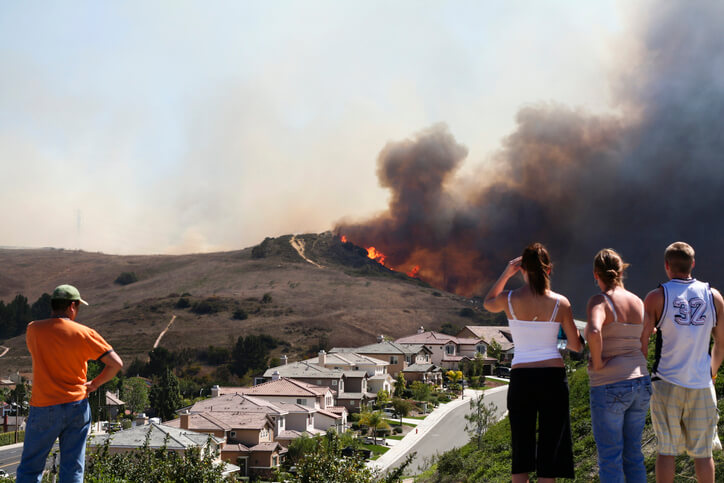
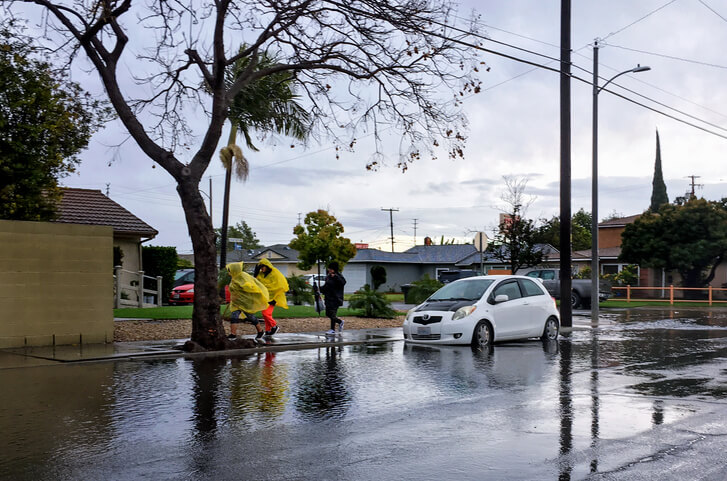
Photo Credit: Ten Strands
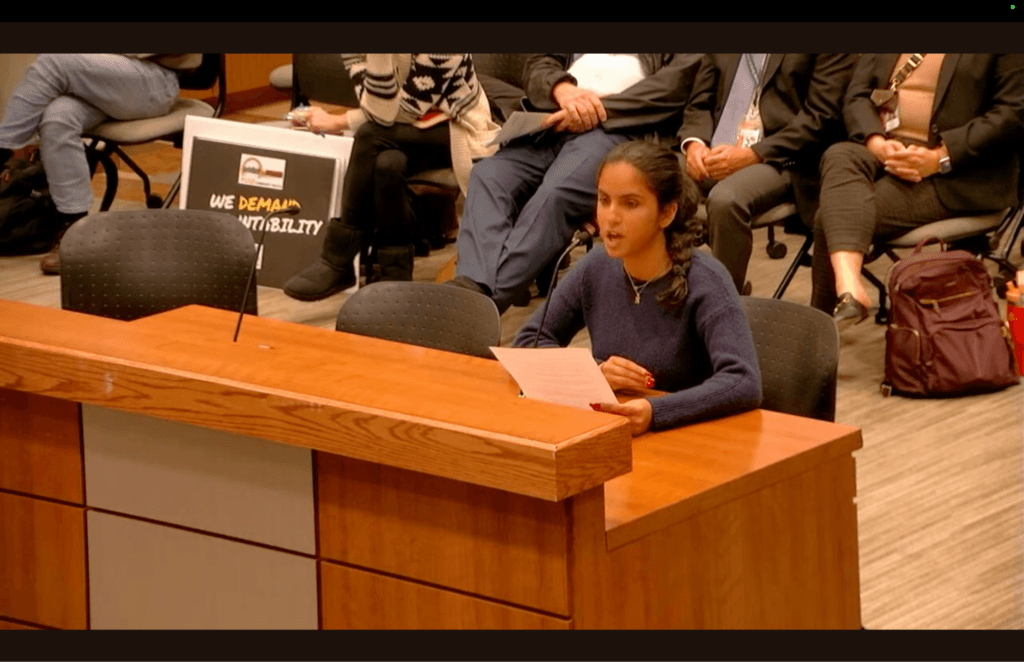
This is what whole-systems change means in practice — not only stronger curriculum, but campuses built to withstand what’s coming, and students equipped to act on what they’ve learned, not just study it. On campus, that’s why Ten Strands’ work through the California Schoolyard Forest System with Green Schoolyards America and the Climate Ready Schools Coalition with UndauntedK12 sits alongside our curriculum work. In community and culture, it’s why we run knowledge-to-action programs like our California Youth Climate Policy Leadership Program, where students spend 7 months building and implementing real advocacy campaigns because they’ve already noticed what needs to change.
None of this needs to wait. The whole system, including these newer investments, can apply a climate lens and act now: universal transitional kindergarten, universal free school meals, expanded learning, and community schools already reach students in exactly these settings — classrooms, campuses, and communities alike. Even so, that’s not enough on its own. Given the magnitude of the climate crisis and its real impact on children and communities across California, the state must also make an explicit, sustained investment in this work in TK–12, at a scale equal to what these other priorities have already received.
Distinguished climate scientist Dr. Ram Ramanathan’s MAST framework names mitigation, adaptation, and social transformation as inseparable parts of climate resilience. I’ve spent my career on the third of those. No version of mitigation and adaptation succeeds without an educated generation ready to lead it. That’s what I mean by necessary, but not yet sufficient: California has established the legitimacy this work needs, but it has not yet built the investment to match it. I’ve watched gaps close before, in math and in science, but always slower than the moment demanded. This time, the climate crisis won’t wait for us to catch up. Neither should we.
California’s students already understand this. If you’d like to hear it from them directly, we’d welcome you as a guest at the capstone event of one of our youth programs.
Karen Cowe is the founding CEO of Ten Strands, strengthening partnerships, strategies, and systems that promote environmental literacy so all California TK–12 students thrive in sustainable, resilient schools.

4 Responses
Thanks, Karen, for laying this out so clearly. It’s just so hard to understand how a wealthy state that got that way because it is rich in science, technology, natural resources, and natural beauty, could so under-support science, ocean, environmental, outdoor, and climate education! We are starving the goose that lays our golden eggs. But the foundation of research, proof of concept, and steady stream of policy wins is there—in large part as a result of Ten Strands and the network of coalitions that it holds together. The momentum is real. The payday is coming!
Thank you, Craig, for everything you’ve contributed to the momentum!
Karen, this was a very powerful piece – thank you for writing! I echo Craig’s comments on California investment – it is a conundrum: so much investment in things they have decided create real tangible capitalist outcomes – goods for money. And yet somehow our state (and our county) don’t see education as the cornerstone of all this invention. It is infuriating. When we run Our Changing Planet workshops for educators and educational leaders, a spark goes off, and they start to see how the last piece of MAST can work in their communities – the social transformation. Their students are giving us models and examples each year. How do we get the state funding to see this as a tangible investment? Thank you for the work you are all doing at Ten Strands – you have proven the value of coalition building, and communities that learn together are stronger for that shared knowledge and action examples!
Thank you, Trena! I really appreciate your comment.