The third annual Bay Area Climate Literacy Exchange took place on Monday, February 23, 2026, at Chabot Space & Science Center in Oakland. In many ways the event looked like the teacher professional learning day it was designed to be. It featured keynote speeches, workshops, and dedicated time for participants to meet and share ideas about climate education. However, a quick glance at the participants themselves and a deeper look at the agenda reveals the essential ingredients for a more transformative event.
Padma Balaji, a twelfth-grade student from Mission San Jose High School in Fremont, was one of the 49 middle and high school student climate leaders who attended the event alongside 184 adults. In an article for KneeDeep Times, a Bay Area–based magazine focused on climate resilience, she shares her first impressions of the exchange: “It’s hard to describe what it feels like to look around at more than two hundred people and realize that every single one of them cares deeply about climate change. There was an atmosphere of excitement that we rarely feel when talking about climate change or the education system—and it was contagious.”
While it is unusual for students to be included in teacher professional development spaces, student participation and leadership at the Bay Area Climate Literacy Exchange contributed to the magic and power of the event. In fact, the existence of the Bay Area Climate Literacy Exchange can trace its origins back to the students who advocated for school board resolutions in Oakland, Fremont, and Berkeley, calling for “an educational response to the climate emergency.” As these districts began to implement their climate literacy resolutions, teachers gathered together at the first climate literacy exchange in 2024 to share lessons and expand their climate knowledge.
The intergenerational nature of the event was evident both in the audience and in the presenters throughout the day. Plenary speaker Karina Lopez, a program manager for Frontline Catalysts, a youth power-building organization rooted in Oakland, laid out the collective challenge for the event when she addressed the exchange’s theme of Critical Hope. Critical hope means facing the realities of structural injustice honestly, while still believing—and working toward—a better future together. Karina reminded the audience, “Critical hope asks us to be honest. So let me be honest with you. The climate crisis is not coming for everyone equally. It never was. The communities bearing the heaviest burden of pollution, flooding, heat, and environmental destruction are overwhelmingly communities of color, immigrant communities, low-income communities. The people who contributed least to this crisis are absorbing the most harm. That is not an accident. That is environmental racism, and it’s intentional.” Karina also shared direction for a path forward. She said, “To the adults in this room: Our job is not to protect youth from the weight of the world. Our job is to make sure they don’t have to carry it alone. Show up. Move obstacles. And most importantly, trust them. Help them build the kind of community that makes it possible for us to survive.”
Keynote speaker California Energy Commissioner Nancy Skinner shared lessons from her decades of environmental and justice leadership in local and state government and reminded us that progress is possible when we work together to leverage our ability to imagine, define, and create a better future. Skinner drew parallels between today’s climate crisis and the threat of nuclear waste that impacted her formative years. At one time, California had plans to build nuclear power plants every one hundred miles along the entire coast of the state. However, the creation of energy efficiency standards on household appliances like refrigerators drastically reduced the demand for electricity, eliminating the need for the planned power plants.
Climate conversations and climate education are often framed as science topics, but Skinner described the essential role of social science and policy for making progress on our climate challenges. In 2010, as a member of the California Assembly, Skinner recognized that the full potential of renewable energy could only be realized with robust storage systems to capture surplus solar energy generated during the day, leading her to author energy storage legislation. Today, California has over 16,000 megawatts of battery storage, the most of any jurisdiction in the world besides China.
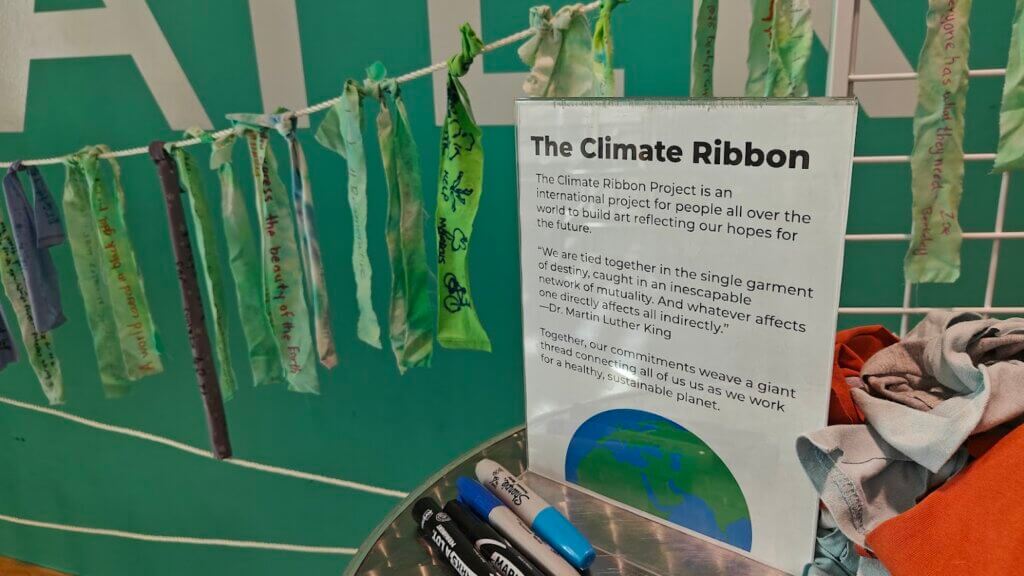
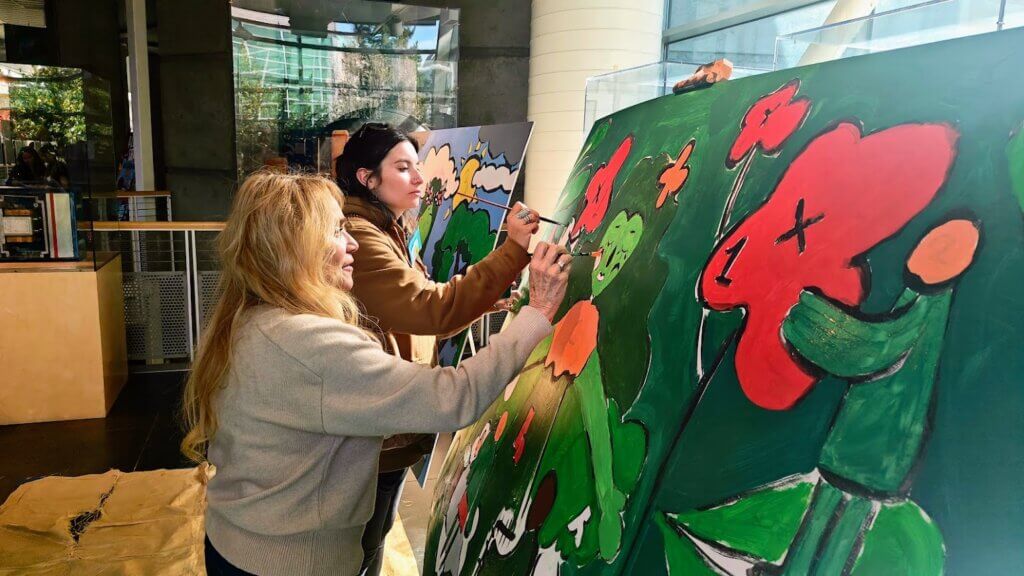
The Bay Area Climate Literacy Exchange leaned heavily into the notion that climate education must be interdisciplinary and include both STEM and the humanities. This notion was evident from both the setting of the event (Chabot Space & Science Center) and the activities in the lobby, which included the painting of a community climate mural (video) facilitated by the youth-led organization Brushstrokes for the Bay and an activity from the Climate Ribbon Project, which invited participants to define their climate dreams on a collective textile art project.
Workshops throughout the day balanced the intergenerational and interdisciplinary nature of the exchange. STEM-focused workshops included sessions like “Exploring Environmental and Climate Data and Simulations” and “Teaching Wildfires in High School Biology and Chemistry,” while humanities-focused workshops included sessions like “Gaming for Justice: Building a Practice of Radical Imagination through Table Top Role Playing Games” and “Dream Communities: Reflection, Imagination, Liberation.” Many other workshops took an interdisciplinary stance by bridging STEM and humanities, shared age-appropriate best practices, outlined climate action projects, or provided insights into implementation strategies for districts interested in expanding climate literacy. Full descriptions and materials from the event’s twenty-one workshops can be found on the Bay Area Climate Literacy Exchange website.
Workshop presenters included members of the California Environmental Literacy Initiative (CAELI), program leaders from nonprofit environmental organizations and government agencies, university professors, classroom teachers, media professionals, and high school students. Student-led workshops included Youth Climate Action and Youth Climate Justice panels as well as a climate art workshop.
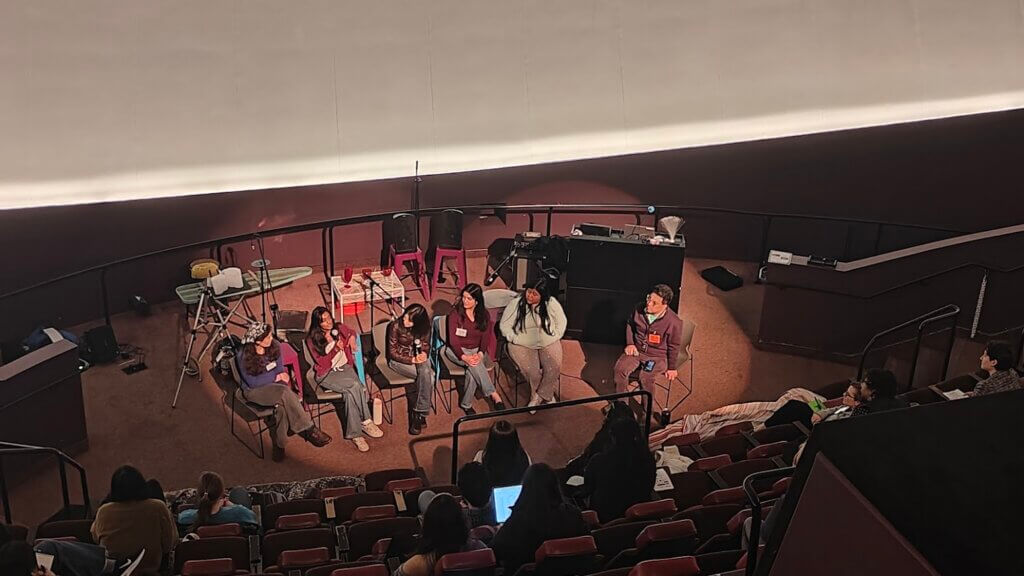
Other “essential ingredients” contributing to the transformative and inspirational nature of the event were the affinity group meetings where participants gathered in peer-alike cohorts (school administrators, community partner organizations, students, teachers grades TK–2, 3–5, 6–8, 9–12). All affinity groups had facilitated time to explore these essential questions:
- What injustices do young people in your community face?
- How comfortable are you discussing/addressing these issues?
- What examples of creating a better future have inspired you?
- Why is hope important, and how is it fostered in your community?
- What actions can you lead in your community to create a better future together?
- How do we get started? How do we keep it going?
Reflecting on the nature of the exchange, one participant noted, “My favorite part was simply getting together with other amazing people who are working on helping our communities learn more about climate change. I think the affinity group was the most impactful.”
The full inspirational impact of the Bay Area Climate Literacy Exchange was evident in the closing ceremony (video), which felt more like a hootenanny or a rally than a staid conference. Middle school musicians played “instruments” made from repurposed and reclaimed household items. Staff members from StopWaste led a sing-along, and high school students shared rousing climate-inspired, spoken-word poetry reiterating the exchange’s call to action and theme of Critical Hope. To reinforce the importance of solidarity and collective action, the event ended with the farmworker’s unity clap. Participants began clapping slowly in unison, building tempo and strength until the Tagalog call of “isang bagsak!” signaled a final mighty clap reminding us that we rise and fall together.
2026 Bay Area Climate Literacy Exchange by the numbers:
- 233 participants including, 184 adults and 49 students
- 42 schools
- 17 school districts
- 3 independent schools
- 6 county offices of education
- 35 nonprofit organizations
- 9 local, regional, and federal agencies
- 6 universities
…collectively serving over 800,000 students in 14 counties.