
This article was developed for the CAELI Green Ribbon Initiative spring 2026
Green Hills Elementary School, part of the Millbrae Elementary School District in San Mateo County, is building a school culture where environmental stewardship, student leadership, and community engagement are becoming increasingly interconnected parts of everyday school life. In 2026, the school was recognized as a California Green Ribbon Schools (CA-GRS) Bronze Awardee, reflecting its growing commitment to environmental literacy, sustainability, health and wellness, and student-centered leadership.
At Green Hills, environmental and climate action is not approached as a stand-alone initiative or enrichment activity. Instead, school leaders have worked to integrate sustainability into multiple aspects of the school experience—from campus operations and student leadership opportunities to outdoor learning, wellness initiatives, and family engagement. Based on a site visit in late April as well as conversations with Principal Kerry Dees and Director of Facilities Rudy Correa, it is clear that this work has been shaped by a shared belief that environmental stewardship can strengthen both the school community and student learning experiences.
The school’s progress has been supported through collaboration with district facilities leadership, county partners, engaged parents, and enthusiastic students who are helping make sustainability increasingly visible across the campus. While Green Hills describes its work as still emerging, the school has developed a strong foundation for continued growth and deeper integration over time.
The Beginning of Green Hills Elementary’s Sustainability Journey
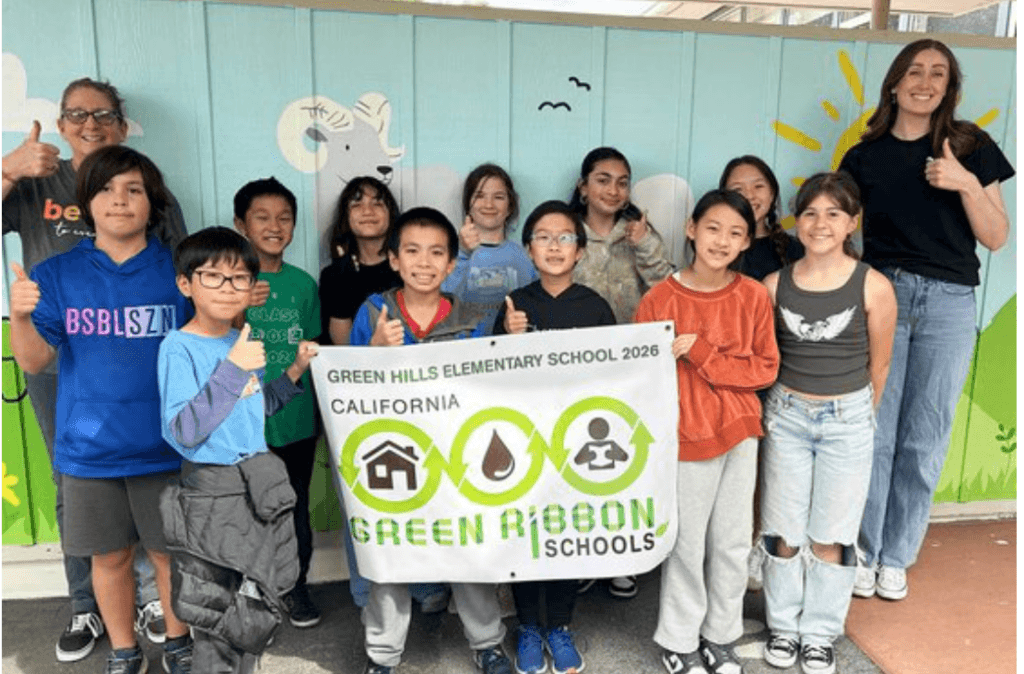
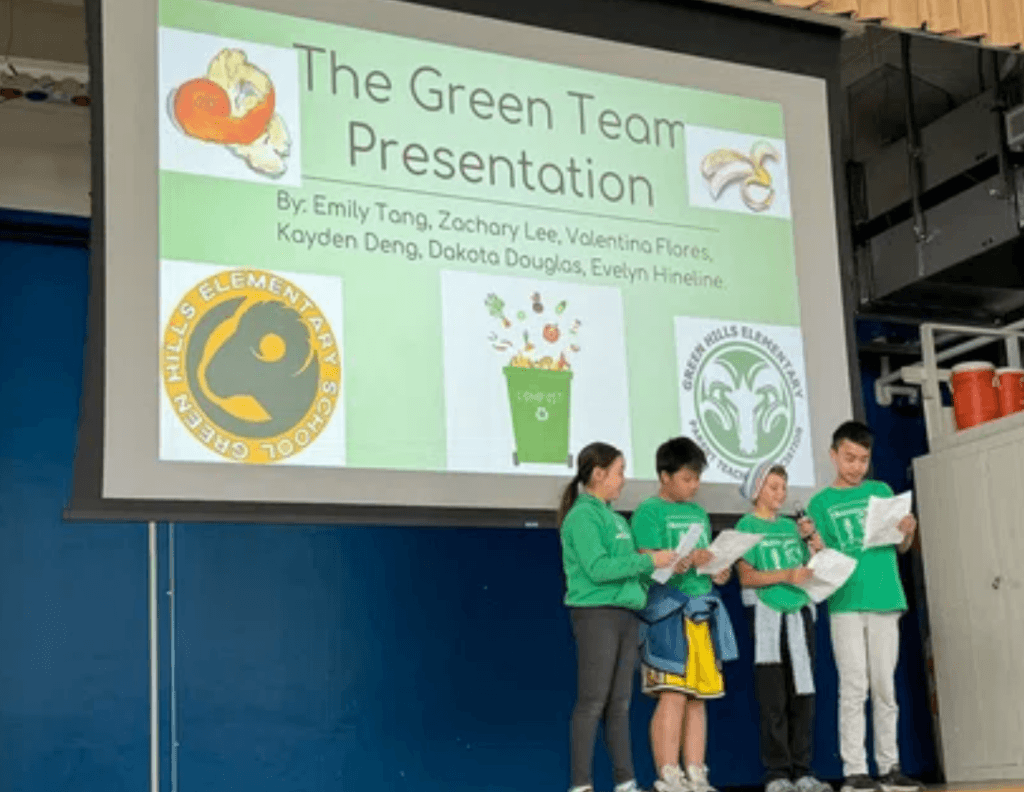
Momentum for environmental initiatives at Green Hills grew in the years following the pandemic, when school leaders began placing renewed focus on connection, community, and student engagement. During this period, the school expanded opportunities for students to participate in environmental learning and stewardship activities that connected directly to daily campus life. One important milestone was the development of the school’s Green Team, which began approximately five years ago and now includes more than 20 students annually.
(Photo credit: ACSA – March 2026.)
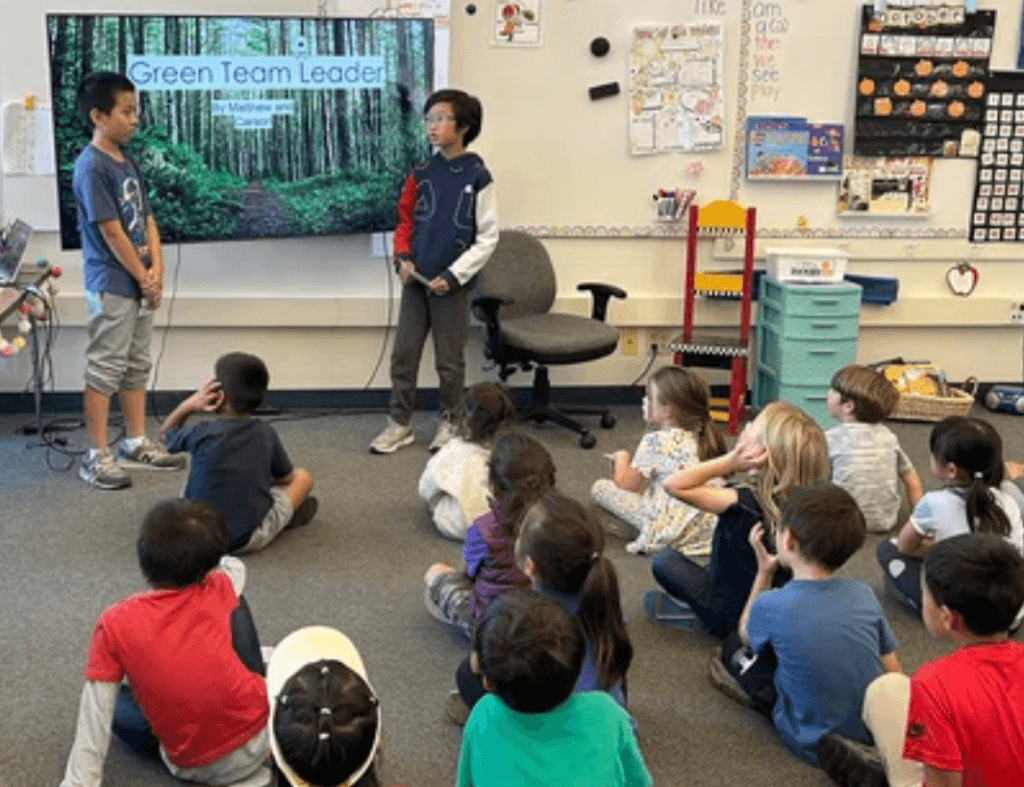
The Green Team has helped create both visibility and structure for sustainability efforts on campus while also providing leadership opportunities for students. Rather than serving as a symbolic club, students actively participate in supporting and reinforcing environmental practices throughout the school community.
At the same time, Green Hills expanded garden-based learning opportunities for students across grade levels. Through hands-on experiences in the school garden, students engage directly with environmental concepts related to biodiversity, food systems, natural cycles, and waste systems. These outdoor learning experiences help connect environmental education to observation, inquiry, and real-world systems in ways that are tangible and developmentally meaningful for elementary students.
From Campus Projects to Schoolwide Systems
As early sustainability efforts gained traction, Green Hills gradually began building the routines, systems, and partnerships needed to support more integrated environmental practices across campus life. School leaders emphasized that the goal was not simply to implement isolated projects, but to create systems that students could interact with regularly and learn from over time.
This work has been strengthened by strong collaboration between school leadership, families, the PTA, and district facilities and operations staff. Principal Kerry Dees has played a central role in championing the school’s sustainability vision and helping connect environmental initiatives to broader goals around student leadership, authentic learning, campus improvement, wellness, and community engagement. At the district level, Rudy Correa and the facilities team have helped support and sustain many of the operational systems that make this work possible.
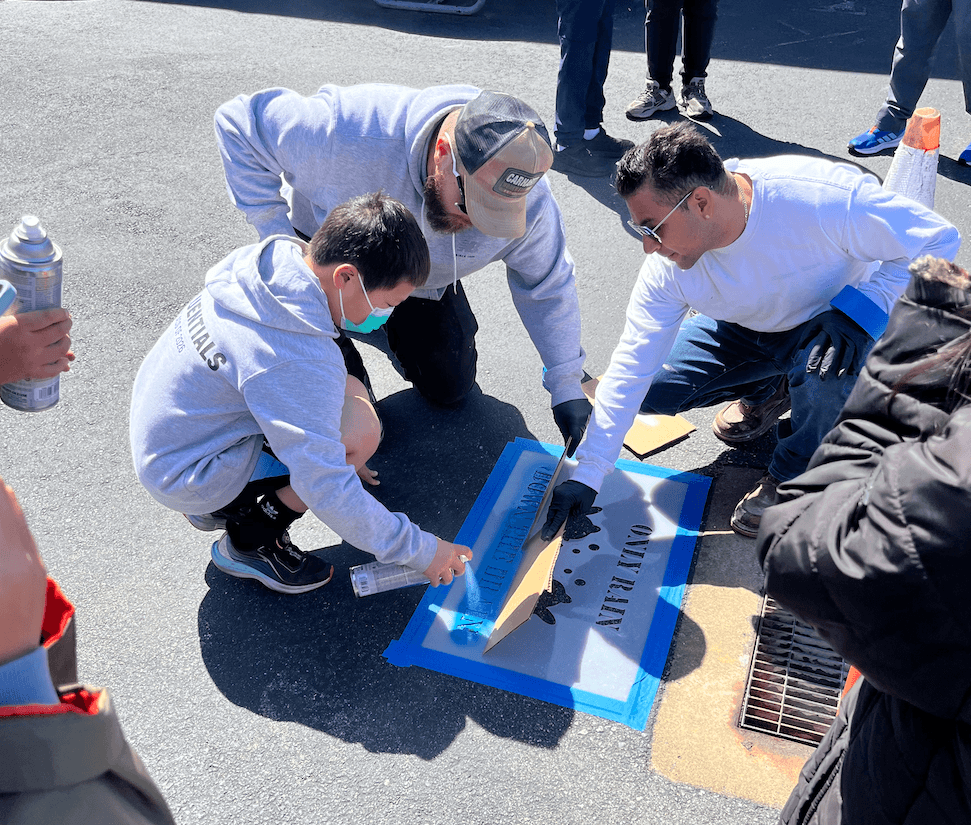
One notable aspect of Green Hills’ approach is the willingness of school and district leaders to learn from other schools and sustainability leaders and bring promising practices back to their own campus. For example, during a late April site visit conducted by Ten Strands, students and staff were preparing to spray paint messages near campus storm drains reminding the community that the drains flow directly to the bay—an idea that was a best practice that Principal Dees and Facilities Director Correa had seen when attending the Green Ribbon Awards ceremony in San Diego. They were inspired by seeing how small yet visible efforts like this demonstrate the commitment to environmental stewardship efforts, helping to reinforce the idea that the campus is a laboratory for learning—and in this case, allowing students to connect local actions to larger watershed systems and environmental impacts.
Sustainability in Action Through Green Ribbon Pillars
Green Hills Elementary School’s sustainability efforts reflect growing alignment with the three pillars of the California Green Ribbon Schools program: reducing environmental impact, improving health and wellness, and providing effective environmental education. Rather than existing as disconnected initiatives, many of these efforts reinforce one another and are increasingly embedded into the everyday experiences of students.
Pillar I: Reducing Environmental Impact and Costs
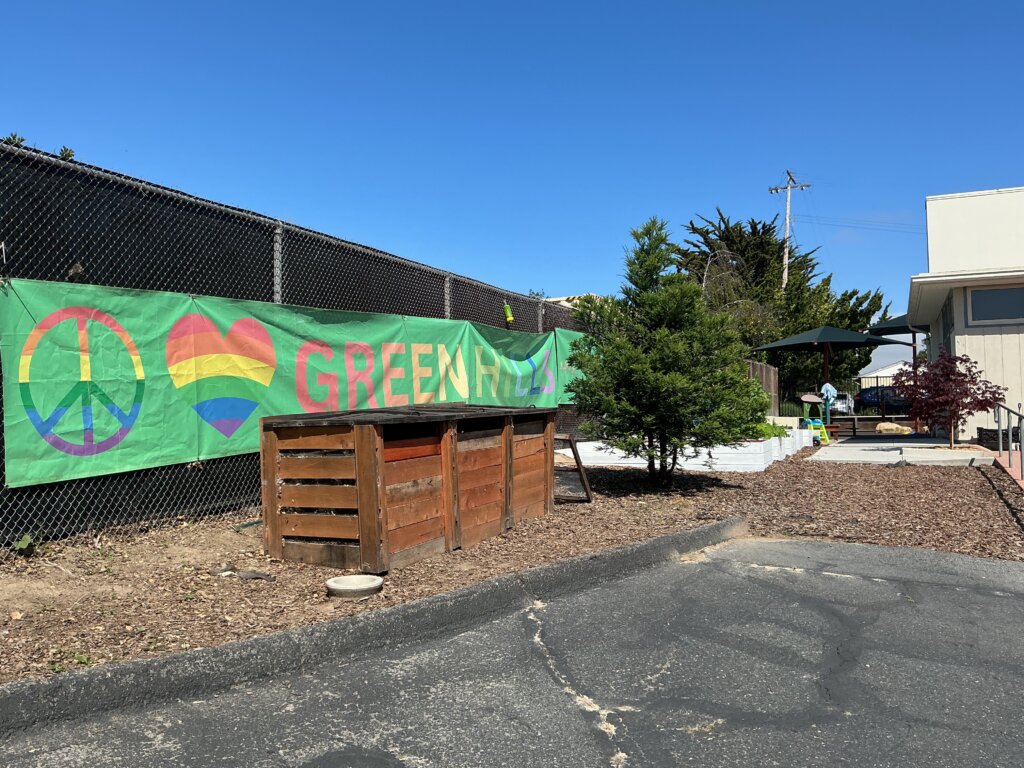
At Green Hills, reducing environmental impact is visible through both student-led stewardship efforts and ongoing improvements to campus facilities and operations. Composting has become a highly visible part of campus life, with students actively participating in sorting and managing waste as part of their daily routines. Members of the 5th grade Green Team help support these systems alongside school leadership, transforming waste reduction into a shared campus responsibility.
The school has also expanded sustainability efforts through operational and infrastructure improvements. Conversations during the site visit highlighted energy efficiency upgrades supported through Proposition 39 funding, including the replacement of an aging boiler system with a heat pump. Green Hills has also partnered with community organizations such as Flows to Bay to support rain barrel installation and stormwater education efforts connected to watershed awareness.
Environmental stewardship is also reflected in campus beautification and greening efforts. Prior to the site visit, additional tree planting had taken place on campus, contributing to shade, campus aesthetics, and long-term environmental benefits. During the visit itself, students and staff were actively preparing storm drains with educational messaging reminding the community that runoff flows directly to the bay, helping connect campus practices to larger environmental systems.
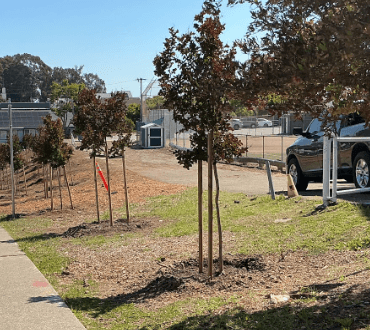
The school’s facilities and operations efforts were further recognized through Green Business Certification during the 2024–25 school year, reflecting attention to sustainability practices such as green cleaning and environmentally responsible campus operations. Additional community-supported efforts, including PTA-led clothing and shoe donation programs, further reinforce the school’s broader culture of reuse, waste reduction, and environmental responsibility.
Pillar II: Health and Wellness
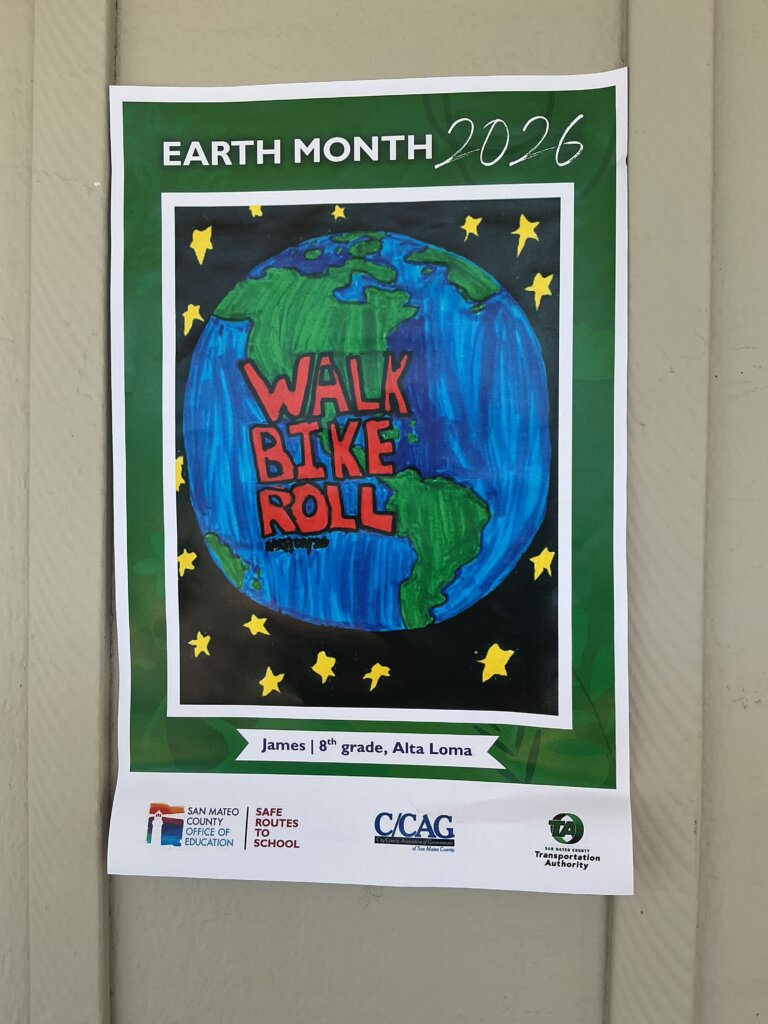
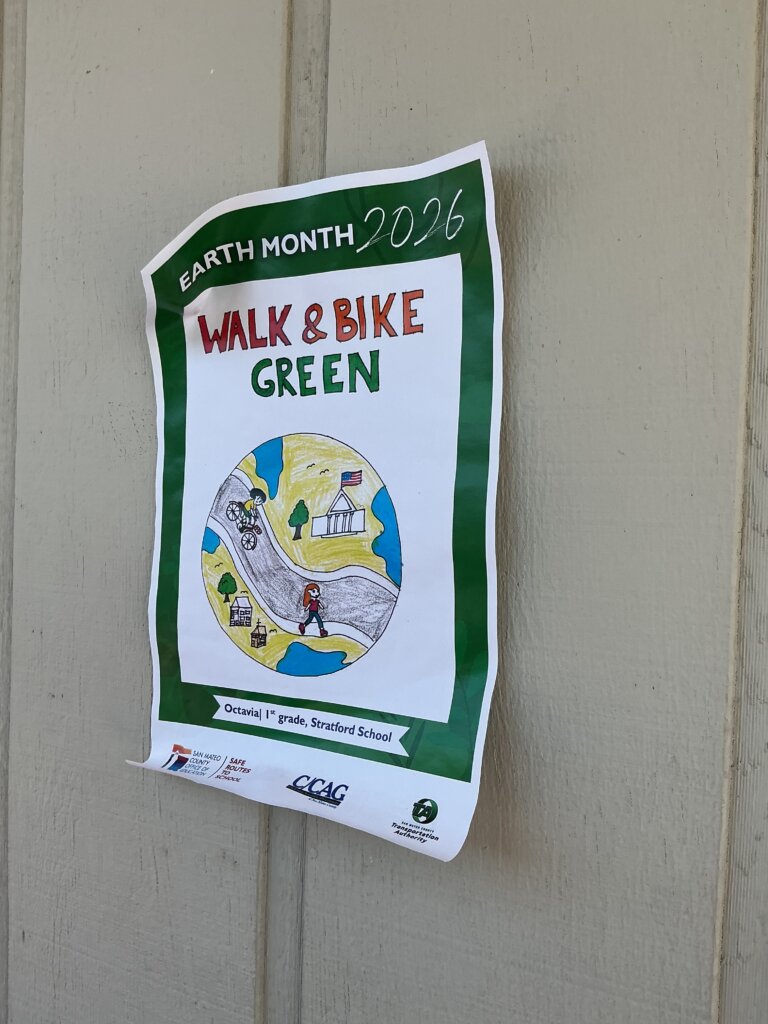
Green Hills’ sustainability efforts also intersect strongly with student health, wellness, and community connection. One example is the introduction of Millbrae’s first walking school bus program through Safe Routes to School. Initially developed in response to traffic and safety concerns, the effort has evolved into a broader community-building initiative that encourages active transportation, strengthens relationships among families, and promotes student wellness.
As students walk to school together, the program helps reduce congestion while also fostering routine, belonging, and stronger social connection among students and families. Access to garden-based education and outdoor learning opportunities further supports student wellness by encouraging students to spend time outdoors while engaging in hands-on and collaborative learning experiences.
Family and community partnerships continue to strengthen many of these efforts. PTA and parents support initiatives such as the walking school bus, clothing and shoe donation drives, and broader activities that help connect environmental stewardship, the community, and student well-being.
Pillar III: Environmental and Sustainability Education
At the core of Green Hills’ approach is a commitment to experiential and student-centered environmental learning. Sustainability is not confined to a single lesson or subject area, but is increasingly integrated into how students interact with the campus itself.
The school’s composting and garden systems function not only as operational practices, but also as learning environments where students develop understanding through direct participation. Students engage with concepts related to growth, waste, biodiversity, food systems, and environmental stewardship through experiences that connect classroom learning to real-world systems.
Student leadership is a particularly important component of this work. Through the Green Team and other campus activities, students are encouraged to take ownership of environmental practices and help reinforce sustainability habits across the school community. School leaders shared that these experiences often extend beyond campus, influencing student behaviors and conversations at home and helping cultivate a broader culture of stewardship within the community.
Family and community engagement further strengthen these efforts. Parents help support initiatives such as the walking school bus program and other school-based sustainability activities, while community partnerships expand opportunities for learning and involvement. Still, curriculum and instruction are areas of growth in terms of greater integration, and Principal Dees is eager to see the work go deeper across grade levels and subject areas.

A School on the Rise
Green Hills Elementary describes its sustainability work as still emerging, but the school has already established important foundational systems and partnerships that position it for continued growth. Rather than viewing Bronze-level Green Ribbon recognition as an endpoint, school leaders see it as part of an ongoing process of strengthening environmental literacy, student leadership, campus stewardship, and community engagement over time.
Through the combined efforts of school leadership, district facilities staff, families, and students, Green Hills Elementary is demonstrating how environmental and climate action can become integrated into the broader identity and culture of an elementary school community. Its journey highlights how sustainability efforts can support not only environmental goals, but also student empowerment, authentic learning, wellness, and long-term community connection.
Learn more here
- ACSA Feature on Green Hills (March 2026): Students Drive Green Efforts at Green Hills Elementary School
- California Green Ribbon Program
- CAELI Resources for Green Ribbon