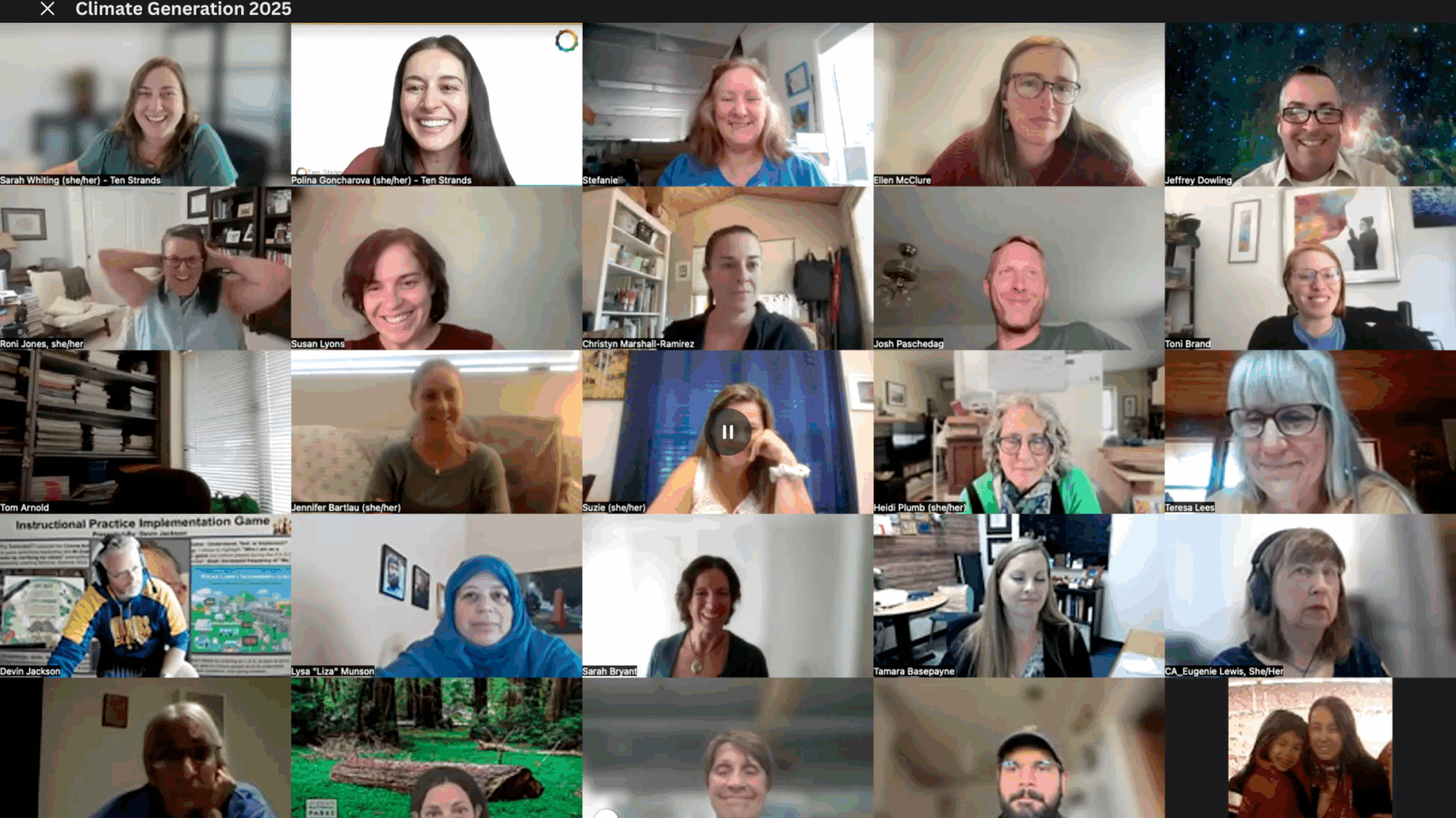
This July, more than 290 educators from across North America gathered virtually for the 20th Annual Teach Climate Network Summer Institute, hosted by Climate Generation. Taking place July 14–16 or 17, the institute offered a three-day professional learning experience focused on interdisciplinary, justice-centered approaches to climate change education. The final two days of the institute, July 16 and 17, were reserved for regional cohort days, allowing place-based learning to flourish.
The Teach Climate Network Summer Institute itself brought together a powerful national lineup of speakers. Participants across the country created personalized learning schedules, gained access to classroom-ready resources, and exchanged ideas with peers during live workshops and asynchronous discussion boards.
Among the total participants, twenty-seven California educators joined in, contributing both to national workshops and to the California Cohort Day, a full-day virtual experience on July 16 led by Ten Strands. The regional cohort model, now in its third year, gave educators space to explore local climate challenges and share place-based strategies that complement the broader national learning.
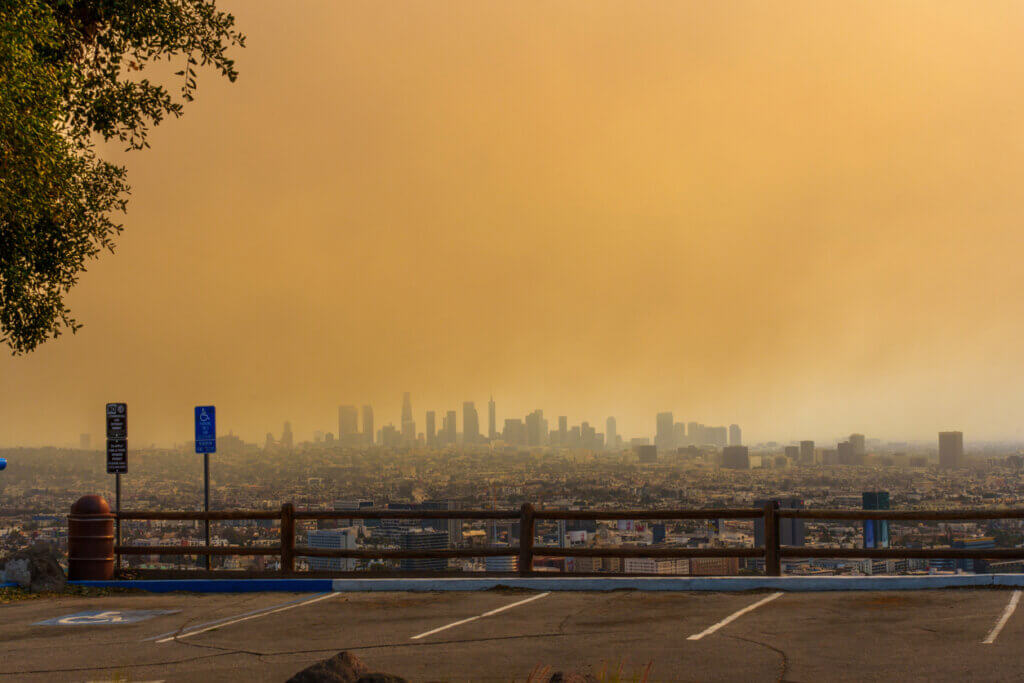
This year’s California Cohort Day came at a time of heightened emotional and environmental stress. Earlier in the year, devastating wildfires near Los Angeles displaced families, disrupted schools, and deepened climate anxiety in communities already navigating compounding crises. These events helped shape the direction of the cohort day, which emphasized trauma-informed practices, youth voice, and healing-centered education. The day was designed by Ten Strands, led by Sarah Whiting and Polina Goncharova, and included guest speakers, student leadership, interactive simulations, and art-based reflection, creating a space that acknowledged not just how we teach climate change but how we process and live through it.The day began with a powerful keynote from Dr. Sarah Jaquette Ray, professor of environmental studies at Cal Poly Humboldt and author of A Field Guide to Climate Anxiety. Drawing from her research and experience, Dr. Ray offered a framework for understanding climate anxiety in young people, not as a problem to be solved but as a meaningful response to a crisis that deserves care and attention. Her talk blended theory with practical strategies, inviting educators to shift from urgency to agency in their climate teaching. Her major theme was a shift in climate education to help students “build a world they desire, not survive a world they fear.”
Building on that foundation, Dr. Roni Jones, director of curriculum at Ten Strands, introduced the Seeds to Solutions™ curriculum. This free, open‑education resource was developed in response to community and educator demand and provides age‑appropriate, California‑specific instructional units across grades K–12. The curriculum transforms classroom learning into inquiry‑driven exploration, empowering students to investigate real environmental challenges—from wildfires to air quality to water resilience—and design locally rooted, justice‑centered solutions. The units embed trauma‑informed practices and align with California’s standards and Environmental Principles & Concepts. In breakout groups, educators discussed how to adapt the framework in their own contexts and reflected together on shared insights and challenges.
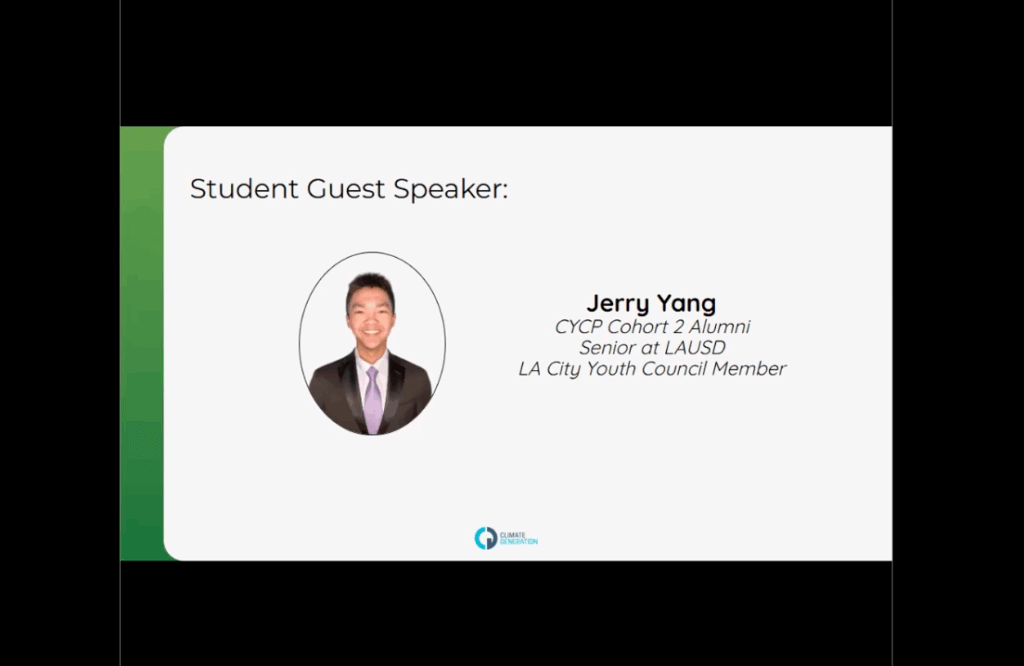
After lunch, the group heard from Jerry Yang, a high school student who shared his personal story of living through the Aliso Canyon Gas Leak (2015) as an elementary school student in California. His reflections on trauma, resilience, and the role of youth in climate leadership grounded the day’s themes in lived experience, offering a deeply human lens on what it means to teach and learn in a time of ecological disruption.
From there, the focus shifted toward systems thinking and experiential learning. Polina Goncharova, partnerships programs specialist at Ten Strands, facilitated a simulation that guided participants through a narrative arc from climate impacts to addressing trauma to collective action, across diverse California regions. The activity asked educators to step into the shoes of students navigating real-world climate stressors and to consider how empathy and systems thinking can shape classroom responses.
To support emotional processing, Rachel Moszkowicz, an intern with the Climate Mental Health Network, led a hands-on art activity that invited participants to reflect and create. Through creating a color palette to represent positive memories, educators tapped into the emotional side of their work, making visible the joy, hope, possibility, and connection that often remain unseen in the climate crisis and climate education movement. Rachel shared that “Love and gratitude are important to return to to sustain us in this climate work.”
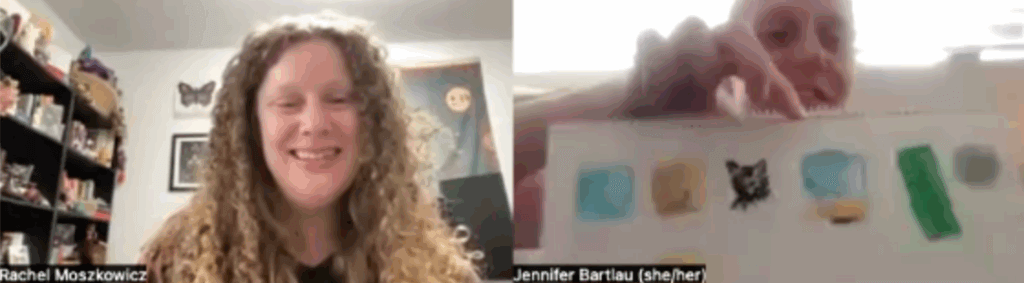
Screenshot of California Cohort Day participant Jennifer Bartlau sharing her palette with guest speaker Rachel Moszkowicz.
The day concluded with a session led by Sarah Whiting, data science director at Ten Strands, who introduced a trauma-informed goal-setting tool to help educators map out practical next steps across campus, curriculum, community, and culture. Participants were encouraged to reflect on their spheres of influence and set intentions for integrating trauma-informed practices in their schools and communities.
As a final reflection, participants engaged in a virtual version of the Climate Ribbon ritual, using a shared Padlet to name something they love and hope to never lose to climate change. The digital wall quickly filled with heartfelt entries, from cherished memories to beloved landscapes. Participants “hearted” the reflections that resonated with them, creating a shared sense of care and affirming a commitment to fighting to protect the things we love. It was a moving day designed not only to inform but to connect, heal, and inspire.
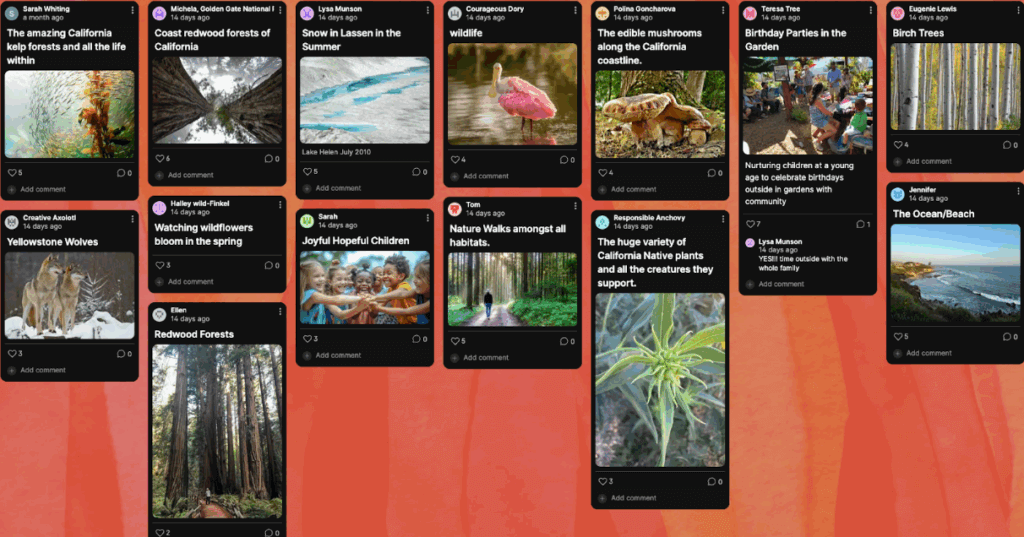
Screenshot of the Virtual Climate Ribbon Padlet.
While California’s participation was just one piece of the broader institute, the cohort day offered a meaningful example of how climate education can go beyond content delivery. It can be a space for healing, imagination, and transformation, especially when it centers the lived experiences of young people and educators navigating climate realities in their own backyards.
We’re grateful to all the speakers, educators, and students who contributed their time, stories, and energy to the 2025 Summer Institute and California Cohort Day. We especially thank Dr. Sarah Jaquette Ray, Dr. Roni Jones, Jeffrey Dowling, Susan Lyons, Josh Paschedag, Stefanie Freele, Rachel Moszkowicz, and Jerry Yang for their presence and leadership.
California Cohort Day agenda: https://bit.ly/CACohortDay2025Agenda
California Cohort Day recording: https://bit.ly/CACohortDay2025VideoRecording
Learn more about the Teach Climate Network Summer Institute: https://climategen.org/summer-institute/