
Ask any Angeleno about the Inland Empire, or “the IE,” and you’ll get a dozen different answers. To the uninitiated, the Inland Empire is the name given to Riverside and San Bernardino Counties, two sprawling counties sitting on Tongva, Cahuilla, Serrano, and Luiseño land. The first Americans arrived in 1851: a group of Mormons and their enslaved peoples, among them Biddy Mason, a central figure in the early Black community in Los Angeles. After the Civil War, the railroads came, and with them, citrus.
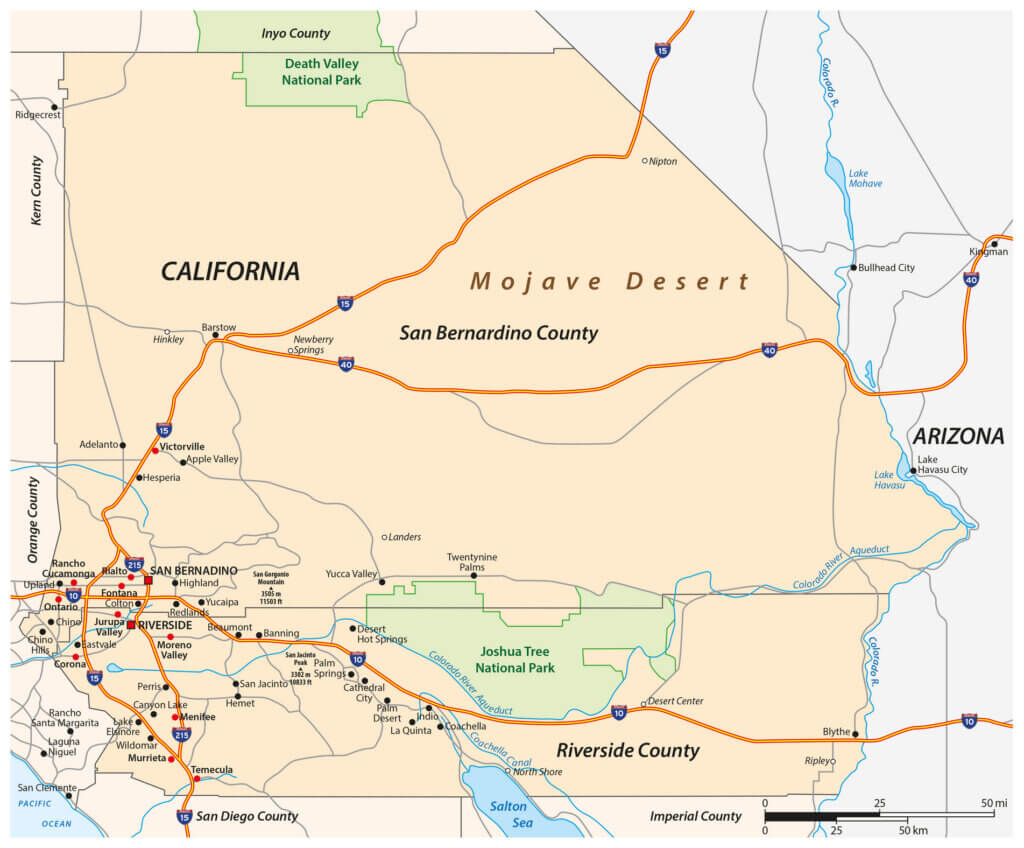
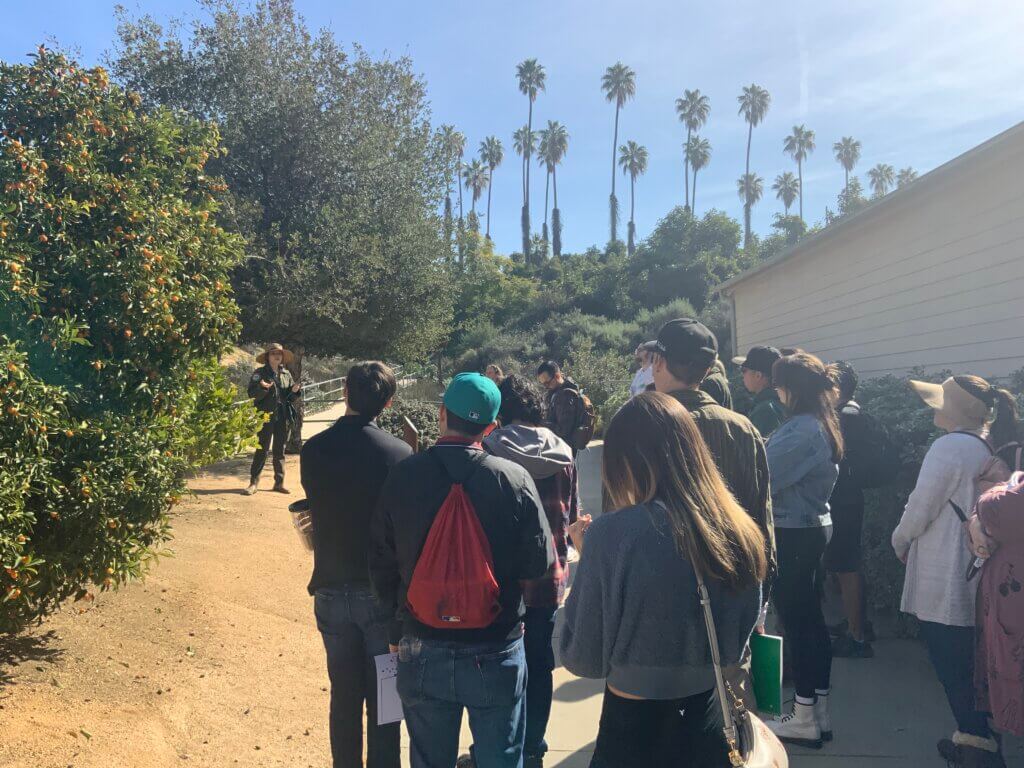
The region was soon dubbed the “Orange Empire” after the stretch of citrus fields that extended from Pasadena to Redlands. That name evoked sunshine, abundance, and a romanticized Spanish fantasy. In Orange Empire: California and the Fruits of Eden, historian Douglas Cazaux Sackman traces how the growers’ associations used scientific management to construct that image in a way that obscured the industrial reality beneath: packing houses, segregated labor camps, and a workforce drawn from Mexican, Filipino, Sikh, Black, Japanese, Chinese, and Korean immigrant communities who lived apart from white residents in segregated communities historians call colonias. Historian Matt Garcia tells that more complete story in A World of Its Own: Race, Labor, and Citrus in the Making of Greater Los Angeles, 1900-1970.
The land and the people of the IE are intertwined, costars in the historical narrative of the region. UCLA ethnic studies scholar Genevieve Carpio describes this relationship as a “crossroads,” where the ability to move freely was defined by racial identity. In Collisions at the Crossroads (2019), Carpio analyzes the way the IE’s environment was essentially weaponized through laws like bicycle ordinances targeting Japanese laborers and traffic checkpoints that racialized Mexican drivers to maintain a “fantasy past” that resulted in the IE appearing to be a landscape of leisure and easy travel—but only for some. Unfortunately, the local narratives and stories of the people and the land of the IE are largely unknown, even to the students who live here.
Teaching the Land as a Primary Source
Our project, IE Stories: Using Local Narratives in K-12 Instruction, seeks to change this. The project is a collaboration among A People’s History of the IE, The History and Relevancy Project, The Civil Rights Institute of Inland Southern California, Cal State University, San Bernardino, UC Riverside, and the UCLA History-Geography Project (HGP). This unique collaboration demonstrates the power that institutions have to leverage their scholarship and resources to support students and teachers. Together, we develop history and ethnic studies lesson plans for teachers in Riverside and San Bernardino County schools, aligned to California’s Common Core Standards, History-Social Science Content Standards, History-Social Science Framework, the Ethnic Studies Model Curriculum, and the Environmental Principles and Concepts (EP&C’s).
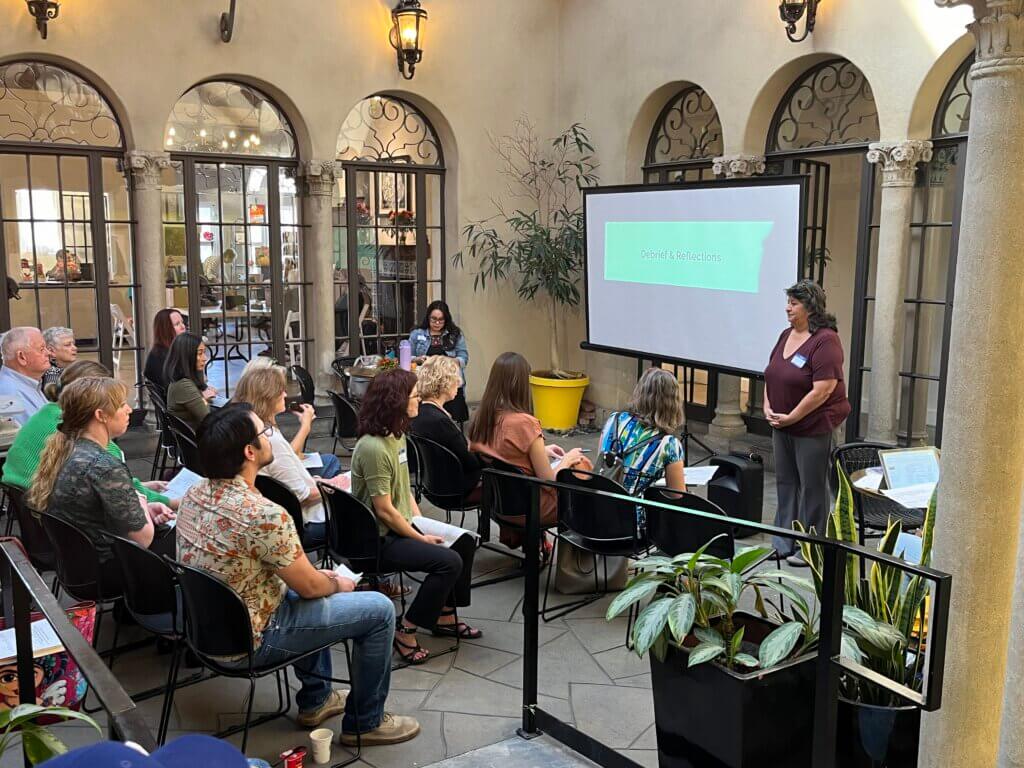
By using local archives, teachers can facilitate a “reading of the world,” recognizing that the places we inhabit are political texts, shaped by power, and that learning to read them is an act of both inquiry and identity (Gruenewald 2003). In the IE, that means reading the citrus fields and the colonias together. It means understanding that the land students walk on holds histories that were deliberately obscured and that recovering those histories is not nostalgia but a form of civic reasoning. Researchers Mark Kissling and Jonathan Bell (2020) argue that history-social studies has been too narrowly focused on human society alone. The land is not merely a backdrop—it is a participant. The citrus groves that made the Orange Empire were planted, tended, and harvested by communities who were denied the freedom to move through the very landscape they built. Teaching that story to the students who live in that landscape now is the work of an education that prepares them to be members and citizens of the community, not conquerors of it. IE Stories is built on the idea that when students learn to see their place clearly, they become more capable of imagining and building something better in it.
From Citrus to Logistics
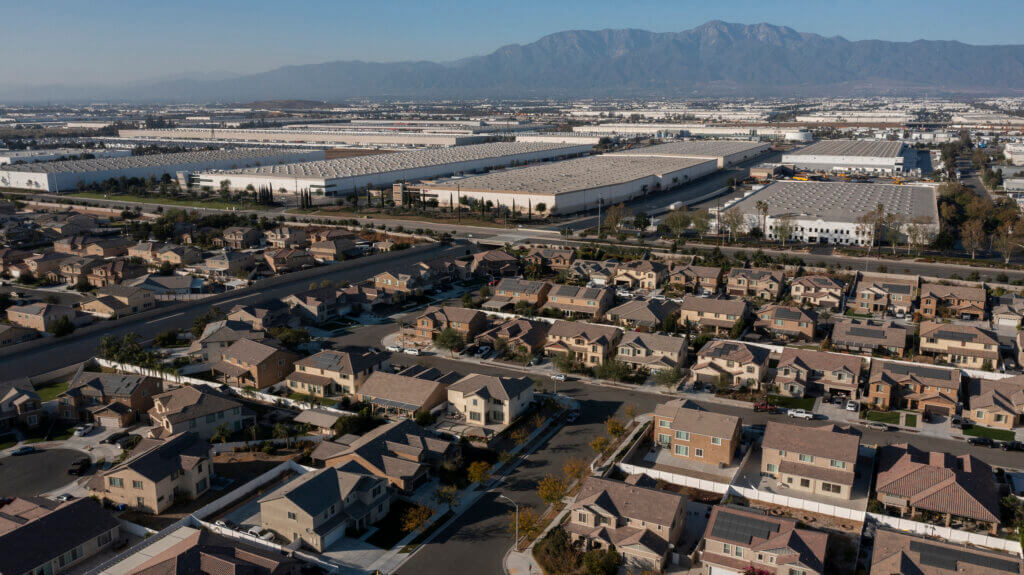
One example is an IE Stories lesson written by Amanda Sandoval, one of the UCLA HGP’s teacher leaders and a well-known history and ethnic studies educator. Sandoval’s lesson asks students to examine one of the region’s most urgent environmental issues: toxic air quality caused by the rapid expansion of logistics and warehouses. The Inland Empire is now the distribution hub for much of the American Southwest. The enormous warehouses and data centers are replacing what were once citrus groves and farmland. Using “The Four ‘I’s’ of Oppression” (Bell 1997) as an analytical framework, Sandoval’s lesson traces history of Mira Loma, California, and the social justice movements that have emerged in response to the area’s growing logistics industry. Students engage with primary sources through discussion, written reflection, and a culminating creative assessment: a comic strip that asks them to respond to the lesson’s inquiry question. This is what justice-centered environmental instruction looks like in practice. Students are analyzing issues in their own communities through frameworks that examine power dynamics and resistance efforts.
Centering Indigeneity
Both environmental literacy and justice require students to understand who has stewarded the land and for how long. IE Stories also centers Indigenous history. For example, a lesson on Pá’čapa (or Mount Rubidoux), the first known First Nations village in Riverside, was written by ethnic studies teacher Cory Stewart (Chickasaw). Stewart’s lesson asks students to rewrite the historical markers at Mount Rubidoux, shifting the narrative away from the pioneer settler history toward a more authentic understanding of the land’s deeper roots. The lesson reminds students that the story of the place they call home did not begin with the arrival of settlers.
Looking Ahead
In the summer of 2026, we will launch the third iteration of IE Stories, this time with an intentional focus on environmental issues in the region (both past and present) and the ways communities have responded across generations. The Inland Empire is home to nine Superfund sites, including the Stringfellow Acid Pits in Jurupa Valley, a site that has leaked chemicals into groundwater and soil, impacting a predominantly working-class and Latinx community. We plan to partner with community organizations already doing this work, including the Inland Valley Alliance for Environmental Justice, which is educating IE residents about the impact that warehouses, logistics centers, and industrial land use are having on the region’s land, water, and air.
Central to the success of the next iteration of IE Stories is building teacher capacity. We are dedicated to providing ongoing professional learning and local resources, empowering our educator cohort to implement California’s EP&C’s, and the curriculum can support schools hoping to become early adopters of the State Seal of Environmental Literacy, currently under consideration by the California Legislature.
Ultimately, IE Stories aims to promote student agency so that students feel empowered to become changemakers in their community and see the land itself as a primary source that can be analyzed and decoded, much like the primary sources they analyze in their classrooms. By learning to read the landscapes they inhabit, students in the IE will understand that the warehouses that replaced the citrus groves, the air pollutants hovering above their schools, and the sacred land beneath their feet are not accidental geographies but authored realities. Developing environmental literacy and pairing it with the civic capacity to impact their communities’ futures is what civic engagement and environmental justice are all about.
References
Bell, Jonathan. 1997. “The Four ‘I’s’ of Oppression.” YouthBuild USA.
Carpio, Genevieve. 2019. Collisions at the Crossroads: How Place and Mobility Make Race. University of California Press.
Garcia, Matt. 2001. A World of Its Own: Race, Labor, and Citrus in the Making of Greater Los Angeles, 1900–1970. University of North Carolina Press.
Gruenewald, David A. 2003. “The Best of Both Worlds: A Critical Pedagogy of Place.” Educational Researcher 32 (4): 3–12. https://doi.org/10.3102/0013189X032004003/
Kissling, Mark T., and Jonathan T. Bell. 2020. “Teaching Social Studies amid Ecological Crisis.” Theory & Research in Social Education 48 (1): 1–31. doi:10.1080/00933104.2019.1673267.
Sackman, Doug Cazaux. 2005. Orange Empire: California and the Fruits of Eden. University of California Press.