
Winter 2026
Overview: When Aahaan Jain first witnessed severe air pollution during visits to India, he began asking questions about why some communities bear a greater environmental burden than others. Years later, those questions would lead him beyond environmental awareness and into climate policy, where as a freshman in high school he successfully helped strengthen his district’s climate action efforts through the California Youth Climate Policy Leadership Program.
Today, Aahaan is proving that meaningful policy change doesn’t require waiting until adulthood. It begins with curiosity, persistence, and a willingness to push for systems change.
Read the article below to learn about Aahaan’s advocacy campaign and how his experience in the CYCP Leadership Program made an impact on his community and his role as a changemaker. You can also view Aahaan’s testimonial in his video interview.
Name: Aahaan Jain
Age: 14
Grade: 9th
School Name: Lynbrook High School
District Name: Fremont Union High School District
County: Santa Clara County
CYCP Cohort: 3
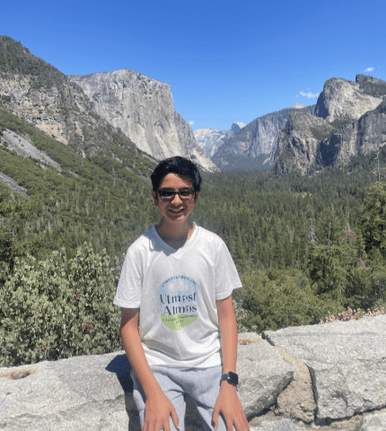
“Start with something you’re genuinely passionate about. Research the issue, talk to community leaders, and find opportunities to make an impact. Don’t be afraid to reach out and cold email people. Some of the most important partnerships I built started with a simple email. I contacted over fifty organizations seeking support and endorsements, and many were willing to help once I took the initiative to ask.”
The Beginning of Aahaan’s Environmental Journey
Growing up, Aahaan’s connection to the environment was shaped by both a love of the outdoors and firsthand experiences with environmental challenges. His family encouraged him to spend time outside, creating memories that fostered an early appreciation for nature.
“Going out into nature was really encouraged by my family,” Aahaan recalls. “I have really vivid memories of going to the Santa Cruz Beach Boardwalk, hiking, and just really enjoying being outside. I think that background really set me up for getting involved in environmentalism and environmental advocacy.”
At the same time, Aahaan’s childhood gave him a very different perspective on environmental issues. Having grown up in India, where air pollution is a daily reality in many communities, he witnessed the impacts of environmental degradation firsthand. Those experiences became a turning point, helping him see that protecting the environment was not just about appreciating nature—it was about improving people’s health and quality of life.
“India has 80 of the 100 most polluted cities in the world. That was kind of a wake-up call for me. When I moved to the United States, I decided that I wanted to get involved in combating this air pollution.”
Together, these experiences laid the foundation for Aahaan’s passion for environmental stewardship and ultimately inspired him to become an advocate for climate action.
From Environmental Awareness to Climate Action
As Aahaan learned more about the causes of air pollution, he began to realize that solving environmental challenges would require more than individual action. Creating lasting change would take leadership, collaboration, and policies that could improve communities over time.
Along the way, an influential eighth-grade teacher reinforced Aahaan’s growing interest in environmental stewardship and climate science, helping him connect the environmental issues he had witnessed with the opportunities to take meaningful action. Combined with his experiences growing up in India and his family’s encouragement to spend time outdoors, these influences strengthened his desire to become part of the solution.
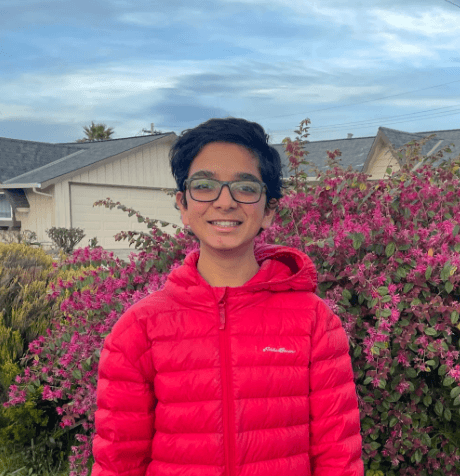
Rather than simply learning about environmental challenges, Aahaan began looking for ways to address them. After moving to the United States, he founded ConServe, a youth-led nonprofit dedicated to combating air pollution and advancing environmental advocacy. Through this work, he began exploring how education, community engagement, and public policy could work together to create lasting environmental change.
“There are several causes of this air pollution, but I think one of the biggest is a lack of government regulation. Another is a lack of environmental nonprofits dedicated to tackling it. When I moved to the United States, I eventually founded my own nonprofit, ConServe, that’s dedicated to combating air pollution.”
As his interest in environmental advocacy continued to grow, Aahaan wanted to better understand how young people could influence policy and create change within their own communities. That search for practical leadership opportunities ultimately led him to the California Youth Climate Policy Leadership Program (CYCP)
Discovering Policy as a Pathway for Change
Aahaan joined the California Youth Climate Policy Leadership Program (CYCP) at a pivotal moment in his life. The summer before starting high school, he was preparing to enter a new school district where he knew few people and was looking for ways to become involved in his new community. At the same time, he was eager to build on his growing interest in environmental advocacy and better understand how young people could create lasting change.
“When I first was admitted to CYCP, I was a little bit lost. It was the summer going into freshman year, so I was going into a completely new situation that I was really kind of scared of.”
Through CYCP, Aahaan discovered that public policy could be one of the most effective tools for addressing environmental challenges. Rather than simply learning about climate policy, he had the opportunity to design and lead a real advocacy campaign focused on creating change within his own school district. The program provided mentorship, practical experience, and a community of peers who shared his commitment to environmental action. Above all, it helped him see that meaningful change happens not only through education and awareness, but also through working with decision-makers to shape the policies that influence schools and communities.
Turning Policy into Action
Designing and leading a district-wide advocacy campaign was unlike anything Aahaan had done before. Entering a brand-new high school district, he had to learn not only how school board governance worked, but also how to build relationships with the people who could help turn an idea into policy. Rather than trying to solve the challenge on his own, he discovered that effective advocacy is an iterative process—one that depends on listening, refining ideas, and building a coalition of supporters.
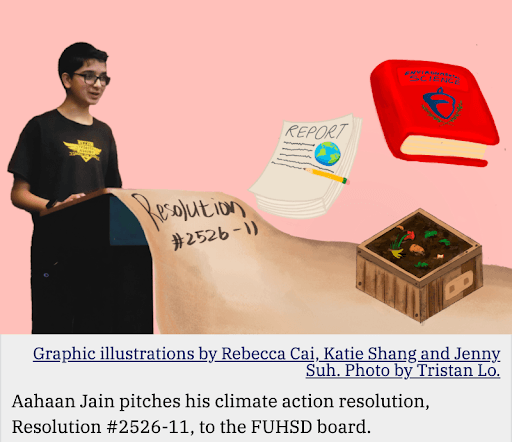
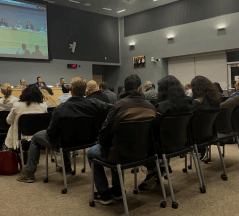
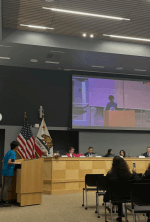
His campaign began with a vision for strengthening environmental literacy and climate action across the district. As the proposal evolved, so did his understanding of what successful advocacy required. He reached out to more than 70 nonprofit organizations, secured endorsements from community partners, connected with more than 120 students across the district, and organized a coalition that included educators, district leaders, elected officials, and community members. By the time the resolution came before the school board, nearly a dozen people spoke in support during public comment.
Throughout the process, CYCP provided the mentorship and guidance that helped Aahaan navigate each new challenge. His mentor helped him think strategically about coalition building, drafting policy language, and preparing public comments, while district leaders and members of the District Climate Collective and Wellness Council offered feedback that strengthened the proposal and helped move it onto the school board agenda.
“My mentor was really helpful in helping me understand how to build a coalition, how to write these resolutions, how to give public comment, things like that. So I didn’t feel like I was alone in this process. I feel like I always had someone who I could email or schedule meetings with to support me.”
Reflecting on his experience, Aahaan realized that successful advocacy isn’t about having all the answers from the beginning. It is about inviting others into the process, learning from their perspectives, and continually strengthening an idea until it becomes a shared vision for change.
Creating Lasting Impact
Passing the climate action resolution marked an important milestone, but for Aahaan, the greatest impact has been seeing the policy move from paper to practice. Several of the resolution’s priorities are already being implemented across the district, including a composting pilot program at Fremont High School, expanded climate literacy efforts, and the adoption of a student-led board policy focused on climate curriculum and eco-anxiety. The district has also developed a website dedicated to climate curriculum, demonstrating its continued commitment to environmental education.
Perhaps even more meaningful has been the campaign’s influence beyond Fremont Union High School District. After the resolution passed, Superintendent Graham Clark shared the model with neighboring school districts, helping spark interest in similar efforts throughout the region. Building on that momentum, Aahaan partnered with his nonprofit, ConServe, to help introduce and support climate action resolutions in districts across California.
“After passing the resolution in Fremont, I actually worked with my nonprofit to pass even more resolutions outside of Fremont. So far we’ve passed resolutions in districts like Berryessa, Milpitas, Pleasanton, Fremont as well, and introduced these resolutions to a lot more board members across the state as well.”
What began as a single student-led advocacy campaign has grown into a broader movement, demonstrating how local action can inspire regional change. Today, Aahaan continues to expand that work through ConServe, statewide policy advocacy, and his ongoing collaboration with Ten Strands, helping empower more students that they, too, can shape the policies that affect their schools and communities.
Looking Ahead
For Aahaan, becoming a changemaker has meant learning that meaningful change begins when people are willing to take initiative—but succeeds through collaboration. His experience with CYCP showed him that solving complex environmental challenges is not about having all the answers from the start. Instead, it is about asking questions, building relationships, listening to others, and bringing people together around a shared vision.
The experience also shaped the way Aahaan thinks about his future. While he is interested in studying economics, business, and finance, he sees environmental sustainability as a thread that can connect each of those fields. Whether through sustainable finance, corporate leadership, entrepreneurship, or public policy, he hopes to apply the leadership, communication, and coalition-building skills he developed through CYCP to help create solutions that strengthen both communities and the environment.
For Aahaan, the greatest lesson from this journey extends far beyond a single climate resolution. What began as one student’s desire to address air pollution grew into a district-wide policy initiative that continues to influence schools across California and inspire similar efforts in other districts. The experience showed him that lasting change is built through curiosity, collaboration, and persistence—and that leadership is not defined by age, but by a willingness to act. As he looks to the future, Aahaan hopes to continue empowering other young people to discover that their voices matter and that meaningful change begins when someone is willing to take the first step.
Explore resources below to learn more about this changemaker.
- Aahaan’s Changemaker Podcast (15 min)
- CYCP Case Study (January 2026): Aahaan’s reflective case study from CYCP Cohort 3
- ConServe: Learn more about Aahaan’s climate work at ConServe
- Silicon Valley Youth Climate Action: Learn more about Aahaan’s climate leadership at SVYCA.
- Lynbook High School Newspaper (2025-26): Aahaan Jain’s advocacy plants a greener FUHSD