

Across California, momentum is building to advance sustainability and climate resilience through stronger policies, investments, and cross-sector collaboration. This October, Ten Strands had the opportunity to see that momentum firsthand at four statewide gatherings: California Farm to School Summit, Resilient California Summit, Green Schoolyards for All Convening, and California Outdoor Recreation Partnership’s Annual Basecamp. Each summit brought together state agencies, community partners, and leaders from across different sectors to share what is happening, learn from one another, and consider how to move different initiatives related to sustainability and climate resilience forward.
One thing that stood out to me across these gatherings was the growing recognition that intentional coordination across sectors, institutions, and communities is needed if we are to achieve California’s environmental and climate goals. Yet one of our most important institutions, the network of TK–12 schools across the state, has not always been a central part of these conversations. Schools have tremendous potential to help drive sustainability and climate resilience efforts in their communities while also cultivating the environmental and climate literacy, skills, and agency needed to sustain these changes over generations.
The California Farm to School Summit offered a really compelling example of what is possible when schools are centered in a broader sustainability effort. Over many years, the farm to school movement has grown from individual programs in different districts, into a statewide effort supported by policy, partnerships, and significant public investment. California’s 2026–27 budget includes $1.872 billion for child nutrition, supporting its Universal School Meals commitment, while the dedicated Farm to School Incubator Grant Program has invested $86 million in 375 projects since 2021.
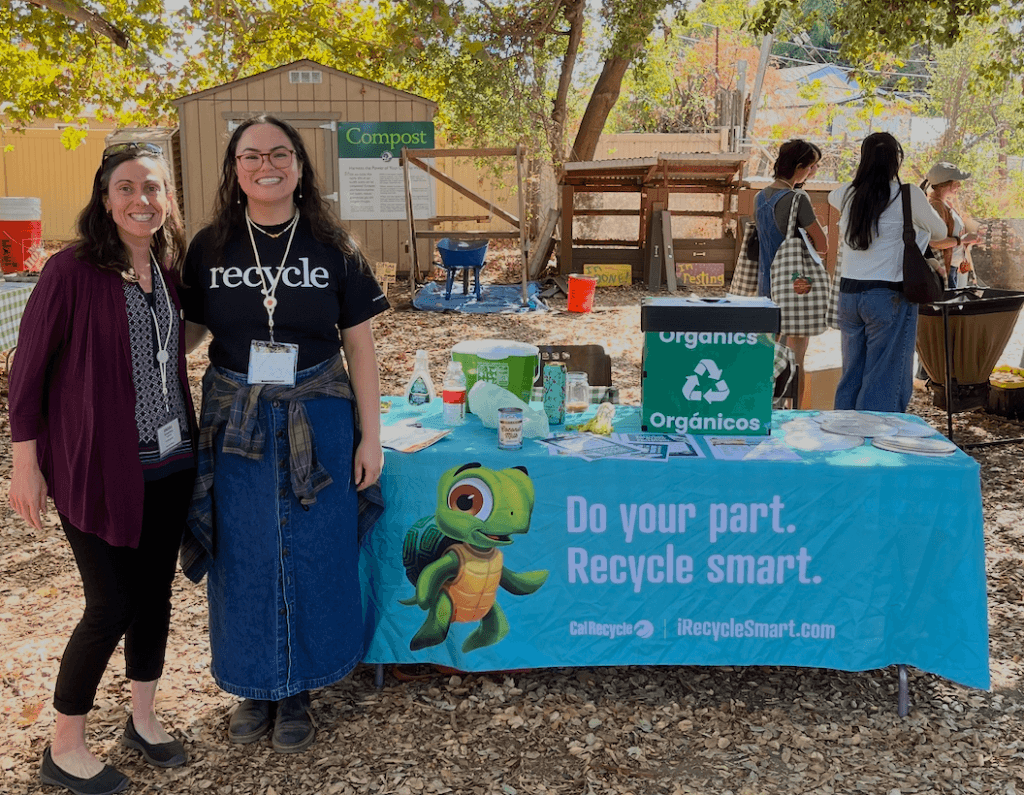
What I find especially significant is that schools are not simply places where these investments are implemented. Through their purchasing power, educational programs, and connections to communities, schools are helping to transform local food systems while building students’ understanding of the relationships between food, agriculture, health, and the environment. The Farm to School movement demonstrates how centering schools can advance a much broader sustainability agenda.
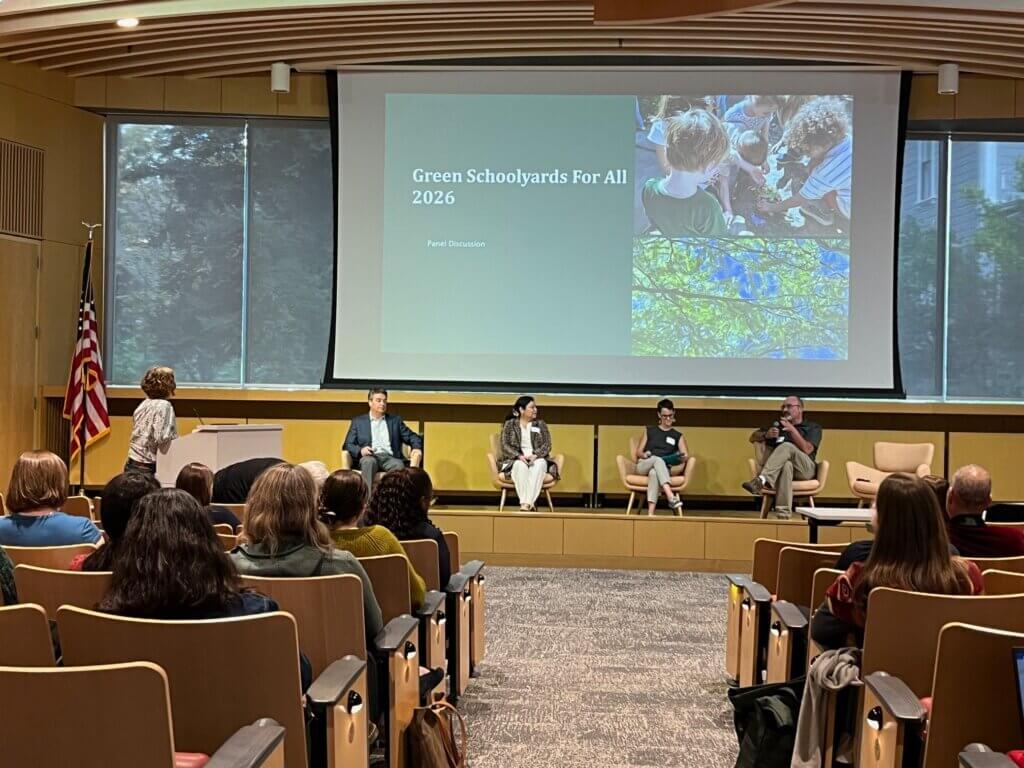
I left the summit thinking about what it would take to build similar statewide commitments to Green Schoolyards for All, Outdoor Learning for All, and Climate-Resilient Schools for All. We saw momentum toward these goals at the Green Schoolyards for All Convening, where CAL FIRE, Green Schoolyards America, and partners brought together state agencies, school districts, and community organizations to explore how to expand schoolyard greening across California. Ten Strands and TreePeople shared perspectives on the importance of trees and outdoor spaces for learning, health, and climate resilience, while acknowledging the policy, funding, and implementation challenges that must be addressed to reach every school.
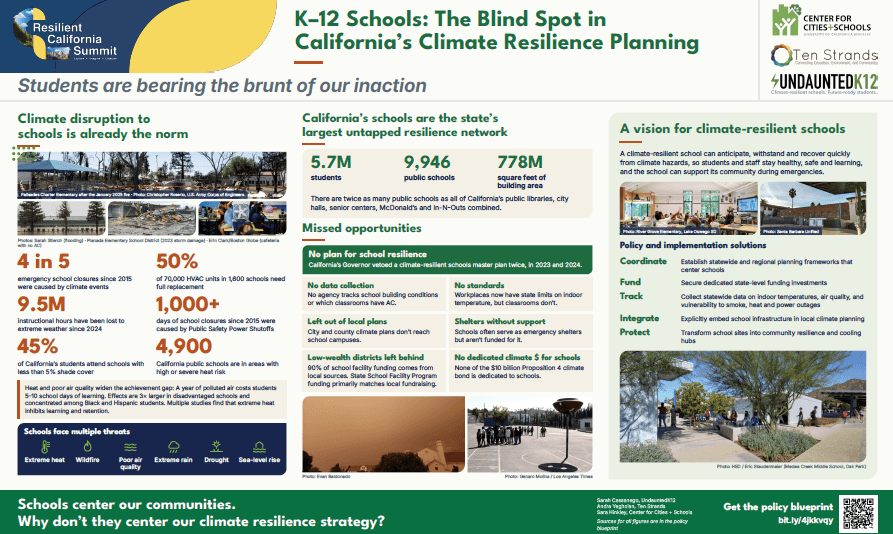
At the Resilient California Summit, the role of schools was much less prominent. Together with UndauntedK12 and UC Berkeley’s Center for Cities + Schools, we shared our research poster that highlighted how schools remain a blind spot in climate resilience planning. Similarly, at the California Outdoor Recreation Partnership’s Annual Basecamp, Ten Strands brought an education perspective into broader conversations about outdoor access and policy, including our efforts to advance outdoor learning for all students.
These gatherings reminded me that we need to think about schools in two ways. They are important community institutions, with land, infrastructure, purchasing power, and relationships that can help drive sustainability and climate resilience efforts today. At the same time, they play an essential role in developing the environmental and climate literacy, skills, and agency that people need to participate in and sustain these efforts into the future.
The momentum across these gatherings gives me hope about what is possible. Farm to School has shown us what sustained leadership, collaboration, and investment can accomplish when schools are central to a statewide effort. Now we have an opportunity to build on that model across other sustainability and climate resilience priorities. If we are serious about creating a more sustainable and resilient California, we need to recognize schools not only as places to implement solutions, but as essential institutions for driving the broader societal transformation we are working toward.