
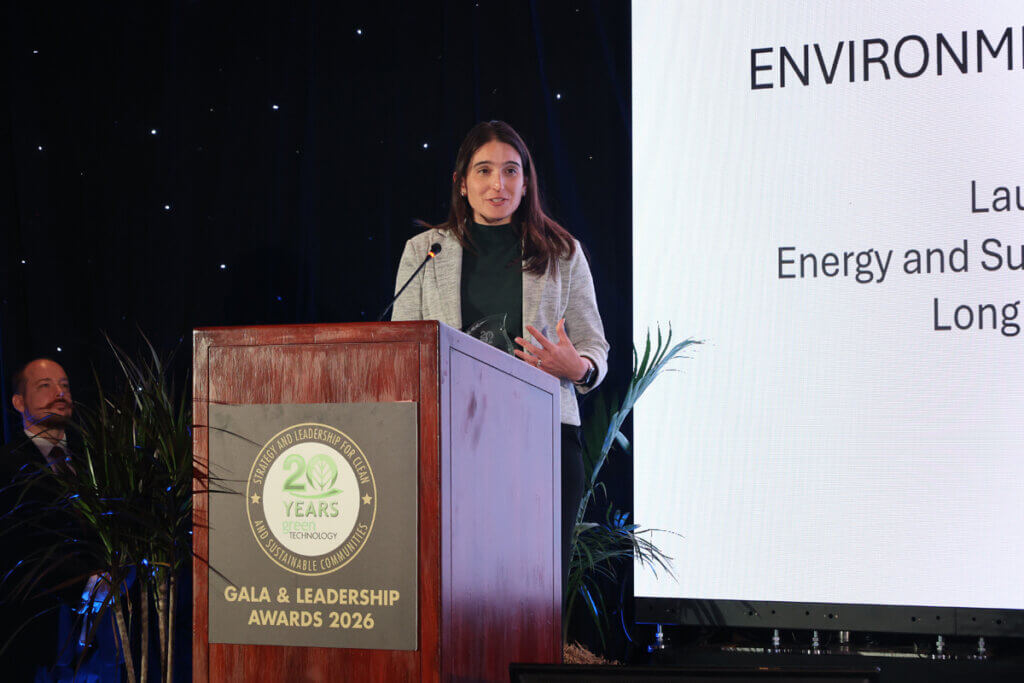
For Dr. Laurel Kruke, championing environmental literacy and sustainability in public schools is the realization of a lifelong passion. Holding a master’s degree in sustainability and a PhD in education focused on climate change education, Dr. Kruke spent years tracking districtwide environmental initiatives across the country before stepping into her role as the Energy and Sustainability Manager for Long Beach Unified School District (LBUSD). Today, she stands at the center of a districtwide sustainability transformation, turning community ambition into tangible, daily momentum across campuses and classrooms.
Dr. Kruke is quick to point out that the foundation of her work rests on centering the student. LBUSD updated its Green Schools Operations Policy in 2022, embedded sustainability into its Vision 2035 strategic plan, and published a comprehensive Sustainability Plan in fall 2024 that is driven by this student-centered approach. As Dr. Kruke reflects:
“Our students are really the impetus behind the sustainability and the climate resilience work that we do…. All of these initiatives are based on a desire from our school district community that includes our students, our staff, community members, parents, families, asking for us to move sustainability forward in really tangible ways, not only through facilities and operations, but also through our curriculum.”
Partnering with Ten Strands to Expand Capacity
Translating high-level policies into the classroom requires dedicated capacity and systemic support. To bridge district operations with environmental literacy, LBUSD partnered with Ten Strands to co-lead a pilot initiative, the Environmental and Climate Literacy Professional Learning Community (PLC). Co-designed and facilitated alongside Ten Strands’ director of client engagement services and data science, Sarah Whiting, the hybrid PLC brought together seventeen educators and administrators across twelve school sites to explore focus areas grounded in a solutionary framework.
Through this partnership, Ten Strands helped connect LBUSD educators directly with regional community partners, such as Grades of Green, Green Schoolyards America, and the Water Replenishment District, empowering participants to lead local environmental projects and engage students directly. For Dr. Kruke, the PLC serves as a critical catalyst for connecting staff across campuses and building lasting momentum:
“I am really excited about that momentum moving into the second year to see how we can develop those connections between our teachers and our school sites a little bit more and hone in on what’s going to be really useful for the staff at our various school sites.”
Wins from Relational Leadership
Situated within Business Services and reporting to the assistant superintendent of facilities and operations, Dr. Kruke’s approach to sustainability is rooted in visibility, empathy, and proactive relationship-building across LBUSD departments. Rather than issuing top-down mandates, she actively immerses herself in the daily routines of district staff. She makes a point to attend monthly plant supervisor meetings, present directly to school principals, and collaborate closely with facilities and custodial personnel.
“The ability to get in front of staff and talk about the program and answer questions about program implementation shows that sustainability is not just something we’re handing off. This approach has really driven the success that we’re seeing…. They know who I am, what I do, that I’m passionate about it, and that I’m here to support them, not just to put more work on their plate.”
This hands-on leadership is driving major operational wins across LBUSD:
- Waste Diversion: The district’s waste diversion rate jumped from 19–20% to 31%, propelled by updated cafeterias, plant supervisor engagement, and student-created instructional sorting videos.
- Green Schoolyards: Dr. Kruke is leading pilots across elementary, middle, and high school campuses to convert asphalt into nature-based play and learning spaces.
- Energy Transparency: The district is developing utility dashboards to make energy and water data visual and accessible for classroom analysis.
- Environmental Justice: By utilizing a green space equity matrix, Dr. Kruke and the facilities team evaluate factors such as tree canopy cover, green space, and proximity to pollution sources (like the Port of Long Beach, local expressways, and the local airport) to prioritize infrastructure investments where climate burdens are highest.
Statewide Recognition: 2026 Leadership Award
Dr. Kruke’s tireless efforts have not only transformed local campuses but also garnered statewide acclaim. Her leadership was recently recognized at the Green California Schools & Higher Education Summit, where she received a 2026 Leadership Award.
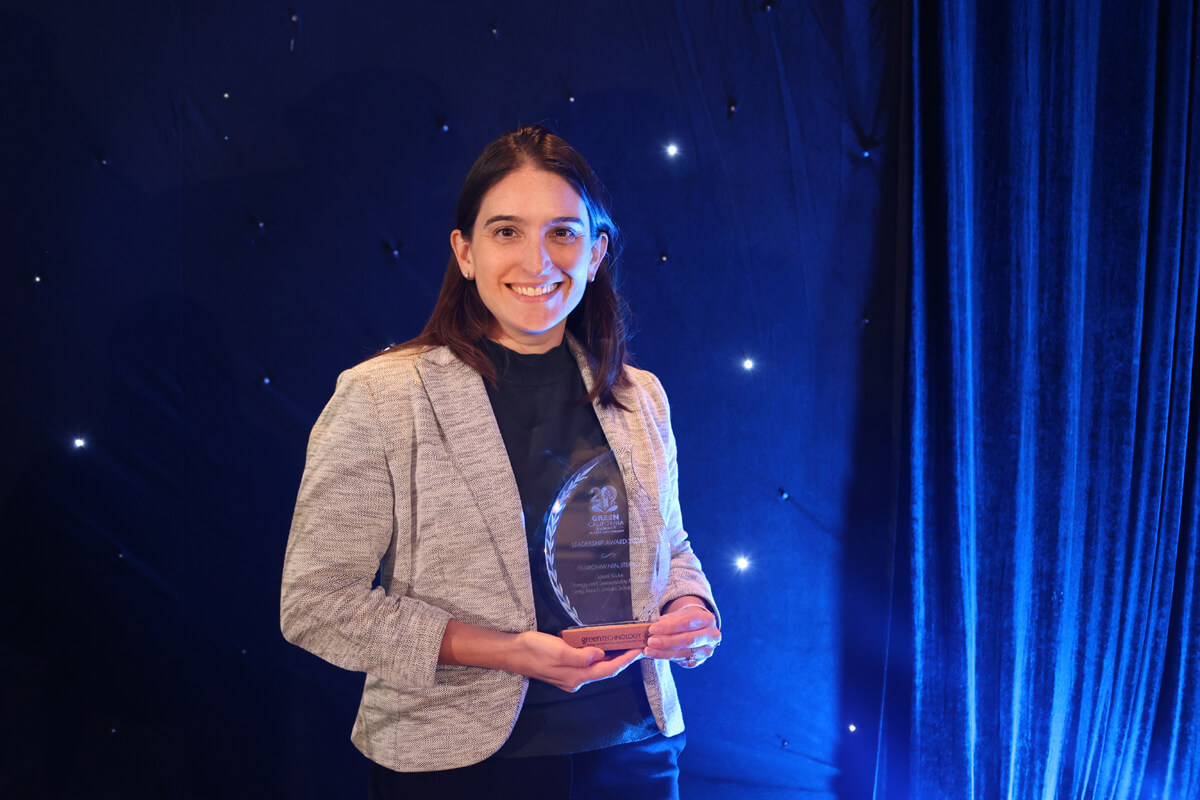
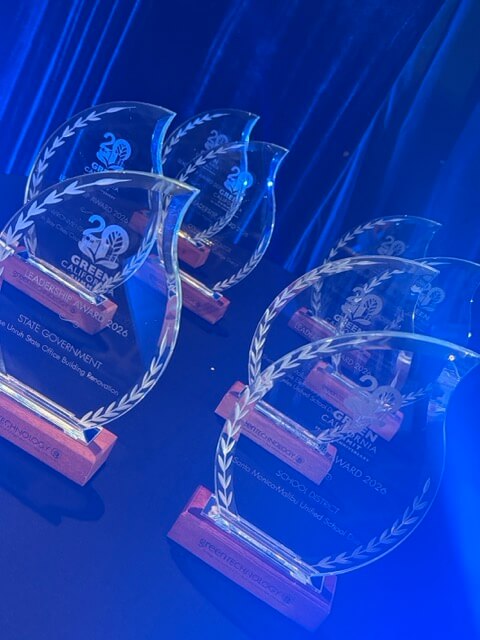
The evening’s ceremony celebrated champions who have helped move the state forward in critical areas such as clean energy, climate resilience, sustainable infrastructure, and environmental literacy. Dr. Kruke’s dedicated work serves as a prime example of the kind of effort that shapes policies, inspires innovation, and creates a lasting impact on California’s public institutions.
Pride, Reflections, and Advice for the Field
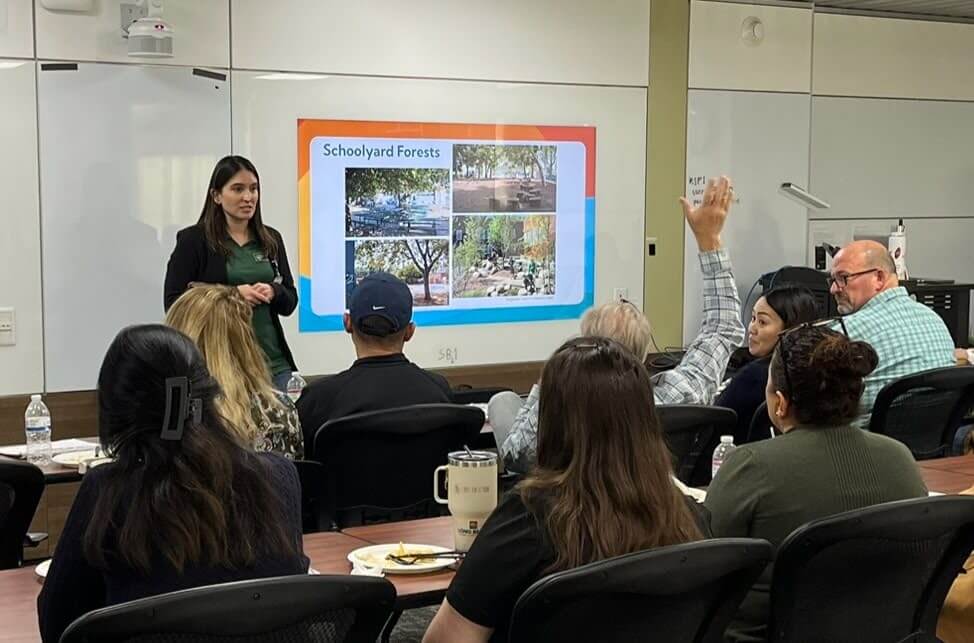
Reflecting on her journey, Dr. Kruke finds the greatest reward in seeing school leaders proactively reach out to join the movement. She recalls an elementary principal who attended one of her green schoolyard presentations and immediately emailed her over the summer, asking how her campus could get a garden.
“I love when schools come to me and ask, ‘How can you help and what can I do?’ It is exciting to me just to get those conversations started, and to hear and see that those conversations are being had among peers. I’m really proud of the momentum that we’ve been building and the awareness of all the different departments.”
When considering the future of districtwide climate action, Dr. Kruke points out a crucial funding gap that external partners and funders must address:
“It’s great to get the money to build the thing or install the thing or purchase the thing. It’s also really necessary to fund post-construction, post-install, maintenance, and upkeep. I think that that is a place where funders sometimes forget that there’s a whole other side to the projects…. for example, grounds staff time as well as the equipment, tools, and training necessary post-planting is a huge area where districts could use additional support.”
For other sustainability leaders or districts seeking to start similar work, Dr. Kruke offers advice anchored in courage and open-ended curiosity:
“Make those connections, reach out, whether that’s internally or externally… having those conversations in person I think can be really useful…. Being curious about what’s already happening is also a really important thing for folks in my role to keep in mind.”
Through collaborative technical assistance from Ten Strands and her own grounded, relational leadership, Dr. Laurel Kruke is proving that when a district aligns operations, instruction, and community vision, systemic sustainability becomes a lasting reality.