
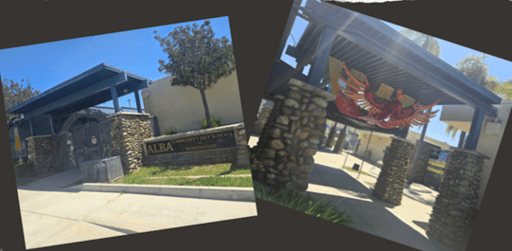
Anne Armstrong didn’t think of herself as a climate champion. She teaches at ALBA Community Day School in San Diego, a small site serving students navigating expulsion, suspension, and deep generational trauma. With water growing scarcer across California, she built a vertical aquaponics system with her students, a closed-loop cycle where fish waste feeds the plants, plant roots clean the water, and the clean water returns to the fish, producing fresh food with a fraction of the water a traditional garden would need. By the end of the year, her students were harvesting their own tilapia and vegetables, and some were bringing grandparents to school for the first time to see what they’d grown.
That project resulted from a partnership between the California Teachers Association’s Institute for Teaching (CTA-IFT) and Ten Strands. The partnership has worked because each organization brings different strengths to the table: Ten Strands’ has deep expertise in environmental and climate literacy, and CTA-IFT has a broad reach into California’s educator workforce, along with a long-standing commitment to invest in passionate teacher projects. In the 2025–26 school year, the two organizations partnered to launch the Climate Justice Teacher Grant Community of Practice Cohort, pairing direct classroom grants of up to $20,000 with a sustained professional learning community for teachers across the state.
The partnership is an important response to moving California’s strong policy foundation for environmental and climate education (ex: Environmental Principles and Concepts, AB 285 requiring climate change instruction in science classrooms statewide, and the 2026 Portrait of a Learner naming environmental literacy as a core student competency) into daily classroom practice.
Below, Anne talks about turning an empty courtyard into a thriving ecosystem, what it meant to fail and try again alongside her students, and why she believes project-based environmental education can change how students see themselves and their future.
I. BACKGROUND AND INTRODUCTION
Q: Please introduce yourself, including your name, your school, your role, and any affinity group identifiers you would like to share.
Anne Armstrong: Hi, my name is Anne Armstrong. I work at ALBA Community Day School in San Diego. This is a school dedicated to supporting students who have been expelled, suspended, or recently released from incarceration. We are a tiny, atypical school. Our students are in grades 7 through 12, and they are amazing young men and women who just need a different setting than a regular comprehensive school site.
I am a member of the SDEA, which is the San Diego Educators Association. I’m also part of the NEA—National Education Association—and I am credentialed in English and history, but because ALBA is such a small school, I actually teach pretty much anything that needs to be taught! This past year, that included English, science, art, ASB, culinary arts, and aquaponics. One thing I don’t teach is math!
Q: How did you hear about the CTA-IFT Climate Justice Community of Practice cohort, and what made you interested in participating?
Anne Armstrong: I came across the opportunity for the California Teachers Association (CTA) with their IFT (Instruction for Teaching) grant and cohort through our community schools coordinator, Shelli Kāhea Kilgore She is an amazing woman who truly embodies community schools and is always finding ways to help us better support our students.

She came to our school with the idea of sharing the IFT grant. When she told us they were doing a new pilot cohort for environmental justice and environmental studies, it seemed like the perfect match because we had been wanting to build an aquaponics system. It was this amazing process that opened up funds up to $20,000. And this last year they offered a pilot cohort for environmental studies, and that allowed me to really focus on the aquaponics garden and how that is a sustainable idea. I applied for the environmental justice cohort and was selected through the grant process, and it was just a phenomenal and fun experience.
II. UNIT OF STUDY AND STUDENT OUTCOMES
Q: Tell us about the specific project you developed, and why you felt it was important to have students learn about this climate justice issue.
Anne Armstrong: I was first introduced to aquaponics at my old school site. Aquaponics is this amazing closed-loop cycle where fish waste goes to feed the plants, the roots of the plants clean the water, and the clean water goes back into the fish tank.
With land becoming scarce, the environment changing, not having enough water, and not having sustainable food sources, the idea came up of bringing this aquaponic system to our students. Many of our students deal with food insecurity, and showing them that they can grow fresh, healthy, organic produce quickly and harvest it once a month was an opportunity we had to take advantage of. These are teenage kids; they don’t think about food growing from the ground. They want to buy it from McDonald’s or the taco shop. Having this growth center of lettuce, kale, chard, and fresh herbs was really an amazing thing for them to see. With a traditional soil garden, it takes a whole season to grow, and months of weeding, watering, and waiting to harvest. With aquaponics, we can put the plants in the system and harvest a month later. Some of our students are at our school for only a semester to a full year, so they don’t always get to see the return on a long-term agricultural investment. With this system, they can plant a seed, take care of it, watch it grow, transfer it to the system, and harvest and eat it all within a semester.
Q: Your unit of study had a physical component – where did you build this project, and what was something students really enjoyed about the physical aspect of it?
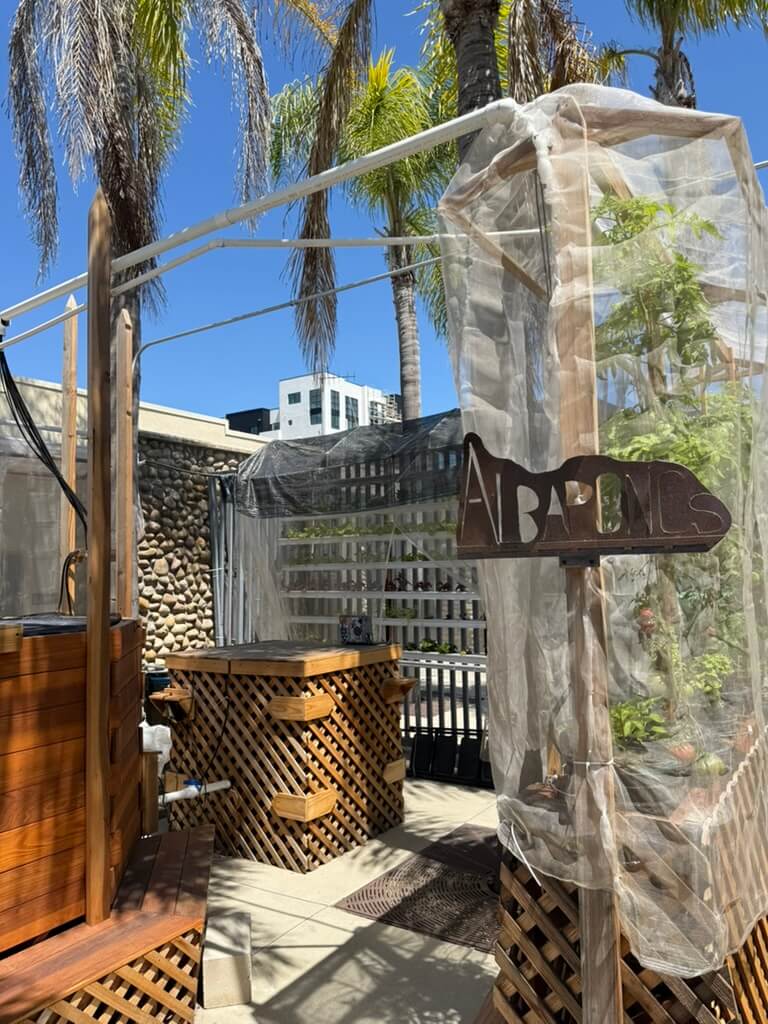
Anne Armstrong: Our system is built outside. It is a vertical wall–it is an amazing design that is completely functional and beautiful. It allowed the students to get out of the classroom, get in the sun, and take care of something. They enjoyed feeding the fish. When you feed the tilapia, they all bubble up to the surface in a feeding frenzy and eat everything, so the students loved doing that. We actually harvested the fish and made fish tacos on the last day of school. The kids were so stoked! They couldn’t believe that the fish they raised from tiny little fingerlings in the classroom were what they were eating on the last day of school. It was a really powerful experience for them. They loved being able to say, “I grew this. This is mine.” Parents enjoyed it, too, because the kids got to bring fresh vegetables home.
Q: How did you integrate different subject matters (like science, English, art, and culinary arts) into this project?
Anne Armstrong: This project happened because I had teachers on board before I even wrote the grant. As a team, we talked about bringing anyone who wanted to join.
The science team was amazing at supporting us. One of the science teachers got into how the whole system runs, with a kind of gravity system plus a pump system, so that was on the mechanical side. Another teacher who loves water focused on the water side, testing it and teaching kids about nitrates and nitrites and pH levels. A third science teacher got into plant growth and measuring plants grown in soil compared to plants grown in our system. Having three science teachers fully support the idea allowed students to learn about different aspects of the science behind the system.
As an English teacher, I brought in the cultural side of sustainability. I showed them a little about Aztec culture and how they used raft systems, which were an early form of aquaponics. I also had students read about other schools doing aquaponics and garden systems.
We connected with art by looking at color theory and the colors of the leaves. For example, when strawberry plants have yellow leaves, that’s not a normal color, and it means they are missing potassium. We looked at the leaves, asked, “What colors do you notice?” and used science to figure out how to fix the problem.
We also added culinary arts. We had a district-wide showcase, and we had the students do a big harvest, wash the lettuce really well, and come up with a salad dressing, and they actually served little bowls of salads. We also did a tilapia cooking lab. I taught them how to fillet a fish, and we experimented with different ways to cook it in the kitchen.
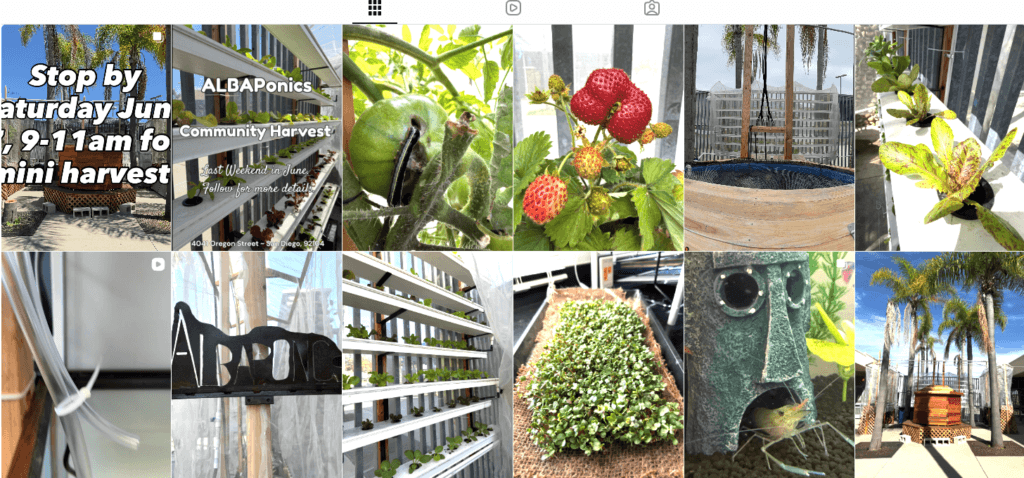
Instagram Posts for Aquaponics Project
Q: What changes, if any, did you observe in your students as a result of this grant project and unit of study?
Anne Armstrong: I saw an immense amount of pride. On our first major harvest and community event, one of our students brought his grandmother. For our students, bringing family to school is huge, because there is often a lot of generational trauma and disconnect at home. To have a student share his work with his grandmother, and to see the look of pride on his face, was spectacular.
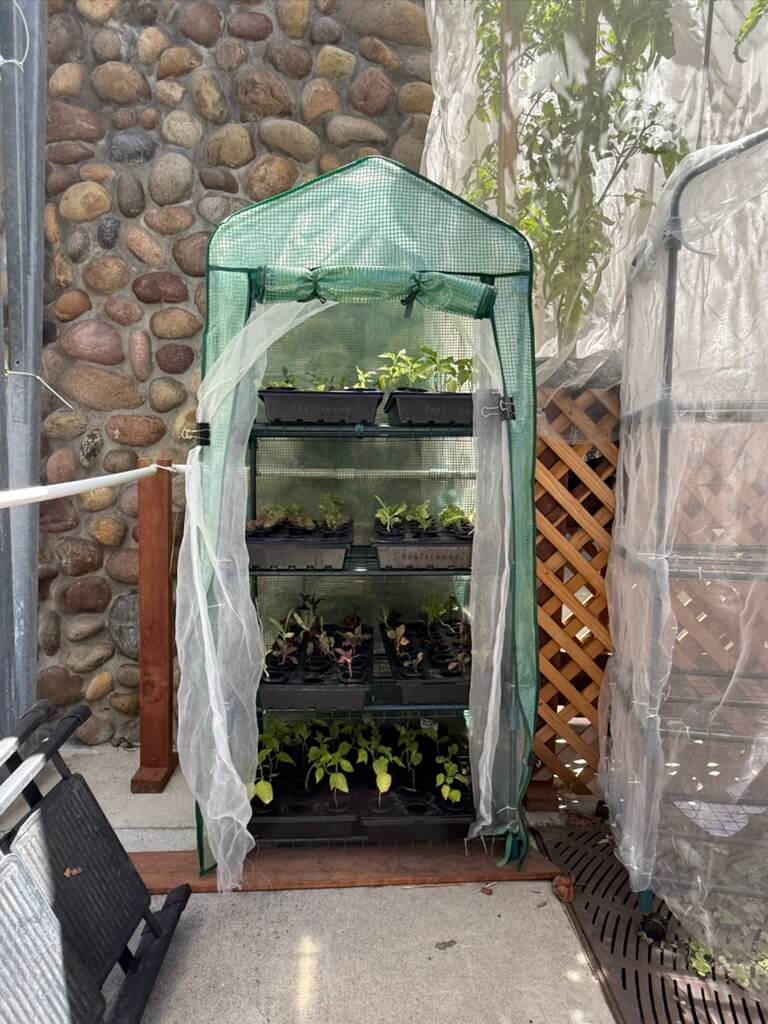
I also saw students learn how to troubleshoot. When the water level in our barrels was dropping, I brought a small team of students out to brainstorm. We treated it like a design thinking challenge. It was an amazing opportunity to really show them real-life failure…plants haven’t died, our fish haven’t died, so we haven’t failed. We’re still good.
Some students would have a hard time, so I would say, “Okay, let’s reset. Let’s look at the system. Let’s check out how the shrimp are doing?” Because we have shrimp. “How are the shrimp doing?” We’d lift the lid, and we’d see shrimp growing, and it would completely reset the dynamic. Removing ourselves from the four walls of the classroom into that physical space was a huge breakthrough in really getting support for myself and giving support for the students.
III. EDUCATOR EXPERIENCE AND IMPACT ON TEACHING PRACTICE
Q: What was your experience participating in the cohort’s online workshops with other teachers across the state?
Anne Armstrong: The cohort held monthly online meetings to connect us with ideas surrounding environmental justice. The teachers would all share what they were doing, which I loved. These meetings were extremely helpful because, to be honest, I’ve never considered myself an activist or a “climate champion”—I’m a teacher who cares but not an activist.
These meetings showed me that there are different avenues you can use to take care of the environment. Learning all of these different ways was really personally amazing for me—the idea of just using your site as a lesson, like the electricity, the water, the waste that comes through, all of this just like “wow”. It got me thinking in a little bit of a different way.
We looked at simulations of the increase in California wildfires and discussed how students who have experienced those fires carry that trauma. These are issues that our students are really getting bombarded with, and they’re concerned about them. Often, we try to help the environment by trying to make students into champions, which is wonderful, but at the same time, it’s terrifying to some of our students.
The cohorts and meetings taught me how much there is to do, and even something little that I’m doing is still something that’s good. Focusing on food insecurity showed that something like this project is a viable solution for food sustainability. All you need is a little bit of space.
Q: How did participating in the CTA-IFT Climate Justice Community of Practice cohort impact you as an educator? Please share any new perspectives or strategies you gained.
Anne Armstrong: Being part of this cohort has been the most amazing experience. I was able to learn about aquaponics alongside my students. I went from knowing the basic idea of aquaponics to managing and running the project, and successfully producing food.
For me personally, being able to do something and do it successfully and do it well was something I really needed. Being back in the role of a student, working alongside my students and my peers, helped rebuild my self-esteem. It reminded me that I can be resilient, and I hope that resilience is transferred to our students.
It also allowed me to build relationships outside the classroom, which is so important for the kind of school that we are. Having students work with their hands on something non-academic creates a different dynamic than trying to get a student who has low reading levels to read something when they are really hurting and anxious. All of their trauma comes into the classroom. So it was a really beautiful way to reset myself, and it was a beautiful way for students to reset.
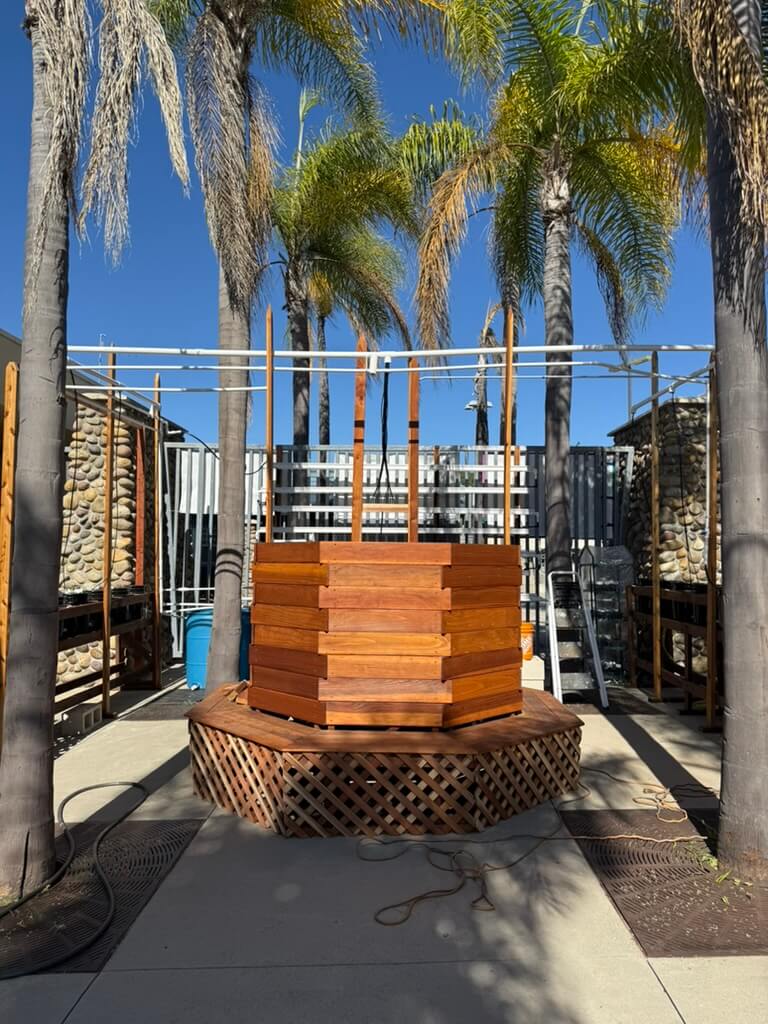
We designed our outdoor system to also serve as a meditative mindfulness space. We added benches around a central fish tank, and it looks a little like a 1970s redwood hot tub. When students or teachers are stressed, they can go sit out there, listen to the water, and reset.
As an adult, working with students who are so filled with trauma, I learned to show students that if I’m having a bad day, it’s okay to admit it; it’s okay to step out for a second. It creates stronger relationships by making yourself vulnerable for our student population. It taught me a lot about making sure my heart stays at the center of my teaching.
Q: What was particularly valuable about connecting and learning with other educators in the cohort?
Anne Armstrong: Teachers understand teachers. We have our own way of talking and sharing. Being able to go into those breakout rooms, hear what other teachers were doing, and share and create was so powerful. It was amazing to get to brainstorm with them and share and get ideas from them. It was phenomenal!
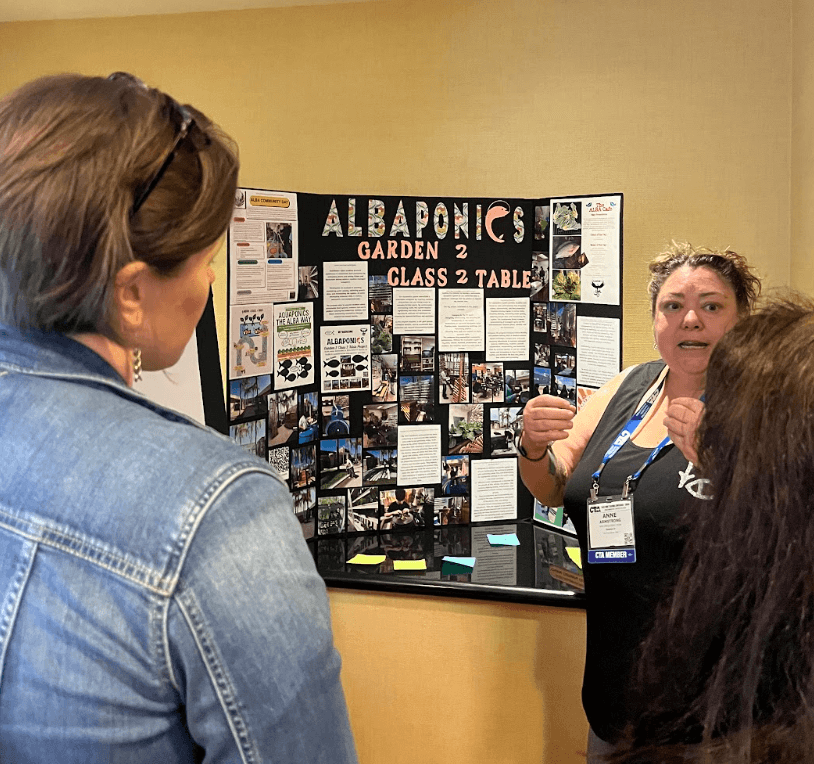
When we finally met in person at the CTA conference in March, it was incredible. These teachers were so brilliant, intelligent, and knowledgeable. I felt so incredibly grateful to be a part of this team. To see so many great ideas out there was unbelievable.
Q: What does solutionary teaching and learning and/or teaching for climate justice mean to you now that you have completed this program?
Anne Armstrong: Participating in the environmental cohort and being awarded this grant really came at a time when I was questioning my teaching. Being in this environment and watching the progression from an idea to fully functioning sustainability has been so powerful on a personal level. My identity is shifting as a teacher to now being someone who can be successful trying something new. I also grew up with gardening being used as a punishment, so it was really a negative activity. This project took something I love—which is water—and gave me a completely new appreciation for water and an understanding of a whole natural cycle. Now, I’ve 100% embraced it to the point where I want to build a system like this at my own house!
Seeing the growth of these plants and the growth of the system and the fish, and the success of the project and how it’s impacted not only myself but our students and our site, has been so inspiring and supportive. I can look at it and go, wow, with a little help I can do this. With help, I can do anything. So it’s been one of the most important projects of my entire career.
IV. ADVICE FOR OTHER EDUCATORS AND INVESTMENTS IN THIS TYPE OF SYSTEMS CHANGE WORK
Q: What advice would you give to other educators interested in getting involved in climate justice education?
Anne Armstrong: If you get the opportunity, go for it, run with it. Find your grants, find what’s out there, and do it. Take the risk. Start with people who can support you; start as a team, because a project like this is too big for just one person. As a community, as a team, as people buy into what you are doing, it becomes an amazing experience.
We were fortunate to get a $20,000 grant to build what I call a “bougie” system, because our kids aren’t used to having “bougie” things, and I wanted them to have that. But you can build these systems entirely out of recycled materials.
The worst that can happen is you are told “yes,” and you have to learn how to do it! Never be afraid of that. I never thought I would be a farmer in my entire life, but now I am an urban farmer producing food that people can eat.
Q: Imagine you were speaking to a legislator, funder, or education leader. What would you tell them about why more teachers need experiences and funding like this?
Anne Armstrong: I would tell them that it’s extremely important to fund environmental grant projects for students. They are the ones who are going to be making decisions. We talk a lot about generational trauma in families, but the Earth has gone through generational trauma, too. We need to give our students the tools to create sustainability projects on a grand scale, a local scale, a small community scale, and a family scale.
Our students are no longer “textbook” students. They have AI, they have phones, and that is their world. We have to be able to teach them how to use technology in a way that’s productive and meaningful.
If we shift our teaching toward project-based learning with an environmental focus, students can start using technology to come up with solutions and change things. Allowing our students these real-world experiences and building, growing, and learning is what’s going to get them to remember and really get passionate. Not just reading an article about the glaciers melting. They want to know what we can do in our immediate space, in this moment, to help the future.
With these grants, teachers are able to show students things that affect us every day. We have to change education, and we need more programs like this. We need more funding to teach our students about the world and how to interact with it appropriately.
See Other Media Coverage of this Project Here: San Diego Unified School District Stories of Progress and Success (Spring 2026)