Last week, more than eighty people gathered on a virtual call to celebrate the graduation of the third cohort of the California Youth Climate Policy (CYCP) Leadership Program. Students were joined by mentors, guest speakers, partners, funders, and family members, forming a community united by a shared commitment to climate action and civic leadership.
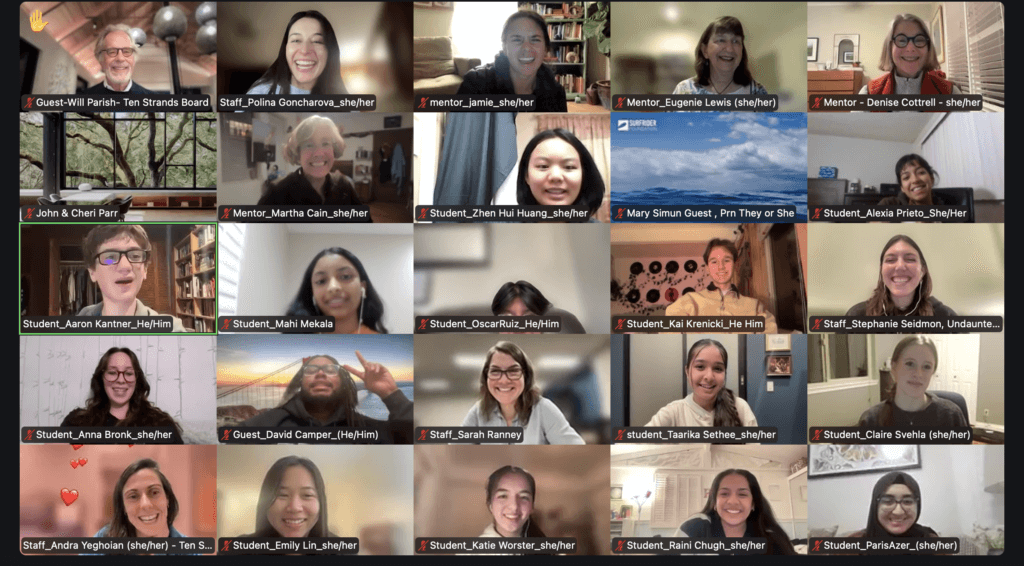

Photo Credit: Ten Strands
Over the course of the evening, students presented the advocacy campaigns they had spent seven months developing to advance environmental and climate literacy and action in their school communities. What stood out from these presentations was not just the quality of the ideas, but the sophistication with which students understood systems: how decisions are made, how coalitions are built, and how policy change, even at the school or district level, can reshape lived experience.
CYCP is intentionally designed as a knowledge-to-action program. Students build a foundational understanding of systems thinking, environmental justice, and civics, and then apply that knowledge through real advocacy campaigns supported by mentors, structured coaching, and reflection. Through this program, they are learning not just what is happening to the climate, but how to act within the systems they inhabit.
The System Students Live In
Listening to these students, we were reminded of a larger truth.
California has made significant investments in climate action across energy, transportation, natural resources, and environmental protection. These investments matter. But when it comes to public education, investment for climate action has been limited, fragmented, and too often treated as peripheral to the state’s climate strategy.
This is a profound disconnect.
Nearly six million students attend California schools every day for many hours during a significant developmental period of their lives. Schools are not just places of learning. They are workplaces, community hubs, public infrastructure, and cultural signalers. They shape how young people understand the world, their relationship to place, and their sense of agency.
If California is serious about preparing young people for a climate-impacted future, education cannot be an afterthought to climate policy. It must be a central strategy.
Treating education as peripheral to climate policy is not a neutral choice. It means overlooking one of the state’s most powerful and most equitable leverage points for long-term climate resilience. Schools shape not only what students know, but what they experience, practice, and carry forward into adulthood. Without intentional investment in climate literacy, healthy campuses, and aligned systems, California risks undermining its broader climate goals while leaving students underprepared for the realities they already face.
This is why Ten Strands focuses on whole-system change in all that we do, including our advocacy work. Through our 4Cs framework—curriculum, campus, community, and culture—we work to align what students learn with what they experience every day. In 2026, our advocacy work focuses on four interconnected efforts that reflect what we are hearing from the field. Importantly, what we are asking for is not outsized. In the context of California’s overall budget, these are modest, strategic investments, small requests with substantial leverage, precisely because schools reach nearly every child, every day.
Turning Commitment into Conditions for Change
Bringing Climate Learning to Life: Seeds to Solutions
California has taken an important step by developing Seeds to Solutions, its first statewide climate change instructional materials. But curriculum alone does not guarantee learning.
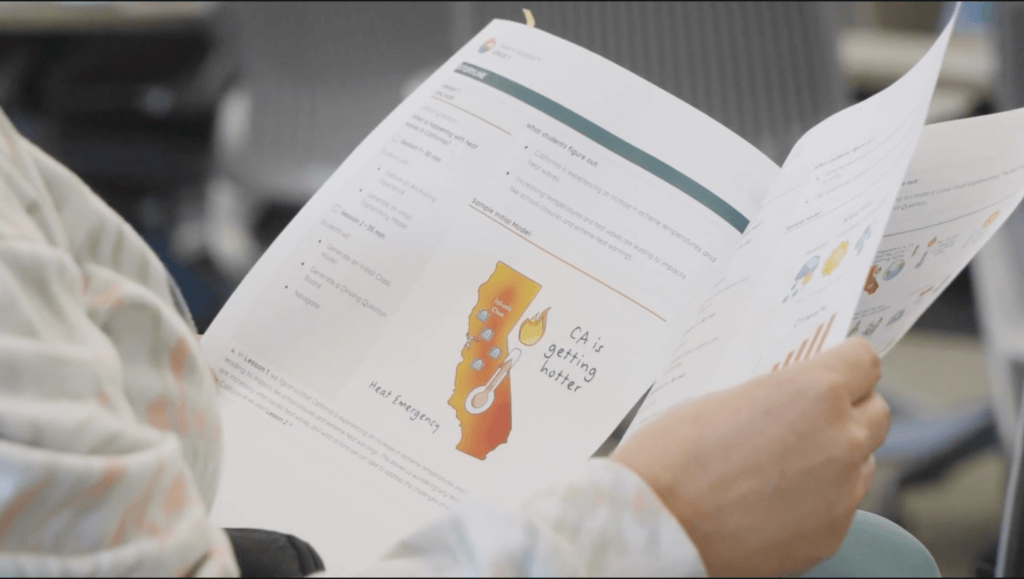
Our advocacy is focused on ensuring educators receive the professional learning and implementation support needed to use these materials effectively and equitably. This investment would move climate education from policy to practice, supporting teachers and ensuring students experience high-quality, solutions-oriented climate learning in classrooms across the state.
Expanding Where Learning Happens: The California Campaign for Outdoor Learning
Outdoor learning supports student well-being, engagement, and connection to place, all of which are essential in a climate-impacted reality. The California Campaign for Outdoor Learning is working to make outdoor learning a normal, supported instructional context rather than an exception.
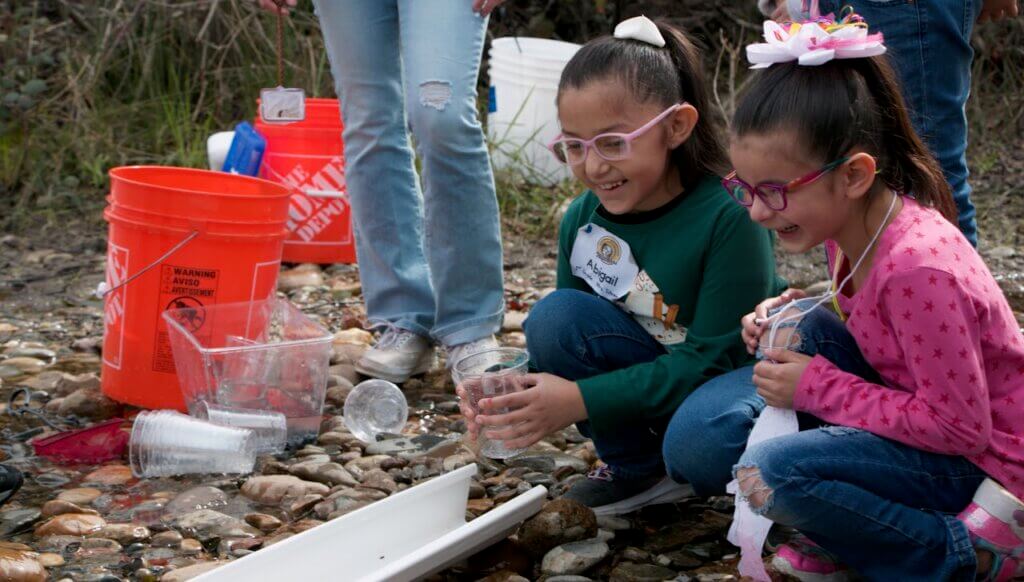
Our advocacy aims to recognize outdoor learning in policy, provide guidance for safe and equitable implementation, and support local planning and professional learning to ensure students spend 20–25% of their learning time outdoors.
Making Schools Climate-Ready: Climate Ready Schools Coalition
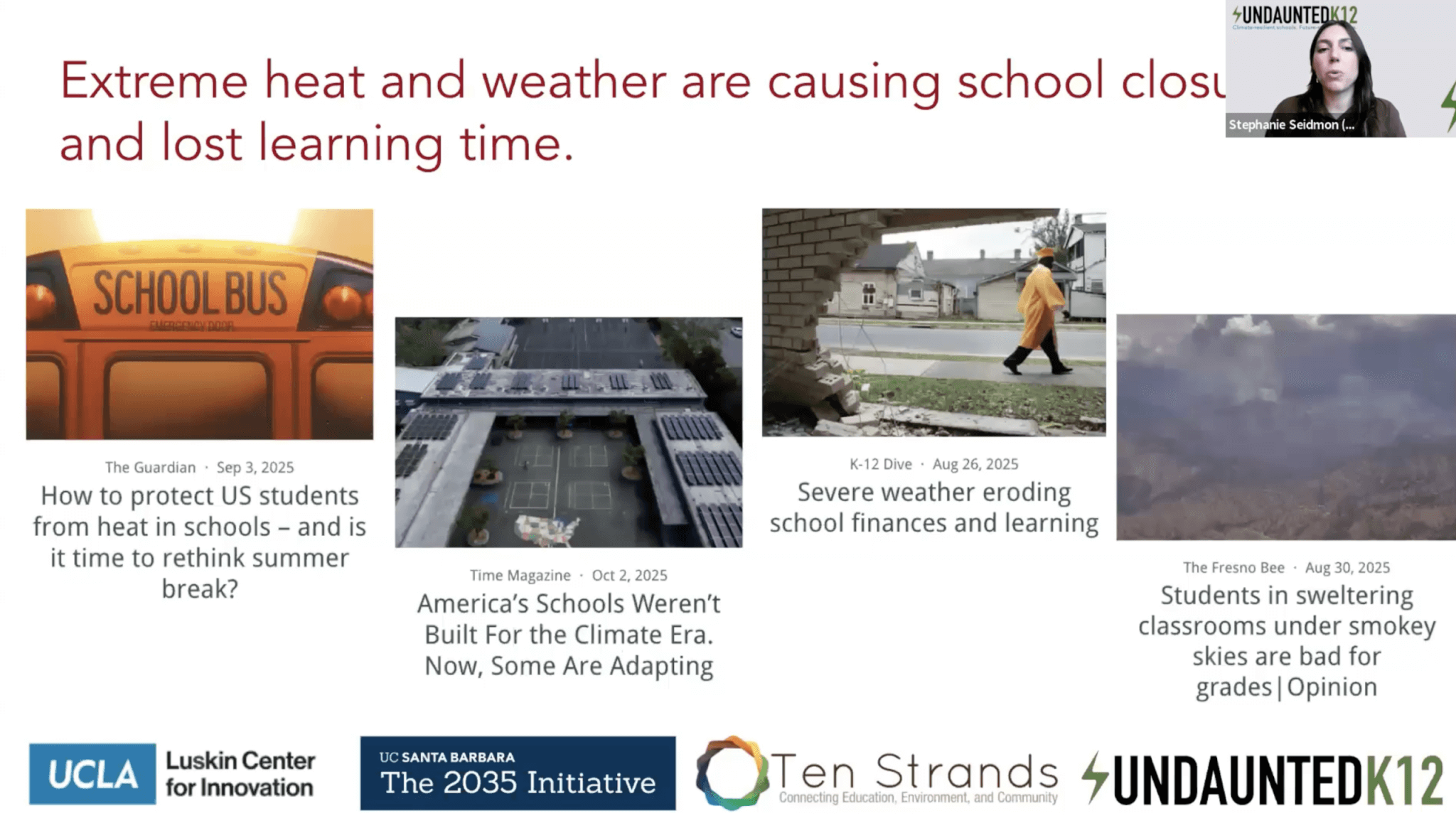
California is investing billions of dollars in school facilities. Whether those investments create climate-resilient, healthy campuses or lock in outdated, high-polluting infrastructure is a policy choice.
Through the Climate Ready Schools Coalition, co-led with UndauntedK12, Ten Strands helps align facilities funding, health, and climate goals so schools can protect students from extreme heat, poor air quality, and energy insecurity, often through practical, low-cost pathways.
Recognizing Student Leadership: California State Seal of Climate Literacy
Finally, we are working to establish a California State Seal of Climate Literacy, a statewide recognition for students who demonstrate climate understanding, civic engagement, and real-world action. The Seal would make climate literacy visible and valued, connecting K–12 education to higher education, workforce preparation, and civic life.
Meeting the Moment Together
The students graduating from CYCP are not waiting for permission to lead. They are already shaping the schools and communities they inhabit thoughtfully, collaboratively, and with a clear-eyed understanding of systems.
Our responsibility is to ensure those systems are ready to meet them.
That means treating education as central to California’s climate response. It means aligning policy, funding, and practice. And it means engaging in advocacy as a necessary act of stewardship for the generations who are already living with the consequences of today’s decisions.
This is the work ahead, and we must do it together.