Skip to content
Facebook Instagram Twitter Linkedin
  • ABOUT US
    • About Us
    • Mission & Vision
    • Organizational Values
    • Team
    • Board & Advisory Board
    • Annual Reports
    • Careers
    • About Us
    • Mission & Vision
    • Organizational Values
    • Team
    • Board & Advisory Board
    • Annual Reports
    • Careers
  • WORK

    Current Initiatives

    • California Environmental Literacy Initiative
    • Outdoor Learning Initiatives
    • Seeds to Solutions
    • Sustainable and Climate-Ready Schools
    • Data Initiative
    • Youth Engagement
    • Technical Assistance Services
    • California Environmental Literacy Initiative
    • Outdoor Learning Initiatives
    • Seeds to Solutions
    • Sustainable and Climate-Ready Schools
    • Data Initiative
    • Youth Engagement
    • Technical Assistance Services

    Legacy Initiatives

    • Education and the Environment Initiative
    • Environmental Principles and Concepts
    • Blueprint for Environmental Literacy
    • San Mateo Environmental Solutionary Teacher Fellowship
    • Global Climate Action Summit Education Affiliate Event
    • Environmental and Climate Change Literacy Projects
    • National Outdoor Learning Initiative
    • Education and the Environment Initiative
    • Environmental Principles and Concepts
    • Blueprint for Environmental Literacy
    • San Mateo Environmental Solutionary Teacher Fellowship
    • Global Climate Action Summit Education Affiliate Event
    • Environmental and Climate Change Literacy Projects
    • National Outdoor Learning Initiative
  • ADVOCACY
    • 2026 Advocacy
    • 2025 Advocacy
    • 2024 Advocacy
    • Advocacy Successes
    • 2026 Advocacy
    • 2025 Advocacy
    • 2024 Advocacy
    • Advocacy Successes
  • PARTNERS
  • NEWS
    • News
    • Blog
    • Featured Stories
    • Press Releases
    • Newsletters
    • News
    • Blog
    • Featured Stories
    • Press Releases
    • Newsletters
CONNECT
GIVE

Designing for Impact: A Collaborative Model for Professional Learning in Math, Science, and Computer Science

by  Chelsea Cochrane , Lesley Gates , Sarah Whiting , Vanessa Lujan
  • November 18, 2025
  • | Community-based Partners, Featured Stories, Teaching and Learning

In a world increasingly shaped by complex environmental challenges, the ability to integrate knowledge across disciplines is no longer a luxury—it’s a necessity. However, too often, mathematics, science, and computer science content remains siloed in the classroom, leaving educators and students struggling to make meaningful connections.

Recognizing this critical gap, the California Mathematics, Science, and Computer Science Partnership (CAL-MSCS) Science Steering Team created a Cross-Content Priority Work Group. The members of this team, Chelsea Cochrane, San Diego County Office of Education; Lesley Gates, Fresno County Superintendent of Schools; Dr. Vanessa Lujan, The Lawrence Hall of Science; and Sarah Whiting, Ten Strands, spearheaded the development of a Cross-Content Collaboration Design Team professional learning (PL) prototype. This PL model is an innovative structure that brings educators (e.g., teachers, leaders, and educational partners) together across disciplines to engage with STEM experts and explore environmentally focused phenomena and real-world problems. Grounded in the guiding principles of using mathematics, science, and computer science to make sense of our world and ensuring mathematics for all, science for all, and computer science for all, this model promotes equitable access to STEM learning experiences that connect classroom instruction to meaningful, community-based contexts. 

The prototype was launched with teams of cross-content educational leaders in both San Diego and Fresno. 
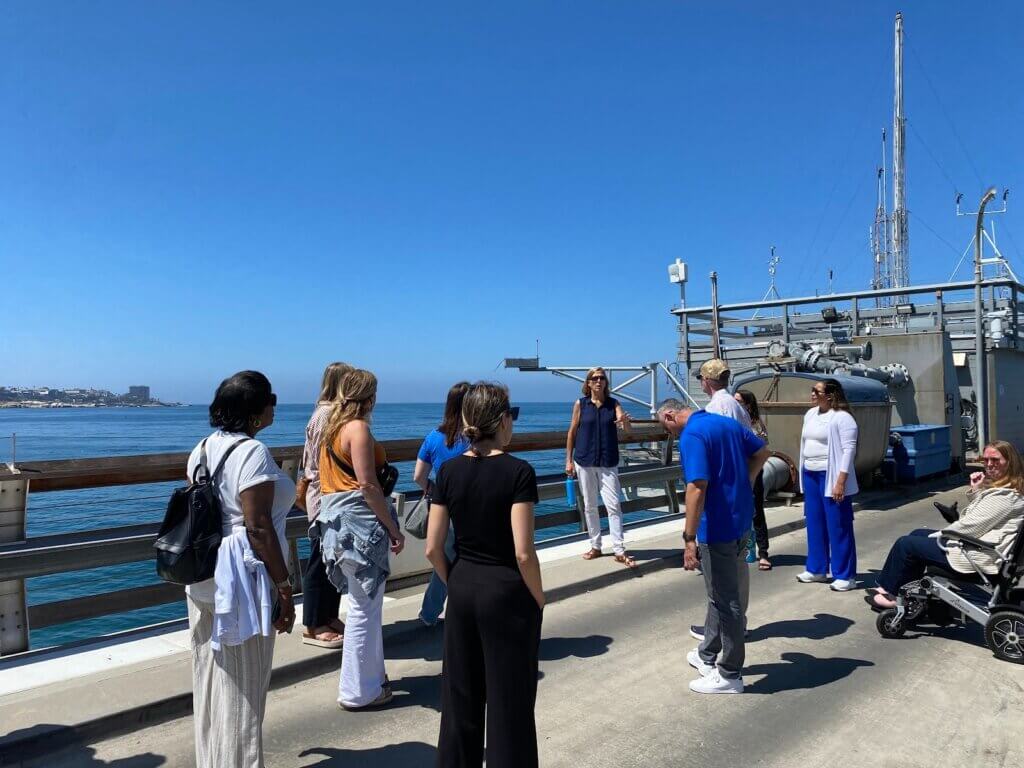
San Diego educators learning about Argo floats (robotic instruments that measure water properties across the world’s oceans) with STEM experts Dr. Sarah Gille and Dr. Cheryl Peach, from Scripps Institute of Oceanography at UCSD.
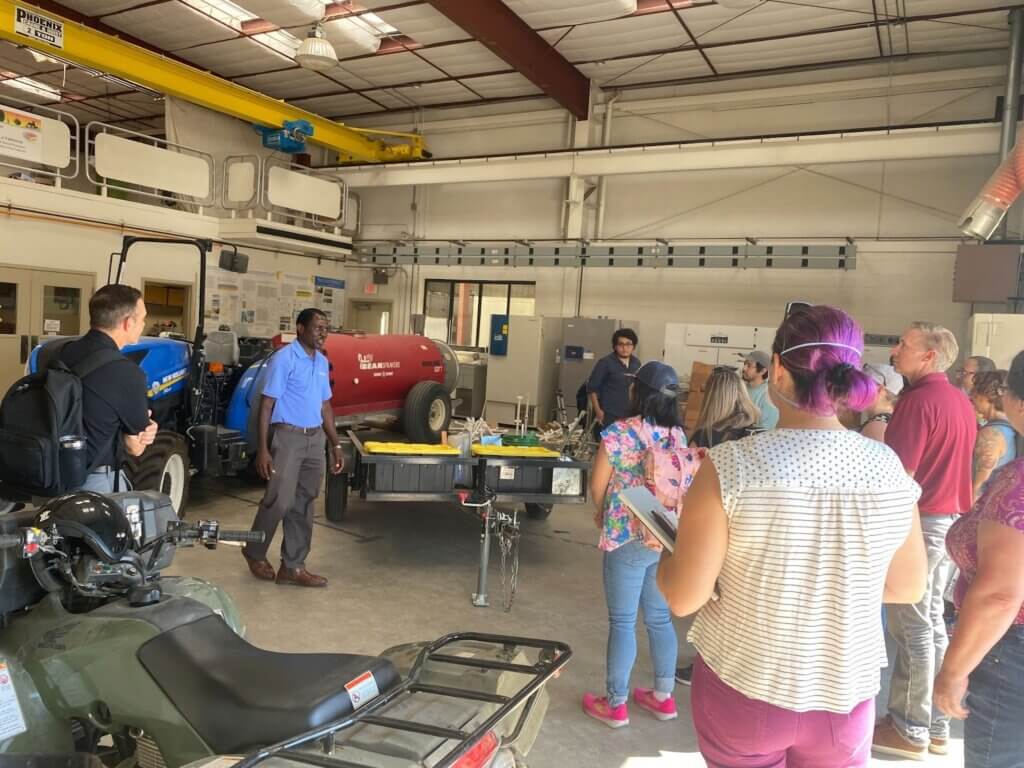
Fresno educators learning about agricultural spray application engineering from STEM expert Dr. Peter Ako Larbi from the University of California Agriculture and Natural Resources. 

The Prototype: A Model for Cross-Content Professional Learning and Instructional Resource Codesign

The PL prototype is an immersive experience adapted from the successful structure of the California Regional Environmental Education Community (CREEC) Network Phenomena Summits. The resulting prototype is built around one central objective: to change the way educators experience professional learning. 

To meet this objective, the prototype fostered a new level of collaboration by bringing together math, science, and computer science educators from grades 4–12 to learn directly with a STEM expert about their current research. Together, they explored a complex, local environmental issue that reflected the unique challenges and strengths of their communities. This focus on locally relevant, real-world contexts ensured that the learning was both culturally responsive and inclusive—providing opportunities for educators to consider diverse student perspectives, community knowledge, and equity-centered teaching practices. Through this process, participating educators designed instructional resources grounded in the work of the STEM expert, ensuring that student learning is connected to local phenomena and environmental challenges. 

Key components of the PL model include the following:

  • Listen to a keynote from a STEM expert to immerse participating educators in learning about a local phenomenon that is the focus of the STEM expert’s work.
  • Participate in a Q&A with the STEM expert to allow educators to have their authentic wonderings answered in real time. 
  • Develop an idea flow to highlight the skills and knowledge needed to explore and explain the phenomenon.
    • Add specific math, science, and computer science connections to the idea flow to make interdisciplinary connections visible.
    • Enhance the idea flow with additional cross-content connections (e.g., ELA).
    • Identify environmental principles and concepts and central themes of environmental literacy.
  • Collaboratively design high-quality instructional resources to anchor the local environmental phenomenon/problem the STEM expert is working to address. 
    • Examples of this work can be seen in the prototype materials: CAL-MSCS Cross-Content Design Team DRAFT Instructional Resource Sample #1 and Sample #2 illustrate how educators connected classroom learning to authentic, community-based environmental challenges.
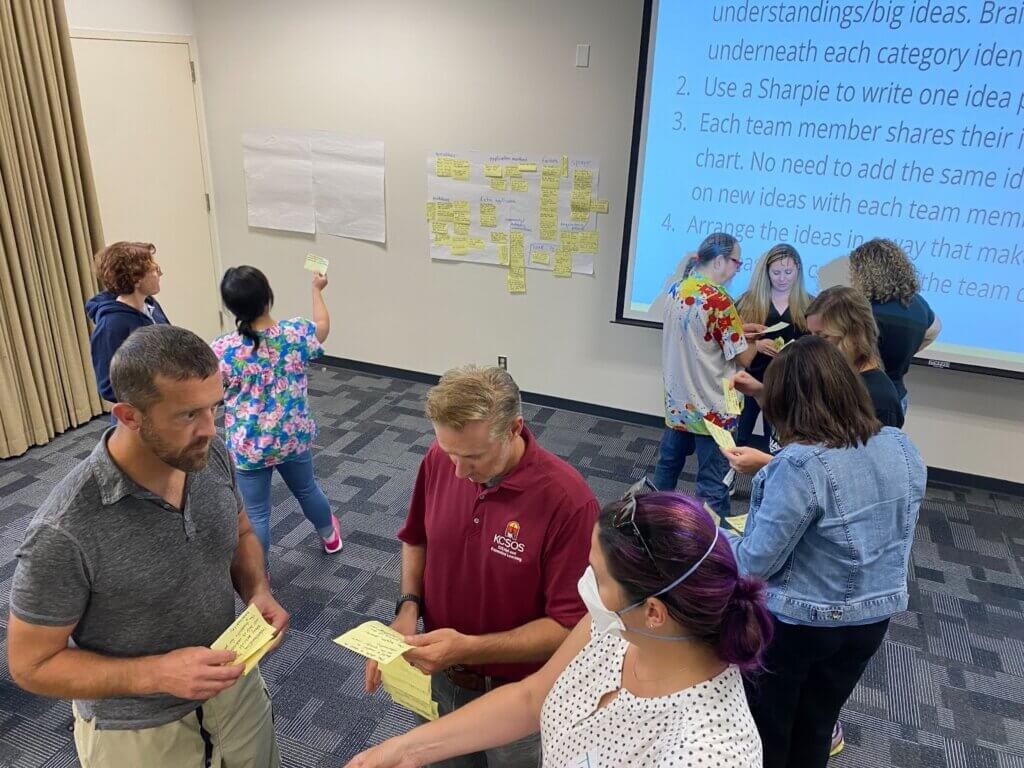
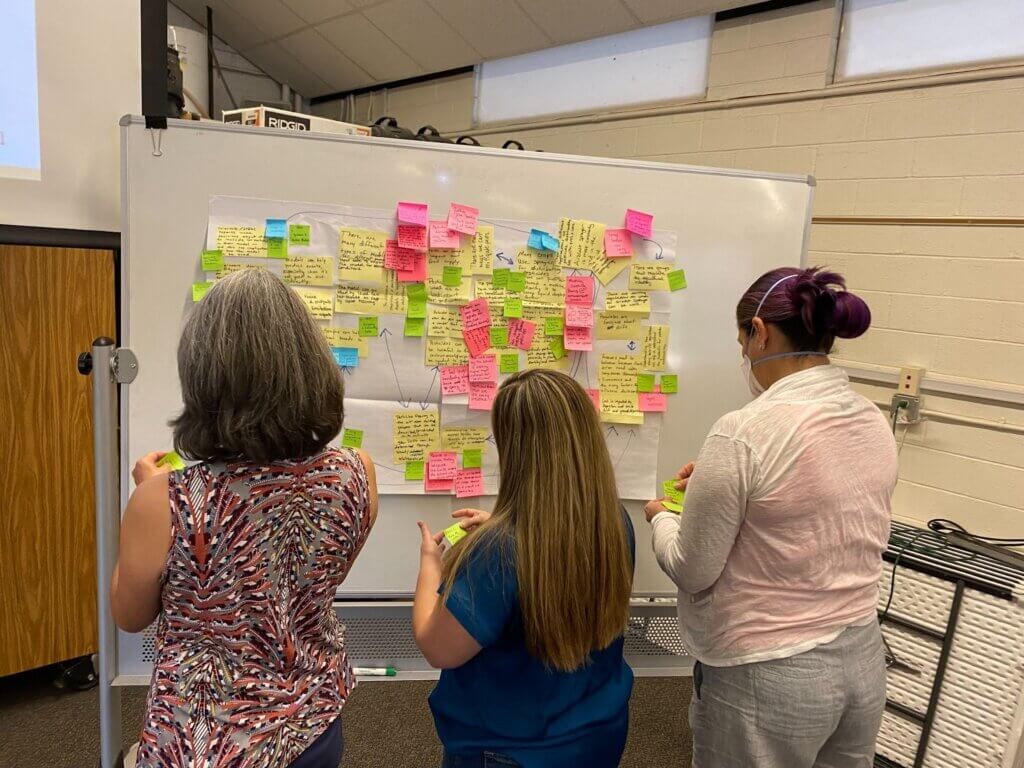
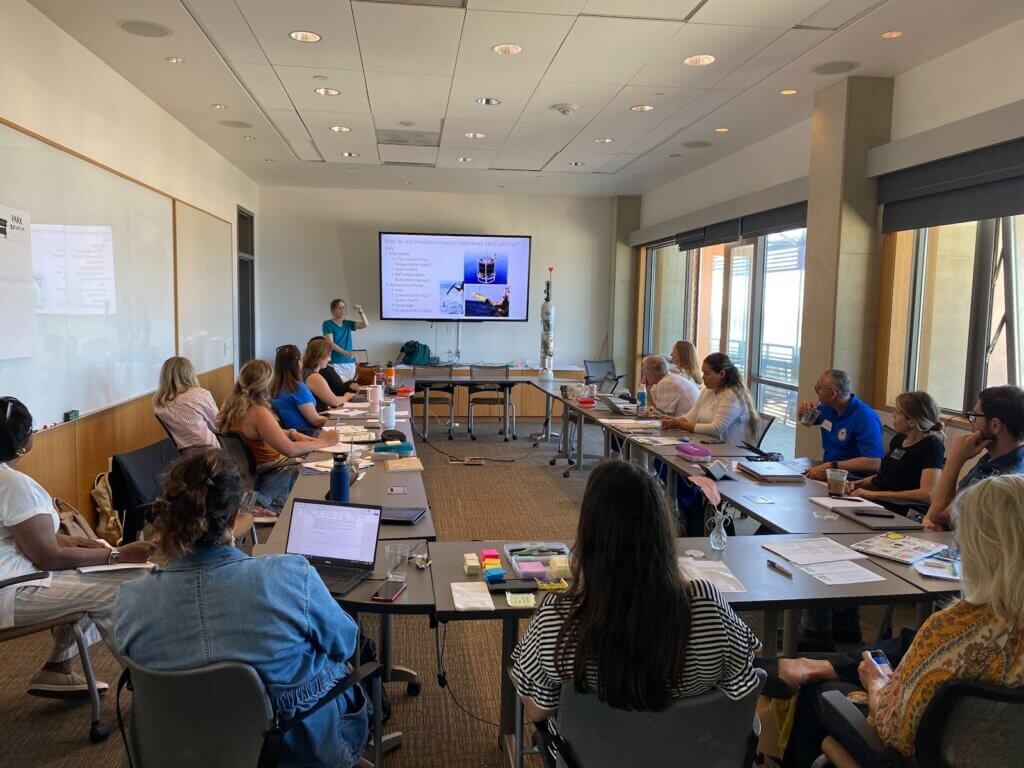
Fresno educators working on their idea flow development and identifying cross-content connections.

Impact and Expansion: Growing Across the State

While the prototype began as a small-scale Design Team professional learning implemented in both San Diego and Fresno counties, the potential for impact and expansion is great. Participating educators overwhelmingly valued the chance to deepen their own learning alongside experts. They also enjoyed working together with disciplinary counterparts from local areas and across the state. The immediate feedback from these initial participants validated the new PL design, showing it profoundly impacted their content knowledge and collaboration skills. A snapshot of their feedback is represented in the following statements:

  • “Getting to learn from the STEM expert ‘filled my cup’ since educators often don’t get to continue their content learning in this way.”
  • “The big ‘ah-ha’ moment really came toward the end of the idea flow when I could see entry points to math, science, and computer science across multiple grade levels.”
  • “It’s about making the science more real world and possibly localized, which all curricula are lacking!”

This positive feedback demonstrated the immense value of the collaborative model, but it also raised a crucial question for the members of the Cross-Content Priority Work Group: How could this powerful process be scaled beyond the initial groups? The goal became transforming the successful prototype into an adaptable, scalable professional learning opportunity.

To support the expansion of this PL model across California, a series of supporting documents was developed. These documents distill the essential steps, strategies, and facilitator notes from the prototype, providing a roadmap for others to successfully lead their own cross-content design experiences. All supporting documents can be found on the CAL-MSCS Science webpage.

Examples of early scaling efforts include two professional learning opportunities led by the San Joaquin County Office of Education and the Santa Clara County Office of Education.

An unexpected positive outcome was hearing that the STEM experts found value in sharing the real-world context of their work with the educational community and view educators as the bridge to the next generation, fostering both relevance and career awareness. Read more about this perspective in the article written by Dr. Peter Ako Larbi, STEM expert from the Fresno County prototype: “UC ANR Agricultural Application Engineering Program Supports local STEM Educators to Enrich K-12 classroom STEM Instruction.”

Looking Ahead 

The CAL-MSCS Science Steering Team is dedicated to continuing this work and scaling this innovative PL design structure statewide. County-level teams are now leveraging CAL-MSCS funding to use the Cross-Content Design Team PL structure in their counties, and the Science Steering Team will further support statewide awareness at the CAL-MSCS Science Community of Practice in spring 2026. 

The Cross-Content Design Team professional learning model demonstrates the transformative potential of collaborative, interdisciplinary professional learning. By bringing together educators from mathematics, science, and computer science to engage with STEM experts and explore locally relevant environmental phenomena, this approach not only strengthens disciplinary content knowledge but also fosters culturally responsive, equity-centered teaching practices. The success of the prototype in San Diego and Fresno counties, and its subsequent expansion to larger design symposia in San Joaquin and Santa Clara counties, illustrates that when educators are empowered to codesign meaningful, real-world instructional resources, the impact on teaching and learning can be profound.

Share this article:

Chelsea Cochrane

Chelsea Cochrane has a strong passion for helping all people thrive and letting their brilliance shine. Early in her career, she developed a passion for teaching science. Helping students and colleagues see that STEAM is for everyone has been the most rewarding part of her career. With thirty years of experience in education, Chelsea enjoys designing curriculum and professional learning sessions that lead with curiosity and exploration, integrating science with other content areas. She is currently a science coordinator with the San Diego County Office of Education and serves as president of the Southern California Association of Science Specialists.

Chelsea Cochrane has a strong passion for helping all people thrive and letting their brilliance shine. Early in her career, she developed a passion for teaching science. Helping students and colleagues see that STEAM is for everyone has been the most rewarding part of her career. With thirty years of experience in education, Chelsea enjoys designing curriculum and professional learning sessions that lead with curiosity and exploration, integrating science with other content areas. She is currently a science coordinator with the San Diego County Office of Education and serves as president of the Southern California Association of Science Specialists.

Lesley Gates

Lesley Gates is the science content specialist with the Fresno County Superintendent of Schools (FCSS). A passionate advocate for elementary science instruction, she believes it is key to building solid foundations that sustain the natural wonder and curiosity students have about the world around them. Before being hired at FCSS, she was a high school science teacher, K–12 STEM district instructional coach, and education specialist at the Fresno Chaffee Zoo. Her current role includes working with TK–6 teachers to identify challenges and design solutions for the implementation of NGSS. Lesley leads science professional learning opportunities for teachers and administrators within Fresno County, across the state, and internationally. Lesley is also the CREEC Region 7 coordinator to help support environmental literacy.

Lesley Gates is the science content specialist with the Fresno County Superintendent of Schools (FCSS). A passionate advocate for elementary science instruction, she believes it is key to building solid foundations that sustain the natural wonder and curiosity students have about the world around them. Before being hired at FCSS, she was a high school science teacher, K–12 STEM district instructional coach, and education specialist at the Fresno Chaffee Zoo. Her current role includes working with TK–6 teachers to identify challenges and design solutions for the implementation of NGSS. Lesley leads science professional learning opportunities for teachers and administrators within Fresno County, across the state, and internationally. Lesley is also the CREEC Region 7 coordinator to help support environmental literacy.

Sarah Whiting

Sarah has harbored a deep love for learning and a passion for the environment since childhood. Her journey into education began after college when she provided early intervention tutoring for autistic children. Having personally experienced unconventional learning, Sarah has dedicated her career to establishing supportive and nurturing environments for students. Over eleven years, she taught elementary and middle school science, served as a district-level STEM TOSA for three years, and held the role of a county-level K12 Strong Workforce Pathway and STEM coordinator before joining the team at Ten Strands. As an advocate for developing systems thinking and creativity, she is driven to create an educational system where students are empowered to become solutionaries capable of making a positive impact on the world.

Sarah has harbored a deep love for learning and a passion for the environment since childhood. Her journey into education began after college when she provided early intervention tutoring for autistic children. Having personally experienced unconventional learning, Sarah has dedicated her career to establishing supportive and nurturing environments for students. Over eleven years, she taught elementary and middle school science, served as a district-level STEM TOSA for three years, and held the role of a county-level K12 Strong Workforce Pathway and STEM coordinator before joining the team at Ten Strands. As an advocate for developing systems thinking and creativity, she is driven to create an educational system where students are empowered to become solutionaries capable of making a positive impact on the world.

Vanessa Lujan

Vanessa Lujan, Ph.D. is deputy director of the Learning and Teaching Group at the Lawrence Hall of Science, which offers professional learning support to leaders and educators in districts, schools, museums, universities, and other educational organizations and nonprofits. Dr. Lujan is also program director of BaySci, and lead author of the LCAP Toolkit for Science and Environmental Literacy, which helps California school districts and county offices of education better understand how to support science and environmental literacy in classrooms, and how to include these core aspects of education into local plans and budgets.

Vanessa Lujan, Ph.D. is deputy director of the Learning and Teaching Group at the Lawrence Hall of Science, which offers professional learning support to leaders and educators in districts, schools, museums, universities, and other educational organizations and nonprofits. Dr. Lujan is also program director of BaySci, and lead author of the LCAP Toolkit for Science and Environmental Literacy, which helps California school districts and county offices of education better understand how to support science and environmental literacy in classrooms, and how to include these core aspects of education into local plans and budgets.

Leave a Reply Cancel reply

Your email address will not be published. Required fields are marked *

This site uses Akismet to reduce spam. Learn how your comment data is processed.

Invest In Ten Strands

Make environmental literacy a reality for all California students!

Connect With Us

Sign up for our newsletter and stay informed.

"*" indicates required fields

This field is for validation purposes and should be left unchanged.

Copyright © 2026 Ten Strands

Facebook Instagram Twitter Linkedin

Contact | Privacy Policy | Terms of Use