Raymond Li
Raymond’s CYCP Cohort 3 project explored renewable energy use in San Ramon Valley schools.
Listen to the story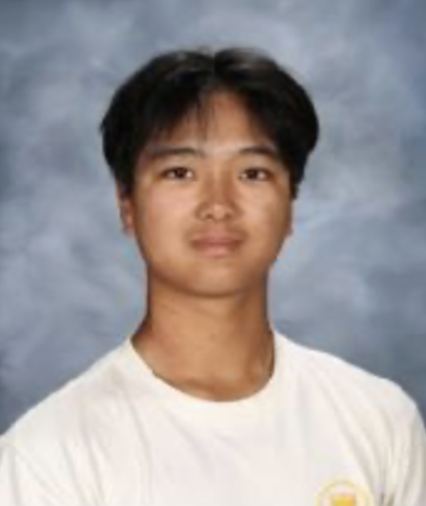
A question became a campaign.
Raymond’s CYCP Cohort 3 project explored renewable energy use in San Ramon Valley schools. He researched district charging infrastructure and developed a proposal to install electric vehicle charging stations across district schools. Mentors helped him evaluate constraints, including funding, and prepare to present the project to district leaders.
Raymond presented the proposal to the district board, and the profile says it has not yet been implemented. It reports a positive response and ongoing communication with district officials, with the project helping start conversations about renewable energy and sustainability. Raymond plans to keep following up and hopes to mentor future CYCP participants.
Podcast conversation
In Raymond’s words
A conversation about the experience, the campaign and what comes next.
Read the full transcript
00:00
Hello, my name is Raymond Li. I'm 16 and I'm an incoming junior at Monte Vista High School in Danville, California. I'm a part of the San Ramon Unified School District in Contra Costa County, and I was a part of the third cohort of the CYCP program. How would I describe my experience with the environment growing up?
00:24
Growing up in San Ramon, California, I spent a lot of my time outdoors. I played golf, soccer, baseball, and tennis, and also participated in many other activities like Cub Scouts in elementary school where I spent a lot of time camping and exploring the outdoors. Being outside so often, I began to be more involved and fall in love with nature, but not understanding much about it.
00:49
I knew basic concepts like how plants need sunlight to grow and trees are important, but I never had thought too deeply about environmental science or the many issues connected to it. My interest in environmental issues started to grow in seventh grade when I attended the Johns Hopkins CTY Model United Nations program at the University of California, Santa Cruz. During the span of the program, we discussed global issues such as climate change and learning about climate change made me realize that environmental problems affect people all around the world and can have long-term impacts on future generations.
01:31
What inspired me to dive deeper into environmental and climate action?
01:36
My interest in environmental and climate action developed through a series of experiences throughout middle school and high school that showed me how environmental issues affect both people and their communities. One of the first experiences that sparked my interest was participating in the Davidson Think Climate Change Program in 2023. Throughout the span of the program, I learned about climate change, sustainability, and some of the scientific processes that affect our environment as a whole.
02:00
It was the first time I realized how broad environmental science was and how many different challenges and solutions exist for these systems. The following summer, I participated in the East Bay Academy for Young Scientists, otherwise known as EBAYS, internship at UC Berkeley. And as part of their program, I researched lead pollution and environmental waste. I collected and analyzed soil samples and later wrote a research paper about the impacts of lead pollution on communities.
02:26
And this experience helped me understand that environmental problems are not just scientific issues, but they can also directly affect people's health and quality of life. In 2025, I joined Environmental Justice Solutions, where I worked on a project supporting the City of Albany's electrification and gas line decommissioning pilot project. My work included conducting research, creating educational materials, canvassing neighborhoods, and administering community surveys.
02:54
Throughout the span of this internship, I learned how public policy can be used to address environmental challenges and help communities transition to cleaner energy sources. How did I hear about CYCP and what initially attracted me to join a program focused on designing and implementing an advocacy campaign talking to our local school board?
03:14
I think I first heard about the CYCP program through my interest in environmental sustainability and climate action. At the time, I was looking for opportunities where I could learn more about environmental issues and make a real impact in my community. What attracted me the most about CYCP was that it focused on action rather than just learning about climate change passively. I liked that the students had the opportunity to identify a problem, research it, and then develop a project that could be presented to local decision makers.
03:44
The idea of working with a school board especially was interesting to me because schools can play an important role in promoting sustainability. As a part of cohort three, I researched renewable energy usage within the San Ramon Valley Unified School District and developed a proposal to install EV charging stations across district schools. Through this project, I learned a lot about renewable energy, school district operations, and the challenges involved in turning an idea into a reality.
04:14
One thing that surprised me was how much research and planning goes into an advocacy campaign. I also learned that even if a project is not implemented immediately, it can still help raise awareness and start important conversations about it. Working on my advocacy campaign through CYCP was a really interesting experience because I had never done anything like this before. My family owns an electric vehicle and solar panels on our house, so I was already familiar with some of the benefits and challenges of the usage of renewable energy.
04:47
One thing I noticed was that charging stations are still not very common in some places. That made me start thinking about why schools don't have more EV chargers and whether schools should help support the transition to electric vehicles. At first, I only had a general idea. CYCP helped me turn that idea into an actual project. I learned how to research a problem, collect information, and build a proposal that could realistically be presented to decision makers.
05:09
While researching EV charging infrastructure in my school district, I found that funding was one of the biggest reasons why these projects had not been implemented already. This forced me to think about possible solutions instead of just identifying future problems. The mentors were one of the most helpful parts of this program. They gave me advice on how to improve my proposal and helped me understand how school boards make decisions.
05:34
They also helped me prepare for presenting my project to district leaders. I presented my policy action project to the San Ramon Valley Unified School District Board of Education on January 20, 2026. My project focused on installing EV charging stations across the district schools. Since then, I've continued to stay in touch with district officials and following the progress of the proposal. So far, the response has been really positive.
06:04
Many people in the community understand that electric vehicles are becoming more common and that charging infrastructure will become increasingly important in the future. When I presented my project, I was able to share my research and explain why schools could be a good location for EV charging stations. Although the project has not been formally implemented yet, I think it has helped start conversations about renewable energy and sustainability within the district and my community.
06:30
Being a changemaker means being able to take action on something you care about, even if you don't know exactly how to solve the problem at first. You don't need to be an expert in climate policy or advocacy, but what matters most is being able to learn, adapt, ask questions, and keep working when things don't go as planned. Through CYCP, I learned that creating change is often a long process.
06:56
When I worked on my EV charging infrastructure proposal, I realized that having a good idea is only the first step. I had to research the issue, understand the challenges, and think about realistic solutions. I also learned the importance of listening to feedback and improving my ideas along the way. Being a changemaker also means working with other people around you. Some of the best ideas come from collaboration and I learned a lot from the members of my team and other students in the program.
07:25
Everyone brought different perspectives and experiences which helped make our project stronger. I hope to continue serving as a changemaker by staying involved in environmental advocacy and helping sustainability projects to my local community. Through CYCP, I learned that creating change is not just about having a good idea, it's about doing research, working with your team, and communicating effectively with decision makers. In the future, I would like to continue advocating for sustainability initiatives in my school District and community and I'm especially interested in renewable energy and expanding electric vehicle charging infrastructure.
08:01
I plan to continue following up on my EV charging proposal I presented to the San Ramon Valley Unified School District and look for other opportunities to promote environmental sustainability. I also hope to help other students get involved in climate action. One of the best parts of CYCP was working with other students and people on my team who are passionate about making a difference.
08:24
As a returning changemaker, I would enjoy sharing my experiences and help bring future participants to develop their own projects and advocacy campaigns. Environmentalism and climate action will play a major role in my future college and career plans. Through programs such as CYCP, environmental justice internships, and research projects, I've developed a strong interest in sustainability and climate solutions. My interests lie in developing large-scale solutions, integrating innovation and sustainability within various domains, whether that will be in energy systems, environmental science application, sustainable agriculture, or infrastructure design.
09:09
Ultimately, I hope to be in a position where I can work at the intersection of research and implementation to ensure my technical endeavors make a real impact on the environment and our community lives. In the future, I hope to work on projects to help communities become more sustainable. Whether through research, engineering, or policy, I want to contribute to practical solutions that make a positive impact on both people and the environment.
09:33
My experience advocating for EV charging infrastructure in my school district showed me that even small local actions can contribute to larger environmental goals, and I hope to continue building on that work in college and beyond.