Mahi Mekala
Mahi’s CYCP Cohort 3 campaign moved from a solar energy focus to zero waste after she adapted the program materials to her private school setting.
Listen to the story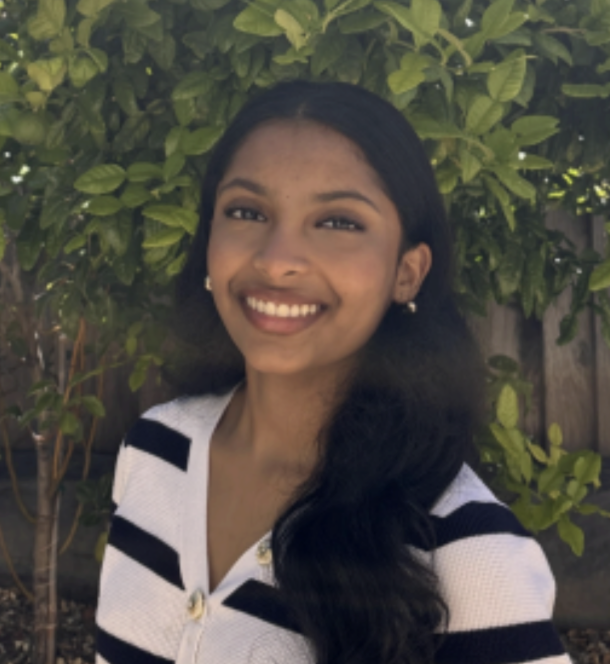
A question became a campaign.
Mahi’s CYCP Cohort 3 campaign moved from a solar energy focus to zero waste after she adapted the program materials to her private school setting. The profile describes partnerships across her school and three community centers, and a campaign that supported compostable alternatives to plastic. It reports about 70,000 compostables used in place of plastic.
The story says pilot programs continue to limit plastics and that administrative regulations are still being drafted to carry the work forward. CYCP helped Mahi develop a campaign from brainstorming through coalition building, while she learned to treat change as incremental. Her profile emphasizes making climate action practical and durable within the community.
Podcast conversation
In Mahi’s words
A conversation about the experience, the campaign and what comes next.
Read the full transcript
00:00
This call is now being recorded. Hello, Mahi. Thank you so much for joining us for another Ten Strands Changemaker Story interview. I would love if you could begin with introducing yourself with your name, pronouns, grade, school, and school district, if applicable. All right. Thank you so much for having me. My name is Mahi. I use she/her pronouns. I'm entering 12th grade at Notre Dame San Jose, which is a part of the San Jose Diocese.
00:31
Thank you for sharing those details. It's great to have you here. To kick things off, I'd love to get a sense of your background, where you come from. Could you describe your experience with the environment growing up?
00:45
Yeah, so I actually grew up in the Berryessa area of San Jose. and so growing up I've always been surrounded by nature, by hills, by a deep appreciation for the environment around me and so as I grew up and I kind of learned about like global warming and climate change it just made me more driven to kind of do my part and find however I can to to protect those spaces for future generations.
01:08
Yeah it's really interesting to hear how your early kind of surroundings and childhood shaped your perspective now um seeing how like your foundation and where your background is, what was the turning point for you?
01:20
What really inspired you to dive deeper into climate action?
01:25
Yeah, I think the first time I really started kind of being angered enough to be like kind of motivated to do climate action on my own part um was when ChatGPT came around. I think anybody in my generation can recall like early 2024, 2025, where everyone was kind of just using ChatGPT. And I was like, wait, this is kind of an attack on critical thought.
01:52
Then I was also like, look, I didn't know that they use that much water until I did some research and I found out and I was like, this cannot be happening. And obviously there's not much that a youth could do about data centers apart from a public comment. and like rallying so I decided I can do climate action in different ways in my community and that's kind of what kind of sparked that thought of climate action.
02:14
That's really interesting and that passion makes a lot of sense considering this AI has been this huge thing and a lot of people are using it without thinking of the consequence. Kind of bringing your passion and drive into focus what initially attracted you to join specifically the California Youth Climate Policy Leadership program?
02:37
Yeah, so I had a lot of experience with policy before as a part of my city's youth commission, and so I was kind of acquainted with policy and like the process of doing so, but I think I just wanted more of a concrete program that taught me how to make climate action more viable for youth, because I think anybody who's been in my position of like, I want to fix, like or at least do my part in climate action knows that it's a great sentiment but it's really difficult to get started on and so me just wanting a more concrete way of doing so I think was what drew me to CYCP as a program.
03:17
Yeah it sounds like you entered the program really knowing what you wanted to get out of it and I think a lot of people are attracted to the program to understand how to make more actionable change through policy. I'd love to learn more about your experience within the CYCP leadership program. Specifically, why don't we start with how was the process of designing, implementing, and leading an advocacy campaign for you?
03:41
Yeah, I mean, I think looking back, it's quite astonishing because I remember seeing the timeline, the schedule, where it was literally just one meeting a month and then like two with your mentor and i was like is that really gonna get the job done and i remember sitting in the the meetings and i was i just felt like extremely handheld through the process and in such a comforting way um like every step of the process from like brainstorming what you want to do building your campaign building your like coalition like everything was so in-depth and everything was so supported along the way um and so yeah the process was just very detailed overall and it was very um beginner friendly if that makes sense like we were taught everything um and we were also like there was like um a lot of like psychological support I guess too like they always talked about what to do if you have to pivot and things like that.
04:42
So if I could describe in one word, it would just be supportive and like holistic, I guess. Yeah, I felt that too in the CYCP space. Nonetheless, of course, running a campaign is a massive undertaking. And so what were some of the challenges and opportunities that came up during your campaign?
05:03
Oh, yeah, there were like a bunch. For one, I'm a part of a private school district and so it's very different from from like passing board policies in public school districts so I had to literally like any document that was shared I literally had to go and email for like a private school alternative um but kind of regarding my campaign it was firstly actually about solar panels and bringing solar panels onto my school campus.
05:35
But I had to pivot from that because my campus size was just too small and it wasn't feasible. So I had to completely pivot my campaign. And that's when I chose to do compostables. But apart from that, I think adjusting to these challenges is just having the mindset that change is incremental, right?
05:54
Not everything's meant to work on the first try. And the end goal can change you just have to be very like persistent and making sure that you however it looks like you're making a good and positive change in your community yeah that's really inspiring I'm sure navigating those shifts is it I mean for you to be so flexible that's a huge accomplishment looking at the final outcome of all this work in your entire campaign what was the impact of your advocacy campaign on your community yeah so I I actually partnered with a few parts of my school and also two, no, three other community centers that we've expanded to, to save up to, I believe, 70K compostables from not being used as plastics.
06:49
And that's like a milestone that I could never envision prior to the program. um but yeah i guess that was the impact of my advocacy campaign and yeah i guess there was a bunch of like um argument not argument administrative regulations that are still in the draft regarding that but the pilot program's there and it's pretty impactful so yeah that's incredible congratulations and i'm sure seeing these like tangible results in your community must be really rewarding.
07:21
Kind of broadening this conversation a little bit, reflecting on your time in the CYCP program, what were some standout experiences or opportunities that made the biggest impact on you?
07:37
Yeah, well, I met a lot of people through CYCP, right, like from the cohort itself, but also because it pushed me to put myself in a lot of advocacy spaces outside of the program itself so I met a lot of like local community advocates I met a lot of like city stakeholders and just a lot of other community members in general um and I think that's natural with any like grassroots effort um but also I think one standard experience in the program itself was I don't know if you recall but it was like a Tree of Hope or something like that where we would like write what we wanted for the world or something like that and then put it on a collective tree and I remember just being very touched by that because it grounded me and I think anybody with like climate anxiety in general and like this idea that we all care and that we're all like driven no matter like what where we go with our careers that we're all driven to make a change and so that was a really stunning experience for me.
08:35
For sure I think that like as you touched on the community at CYCP is so inspiring and really can lift you up when you're feeling anxious about the environment. It's very clear that the program has left like a lasting mark on you and I feel like you really embody the leadership that that program was created to foster. So I wanted to ask what does being a changemaker mean to you?
09:01
Yeah like once again I think change is incremental and change is different for everyone. So I can say that like a lot of my peers in CYCP have changed me they're changemakers by just inspiring me to be more hopeful with climate action um and then obviously there's changemaking in like the practical sense where you're where you're bringing a tangible impact into your community um either which are both equivalently powerful and impactful and necessary um when addressing climate action um but you know i've always tried to be a changemaker in the sense that i want people to care about climate action that's kind of like my first goal beyond like the compostables and beyond the campaign and the coalition it was always about like making people care that you know about climate change and global warming but yeah I think changemaking is just it's a very like broad term but as long as you're leaving a positive impact I think you're a changemaker I really like that definition and I like how you mentioned that change is not a standard thing.
10:11
It's dynamic depending on every scenario and I think that holds true. Switching gears a little bit, for other students who look at your journey and want to follow your footsteps, what advice would you offer to aspiring changemakers or students who are interested in joining the CYCP leadership program?
10:30
That's a good question. I think I would just say dream big in the sense that like the program will grow like will make you grow as an individual and you will be capable of achieving milestones that you didn't really imagine possible for yourself and so when you're planning your campaign and you're planning your advocacy stuff. Dream big. Try to achieve a goal.
11:05
Don't limit yourself, if that makes sense. Don't propose an idea just because you think you can't achieve anything else. It's a program that teaches you a great amount of things. So make the best use of it as you can. Do projects that are deeply impactful, deeply meaningful for you and don't hold yourself back. For sure. I think your advice is very valuable.
11:27
Looking back at your own trajectory, in what ways did the CYCP leadership program contribute to your personal and professional growth?
11:39
I think personally, it made me a lot more resilient or persistent, I guess, because it definitely teaches you that in whatever advocacy campaign you do, I'm sure in yours as well you faced like a lot of rejections and you faced like a lot of um no's before you get like a successful plan out of anything um and so personally it definitely made me a lot more persistent and a lot more like I guess immune to rejections um and in terms of professional growth obviously it gave me a lot more exposure to working with adults because I think any high schooler or middle schooler like whatever like clubs or extracurriculars we're a part of we mostly just interact with like people our age or like teachers and so the program gives you a lot of it pushes you into a lot of different other spaces that you haven't been a part of and so professionally that's a great opportunity to build like interpersonal skills right beyond just your school beyond just your peers um and so yeah i think the CYCP both personally and professionally has just made me more of an outspoken individual more of like a driven and realistic person in terms of like how to work with community 100% I think the experience you gain through the CYCP program the places and spaces it takes you to is really invaluable now that you're a few months or a year out of CYCP what has stayed with you from the program?
13:14
I think just like I don't think I can still fathom the idea that I've made a project in like a matter of nine months right because it's something that I never envisioned for my high school journey it's something that I never envisioned dedicating myself to and like creating that outcome you know it was just something that I never foresaw. And so, yeah, I guess, yeah, that's kind of it.
13:38
I think it's made me an individual, and it's made me a person in my community that I never envisioned for myself. That's amazing. I love how this program has really shaped who you are and what you're interested in now. But your journey clearly doesn't stop here. And looking ahead, I would like to ask you how will you continue serving as a changemaker yeah so um the initiatives and the pilot programs that i've launched um at these three places will actually continue to use these programs right and so um long after i graduate long after i'm like maybe not even a part of this community of my school community these programs will continue to save um plastics and be you know more eco-friendly through our compostables um but in a more like personal sense in a more um kind of emotional sense i think i'll continue to be a changemaker by carrying climate action as a goal of mine um throughout quite literally the rest of my life right um i'm not quite yet what i'm going to do in the future quite not sure what i'm going to do in the future but it's mostly something along the lines of like data science or like climate policy or something like that and so definitely I'm going to try to be a changemaker in in the career path that I choose as well yeah thank you and I think that answers my last question which I was going to close out today which was do you plan to pursue environmentalism as a career um yeah I think especially as a rising senior, I think I've been thinking a lot about my major, and it might not be, like, like, hands-on environmentalism, like, like, working as a vet or, like, working in marine biology, but I'm definitely thinking something along the lines of, like, environmental law, because, you know, law is something that I've always been passionate about, and now through CYCP, I've grown a lot more aware and a lot more compassionate for climate action.
15:52
And so kind of finding the intersection of the two for my future career path is something that I look forward to. But yeah. Yeah, and I think as you mentioned, sustainability is something that can be incorporated in most job fields for sure and should be incorporated. Well, unless you have anything else to add, I really appreciate you being here for the interview today.
16:15
Definitely learned a lot from you. So yeah, thank you so much for being here. Thank you so much for having me.