Aahaan Jain
Aahaan’s work grew from concerns about air pollution and the environmental burdens some communities face.
Listen to the story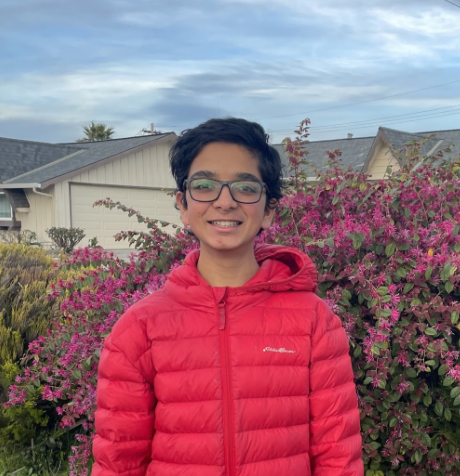
A question became a campaign.
Aahaan’s work grew from concerns about air pollution and the environmental burdens some communities face. He founded ConServe, a youth-led nonprofit focused on air pollution, and turned to school district policy as a path for climate action. Through CYCP Cohort 3, he developed a districtwide campaign around environmental literacy and climate action, building a coalition and refining policy language.
The Fremont Union High School District passed his climate action resolution after students, educators, community partners, and district leaders joined the effort. The profile reports early implementation through a composting pilot, expanded climate literacy, a student-led climate curriculum policy, and a district climate curriculum website. It also describes Aahaan and ConServe helping other California districts introduce similar resolutions.
Podcast conversation
In Aahaan’s words
A conversation about the experience, the campaign and what comes next.
Read the full transcript
00:00
Thank you so much for joining us here today. We are going to have an interview with CYCP alumni to hear their story. Would you like to introduce yourself to begin?
00:14
Yeah, I'm Aahaan Jain. I'm a rising sophomore at Lynbrook High School, which is located in the West San Jose Bay Area. And I graduated from CYCP cohort three. Thank you. It's so nice to have you here. Before we get into your campaign, I would love to learn a little bit more about your background with the environment and kind of what was your experience with the environment growing up?
00:41
Yeah, so growing up, I think going out into nature and exploring was really encouraged by my family. So I have really vivid memories of going to the Santa Cruz Beach Boardwalk and really enjoying the beach and nature and the water. So I really had really good memories of going outside. I've also gone hiking a lot of times. So I was really able to connect to nature.
01:05
So I think that background really set me up for getting experience with environmentalism and environmental advocacy. And I grew up in India actually. So India has 80 of the 100 most polluted country cities in the world. that was kind of a wake-up call for me and when I moved to the United States I decided that I wanted to get involved in combating this air pollution so I eventually found out about the CYCP program and decided to apply.
01:36
That's a really interesting story. I know you touched on how you experienced pollution in your childhood. Can you delve a little bit deeper into what inspired you to get involved in climate action?
01:49
Yeah, so again, I grew up in India. Specifically, I think there are several causes of this air pollution that's really crippling and is so much worse than any other country in the world. But I think the first is a lack of government regulation. And then the second is a lack of like environmental nonprofits that are dedicated to tackling this air pollution. So So going back to the United States, I eventually founded my own nonprofit, ConServe, that's dedicated to combating air pollution.
02:23
And another way that was another way of kind of taking action. Wow. Thank you for sharing that. I'd love to hear and learn more about your experience specifically in the California Youth Climate Policy Program. So I would love to hear kind of what was your campaign, what were the steps within your campaign, and what were you organizing, advocating around in this program?
02:50
When I first was admitted to CYCP, I was a little bit lost. It was the summer going into freshman year. So my school district is the high school district is completely separate from the middle school school district. So I was going into new administration, completely new, a completely new situation that I was really kind of scared of. So I had a lot of uncertainty going into freshman year and going into taking action.
03:21
But I eventually was able to, you know, find mentors. My CYCP mentor, Anne Brown, really helped me guide and kind of she shaped what I would say my advocacy campaign was. So I was really interested in environmental literacy and getting my district to electrify. So I eventually decided to pursue a climate action resolution where I would be able to combine elements of urging my district to incorporate climate curriculum, as well as some climate action methods like composting and electrification and renewable energy that all eventually went into the climate action resolution that I drafted in Fremont Union High School District, which was the district that I currently am in and eventually passed my resolution in.
04:09
So more on my advocacy campaign, I would say it was marked by a lot of outreach. I definitely I reached out to around 70 non-profit organizations across California and got a lot of support from them on the official support letter which I eventually sent to the board showing that oh so many organizations have supported this policy. I also reached out to students and individually went up to more than 120 students across the district and got them to sign in support of the policy so there's a lot of community support There's also an elected official who was able to come in person and give public comment on the day of the resolution and we had around a dozen people giving public comment.
04:51
So just a lot of diverse coalition organizing and getting a lot of people to show up. That is, sounds impressive, very strong campaign and congratulations on passing that resolution. I know you mentioned that originally you're going into a completely new school district. You haven't even been in any of the high schools before within that district. So how did you overcome that challenge of not knowing anybody or any staff in that district yet?
05:23
Yeah, again, I think it was a lot of having friends who were already inside of that high school district, as well as my sister, who's actually just graduated. So she was able to kind of give me some advice. But I also reached out to a lot of teachers and got them to kind of give feedback, help me kind of get a better idea of what my district kind of looked like in terms of administration.
05:49
But I think the most significant part of overcoming this barrier was being involved in two really important district-wide organizations. So the first was the District Climate Collective, which works really heavily with the board and was probably one of my biggest supporters in eventually passing this resolution. And the second was the District Wellness Council. So through both of these committees or councils, I was able to talk to board members, as well as the superintendent and the associate superintendent, which was really instrumental in getting on the board agenda.
06:27
And they also helped me revise the resolution. So I was able to get in contact with a lot of really important stakeholders as well. Wow, yeah, your coalition building seems really, really strong. So after you passed the resolution, kind of what has been the impact of that?
06:42
Have you seen that in your school or what was the results?
06:50
Yeah, so one of the clauses in the climate action resolution was around composting. So I believe my district started a pilot program in Fremont High School for composting. In terms of climate literacy, which was another really instrumental part of the resolution, they've actually passed another student-led board policy related to climate curriculum and eco-anxiety, and they've, I think, built a website specifically for climate curriculum.
07:17
So I definitely see a lot of the impacts of the resolution already being translated into like real world action. But another more nuanced impact of the resolution was actually spillover to other school districts. So the superintendent Graham Clark I believe actually presented the resolution to other school districts. So school districts like Milpitas and Sunnyvale already kind of had an idea that this resolution passed.
07:49
So after passing the resolution in Fremont, I actually worked with my nonprofit to pass even more resolutions outside of Fremont. So far we've passed resolutions in districts like Berryessa, Milpitas, Pleasanton, Fremont as well, and introduced these resolutions to a lot of more board members across the state as well. Wow, you've had like a complete spillover effect. I really took the work in your district to across the region.
08:17
That is really cool to hear. Kind of in retrospect, reflecting on your time at CYCP, part of the leadership program, what were some of the standout experiences within the program or opportunities that had the greatest impact on you?
08:38
I think the opportunity, the mentorship program was really, really unique because in CYCP, you're assigned to one mentor who's either an experienced alumni or an educator or an expert in climate literacy. So my mentor was really helpful in helping me understand how to build a coalition, how to write these resolutions, how to give public comment, things like that. So I didn't feel like I was alone in this process.
09:06
I feel like I always had someone who I could email or schedule meetings with to support me. I think that was definitely one of the most unique parts of the whole program. For sure. The mentorship program is definitely a highlight, I think, for a lot of members of the program. Kind of once again, in reflection, now that you've made all these changes in your community, you've had this leadership experience.
09:33
What does being a leadership role, what does being a changemaker really mean to you now?
09:40
Yeah, I think being a changemaker to me means that you identify a problem in your community and then you get your community and the people around you to kind of combat that problem and eventually bring it up to maybe a legislative authority. So in this case, it was a school board and eventually create change in your own community. That's really powerful. And what advice do you have for aspiring changemakers or students who are interested in joining the CYCP leadership program?
10:11
I think for students who are either in the CYCP program or aspiring to join, the biggest piece of advice that I would give is do not be afraid to reach out to other people. One example that I did was actually reached out to a sustainability commissioner in the city of Milpitas because I knew she passed a resolution in Fremont Unified. And she had a lot of experience in sustainability.
10:37
And she became one of my biggest mentors both throughout the program as well as currently she's helped me a lot in my current endeavors. So don't be afraid to reach out. Don't be afraid to cold email. I think that is so important. and you can get so many opportunities just through that. And then the second piece of advice more specifically for students who are in the CYCP program would be take advantage of the resources that they give you.
11:06
I know it can kind of seem overwhelming, but a lot of the CYCP resources, especially around coalition building, they're really important. And I think you should make full use of them. I think that totally ties into what I'm going to ask you next, which is what has stayed with you from the CYCP program and the resources that were given to you?
11:30
Yeah, I think the CYCP program has been really transformational. The resources, the mentorship, that's really shaped a lot of my freshman year and how I view my community, my school, my district. I think it's left a really huge impact on me. And I think now I wanna give back to the community. I wanna actually, I'm a mentor for the next year CYCP cohort.
11:56
So I'm really excited to give back and be what my mentor was to other students across the state. That's really inspiring. Yeah, coming out of the program and continuing as a change maker in your community, Can you discuss any future plans or initiatives you might have in mind to further promote sustainability and environmental stewardship?
12:22
Yeah, so one thing I wanted to bring up was my nonprofit, ConServe. One of our initiatives was actually climate action resolutions and passing them throughout California state. So we've already met with around 21 school districts, introduced a lot of climate action resolutions across the state, and we're expanding it. We have around chapters in 10 states. So bringing the experience that I had in CYCP to a lot of states and a lot of different regions has been really powerful.
12:55
I'm also working with Ten Strands on a few initiatives. I'm currently a data intern where I'm leading a few data interns on the California data initiative, specifically on a project that ConServe actually founded, which was getting the contact information of around 4,000-5,000 school board members in the 937 school districts across the state. But beyond that, I'm also leading the coalition for a bill along with Ten Strands because I represent the co-sponsoring organization of Silicon Valley Youth Climate Action and we're co-sponsoring Senate Bill 1048, which is the seal of climate literacy that would give students an official piece of recognition from the state if they complete two environmental literacy courses and a hands-on experiential learning project and that bill is co-sponsored by Undaunted by Ten Strands and the California PTA so i'm really excited to continue working with them in the future wow you're involved with a lot of things and it's really cool to see how what started as one thing in your district has really led you to be in all these different spaces.
14:09
The last question I want to ask you is looking even further into the future, do you plan on pursuing environmentalism as a career option?
14:20
I'm not completely sure on if I want to like pursue it as a career option. I'm definitely looking at pursuing maybe business or economics, but I do think that environmental science is very intersectional and interdisciplinary. So I definitely do think that I might take courses in environmental science or sustainability, but I'm not sure if that's something that I want to ultimately pursue yet.
14:46
For sure. Yeah, I feel like, as you said, sustainability is something that can be applied to almost any field, no matter what you pursue. Well, do you have anything else that you would like to share about your CYCP experience or being a changemaker before we leave it off for today?
15:06
I think you asked pretty much everything. Okay, sounds good. Thank you so much for joining us, Aahaan, and sharing your story. Thank you so much.